
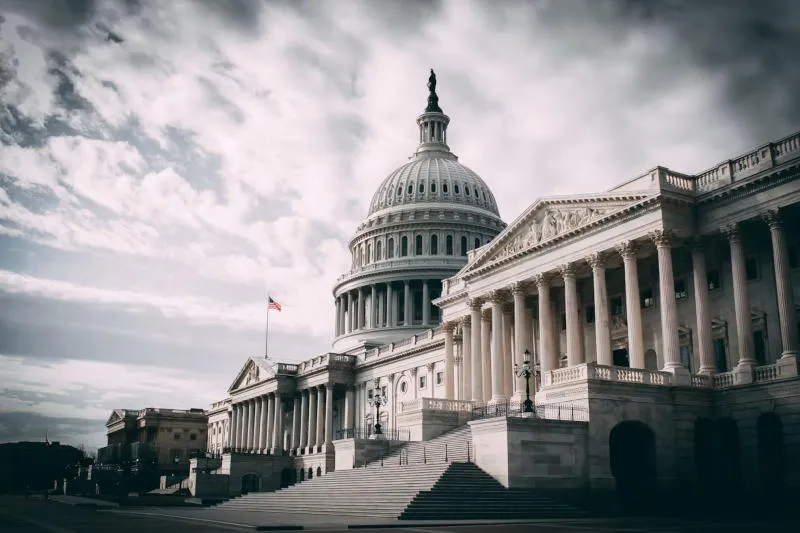
U.S. House legislative committee offices are already overwhelmed with bills created by artificial intelligence — filled with incorrect terminology, incorrect citations and other errors.
Photo credit: Harold Mendoza / unsplash.com
Increasingly, members of Congress are turning to public artificial intelligence services such as OpenAI ChatGPT and Anthropic Claude to write legislative proposals. As a result, lawyers in legislative offices spend so much time reviewing and rewriting bills that it would be faster to draft them from scratch. AI services often ignore nuances and small but important details that can significantly impact the interpretation and adoption of laws. AI, the department gave an example, is indistinguishable “Tax credit, tax relief, exemption or grant”. In some cases, the “state” category includes only the 50 states, excluding the District of Columbia metropolitan area and Native territories. The bills also misquote prior law.
AI-generated bills also present another problem: Congressional staff are no longer familiar with the contents of their own documents or what they want to achieve. Using artificial intelligence, they only scratch the surface of relevant problems. In response to the increased workload brought about by artificial intelligence legislation, the Office of Legal Counsel does not rule out taking mirror measures – using artificial intelligence in its own work to “increase efficiency.” The task force has created an artificial intelligence-based “comparative printing toolkit” designed to help staff visualize the impact of each bill on existing legislation. Unlike regular AI tools, it will throw an error if it can’t figure out exactly where the bill needs to change to prevent it from being blatantly hallucinating.
If you find an error, select it with your mouse and press CTRL+ENTER.