

When looking at the biography of Apple co-founder Steve Jobs, few sources focus on the time he spent outside the company. In 1985, Jobs was forced to leave Apple to focus on a new product called NeXT. It was the company’s cooperation with U.S. authorities that allowed Jobs to survive and return to Apple in 1996 for future success.
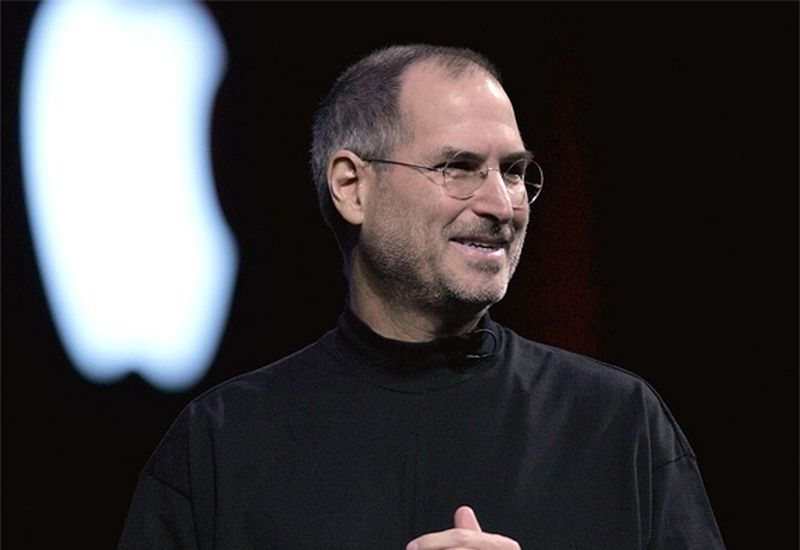
Image source: Apple
version wall street journal Published excerpts from Sharon Weinberg’s new book, due out this September. The publication tells the story of Steve Jobs’ life related to his activities at the NeXT company, which produced workstations. Initially, it was believed that they would be used in academic settings for scientific research, but sources explain that as early as 1986, representatives of the U.S. intelligence community, including the CIA, became interested in the potential of such a device. Two department representatives, Joe Romero and Jeff Harris, then tried to establish contact with NeXT head Steve Jobs. The task was complicated by the fact that Jobs himself had grown up in a rather freedom-loving atmosphere and, like many young people in America at the time, was an opponent of the state system.
From a business perspective, however, NeXT was doing no better, if not worse, and Jobs’s perfectionist habits only made things worse for the company. Meanwhile, CIA officials asked NeXT to ship at least 20,000 workstations, which they planned to use for purposes that should not have been discussed with the vendor. There was another reason why Jobs’ interests intersected with the activities of the U.S. defense complex: In 1986, he acquired the Lucasfilm division, which developed graphics stations for Pixar Studios. California-based defense contractor ESL has partnered with Pixar in this area, developing equipment that can analyze aerial photos taken by reconnaissance satellites.
Jobs was forced to agree to cooperate with the CIA and soon became friends with ESL president Robert Kohler, who had held a senior position in the CIA. The department then began purchasing NeXT workstations for subsequent modifications by the controlled companies. They feature specially designed Motorola CPUs and Intel graphics cards. These components make it possible to use improved computers to process satellite imagery. Modified workstations have been loaded from contractor warehouses onto military transport aircraft and distributed to CIA agent locations around the world. By creating a closed network of such computers, the department is able to process and transmit high-resolution satellite imagery within the network in real time. This significantly reduces delays in the decision-making process and increases the effectiveness of U.S. intelligence. According to witnesses, a characteristic of the contract with NeXT was a high level of secrecy. In fact, participants in each phase of delivery have little idea where the workstations will be sent and what they will be used for.
Government orders allowed NeXT to survive, and its founder, Steve Jobs, eventually returned to Apple in 1996. By then, the Soviet Union was long gone, U.S. defense spending had dropped significantly, and Silicon Valley’s ties to the state apparatus had weakened but were beginning to be revitalized in the era of artificial intelligence systems. Back at Apple, Jobs helped bring first the iPod to market and then the iPhone smartphone, not to mention the company’s success in growing the personal computer industry. Their operating system, by the way, borrows a lot from the NeXT workstations that were provided to meet the needs of the CIA in the 1980s.
If you find an error, select it with your mouse and press CTRL+ENTER.