
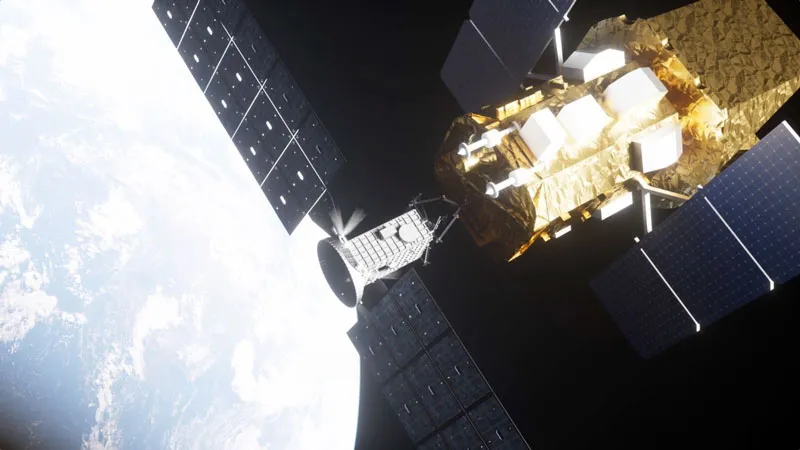
On August 20, Katalyst Space Technologies officially cooperated with NASA Stopped the task The orbit of the Swift Gamma Ray Observatory was raised using the Link space tug, which was launched on July 3 by a Pegasus XL rocket. The reasons given were problems with the vehicle’s orientation system and a partial engine failure. The tugboat may still get close to the observatory, but it won’t save it – it will burn up in the atmosphere before the end of the year.
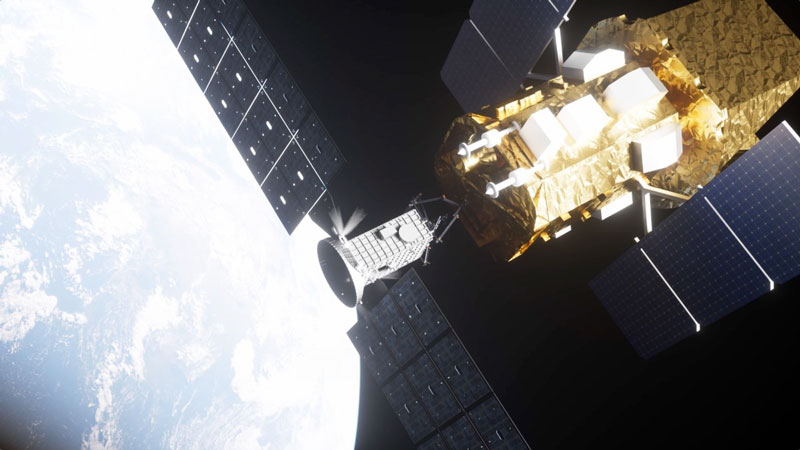
How could this happen, but no. Image source: NASA
“We knew this was a risky but potentially very promising mission: it was the first of its kind, completed in an unprecedentedly short time due to high solar activity, ——A NASA representative said. — We all want more scientific data from Swift [продолжить её работу]. But we know the outcome of this mission [с буксиром] Either way there’s value, and we’ve accomplished a lot thanks to a string of successes to date. “
Swift Observatory descended to an altitude of approximately 340 kilometers and began to decelerate strongly in the upper atmosphere. Any powerful flare on the Sun would eject so much plasma at Earth that it would cause the observatory to cease to exist within weeks. The Katalyst Link tug was built in just one year and is expected to lift it hundreds of kilometers, which will extend the operational time of this valuable scientific instrument. The tugboat successfully entered orbit, but then encountered a number of problems.
Back on July 28, Link went into multi-axis spin after two of the three attitude flywheels failed, while the engine of the reactive attitude control system was only partially working. By early August, engineers had succeeded in slowing the rotation from 9 degrees to 1.47 degrees per second, using electric motors designed for an entirely different purpose – changing orbit. In addition, on August 11, a new version of the flight software was installed on the tugboat to take the malfunction into account and compensate for it. However, subsequent joint analysis showed that safely capturing and towing the Swift was not possible. NASA has yet to explain why this is the case.
Although the observatory’s orbital ascent is canceled, Link will still conduct a series of rendezvous and hover missions near it to collect data for future satellite servicing missions. “Katalyst designed, built and launched an experimental vehicle for an ambitious mission under a tight timeline. We took on a high-stakes challenge and are proud of the milestones achieved.” – said Ghonhee Lee, CEO of the company.
Sean Domagal-Goldman, head of NASA’s astrophysics division, added that the agency understands the risks of the mission but believes it is justified: “We had hoped to expand on Swift’s scientific work, but regardless, the insights gained from this mission are valuable.” The experience value in the contract alone is just over $30 million, but the final amount could be higher.
If you find an error, select it with your mouse and press CTRL+ENTER.