
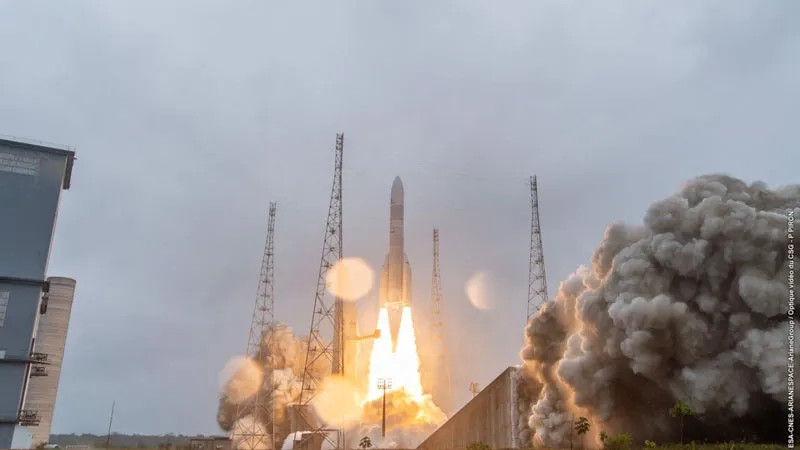
European Space Agency (ESA) reject Significant upgrades to the latest Ariane 6 launch vehicles from previously planned launches, including the promising Block 3 version with a new lightweight upper stage. The ESA explains that now “There is no need or reason” Moving to next-generation launch architecture. But it gets even more banal – the EU continues to subsidize Ariane 6 launches, not wanting to shoulder the massive costs.
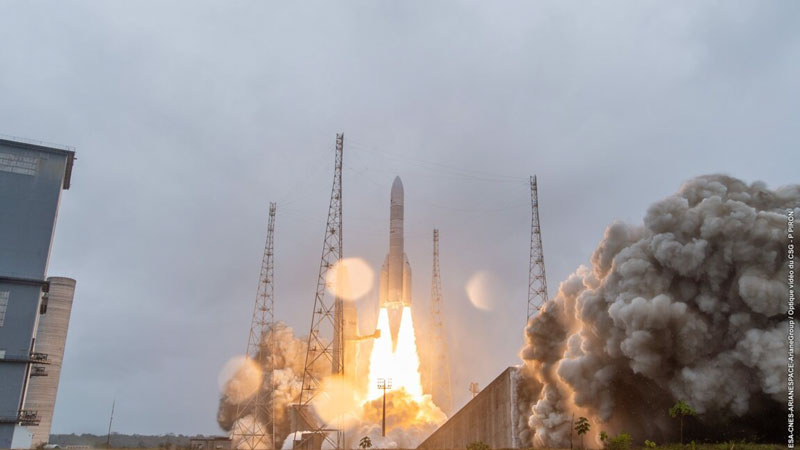
Image source: ESA
A key factor in the cancellation of the upgrade was the development of ICARUS (Innovative Carbon Ariane Upper Stage), a new upper stage that makes extensive use of carbon fiber composites. The project involves replacing traditional metal canisters and structural elements with lighter composite materials, which should reduce the stage’s dry mass, increase payload and reduce launch costs. The technical foundation of ICARUS is the Phoebus demonstrator, designed to test large composite fuel tanks and rocket stage power components.
The Ariane 6 Block 3 variant is seen as a way to expand the rocket’s capabilities beyond the current design. It is envisaged that an upgraded version of the Ariane 64 equipped with four P120C solid rocket boosters and an improved upper stage will have additional heavy payload capabilities, including outer solar system exploration projects. However, following a review of ESA’s priorities, European developers will be forced to adapt some future missions to accommodate the less powerful Block 2 rocket configuration. In particular, this will affect future missions of European probes that they decide to send to Saturn’s icy moon Enceladus.
The failure to modernize Ariane 6 reflects a broader problem in Europe’s rocket program: the need to simultaneously improve Ariane 6’s competitiveness and find long-term replacements for expendable rockets. The launch of Ariane 6 is a breakthrough for Europe, which has been relying on Russian and American launch vehicles. But at what cost, the EU prefers to remain silent.
The authorities are believed to have allocated up to €40 million per Ariane 6 launch. Despite steady demand for rockets, with Amazon, for example, keenly interested in them, each launch feels like it’s going into the pockets of European taxpayers. Without modernization, the elimination of subsidies is inevitable. But European ministers must decide later this year whether the extra debt is worth taking on.
If you find an error, select it with your mouse and press CTRL+ENTER.