
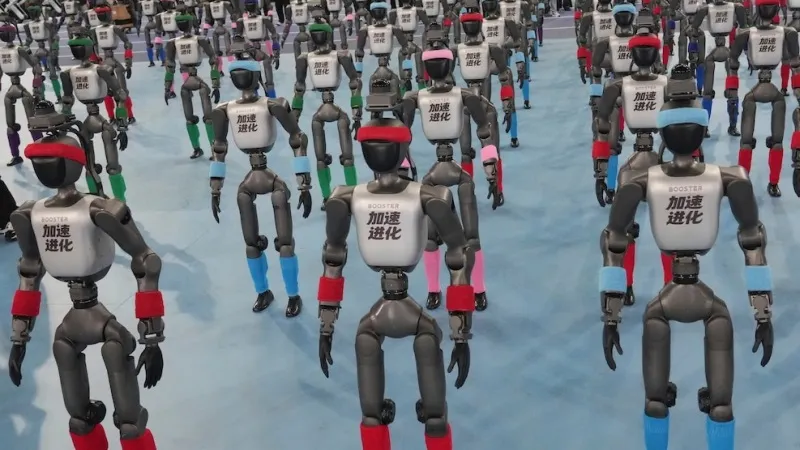
Humanoid robots made in China have proven they can run faster than humans. Now, it’s time for them to accept a more severe test. We’re talking about the ability to pack items and perform other delicate tasks like connecting cables, just like humans.
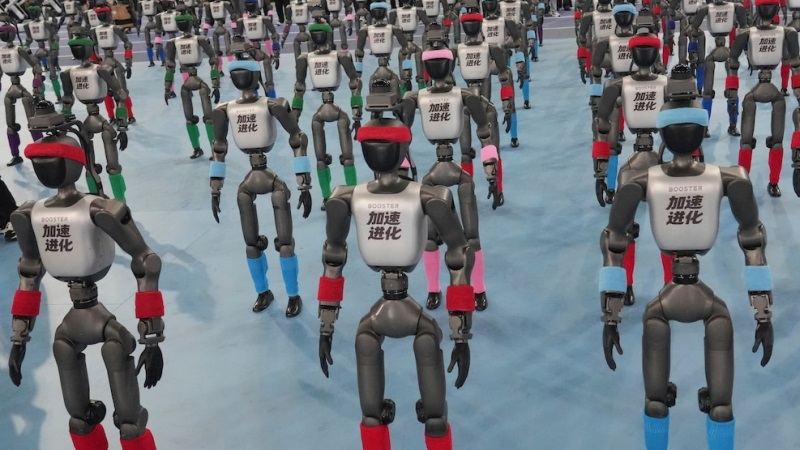
Photo credit: AP Photo/Achmad Ibrahim
The recent World Humanoid Robot Games in Beijing combined tests based on familiar sports events with simulations of machines working in factories, restaurants, offices and emergency situations. The event was widely reported by Chinese media and consisted of 51 sub-categories, including 30 major events and 21 situational tasks. More than 40% of disciplines require robots to be fully autonomous. Huawei serves as the technology partner of this event.
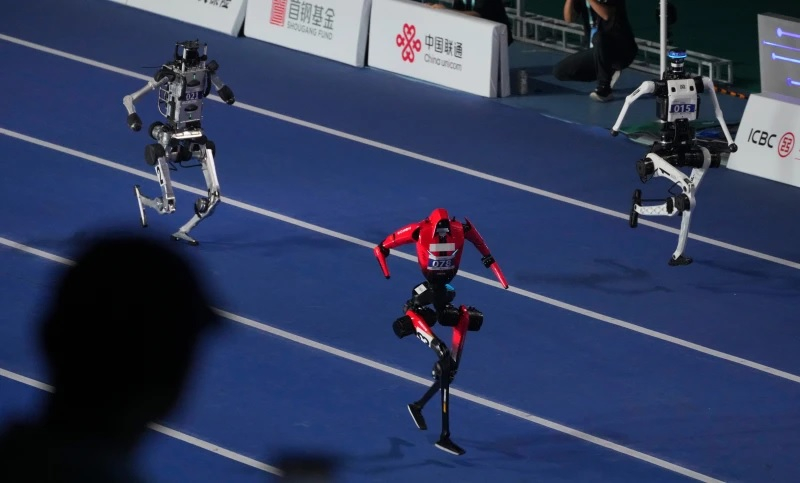
Two robots ran 100 meters on Saturday, surpassing Usain Bolt’s world record of 9.58 seconds. That’s much faster than last year’s result, when the winning robot took more than 20 seconds to cover the distance. This time the problem was braking: the car hit a thick mat installed by race organizers a few meters behind the finish line. In the 400-meter race, the same robot completed the distance in 39.7 seconds, faster than the current world record of 43.03 seconds. The robots will also compete in tug-of-war, weightlifting and traditional Chinese sports competitions.
“The intensity of the competition is higher than last year, which places higher requirements on the robot’s battery management and heat dissipation capabilities. This is very important for China’s industrial sector.”“”, Xu Qiaosheng, an investor in the field of robotics, commented on this issue.

Spectacular races aside, a more revealing test might be one in which the machine encounters small real-world flaws, such as cables placed at the wrong angle, objects slightly out of range, or a missed step. Such tests measure a robot’s ability to recognize objects, accurately position its arms and body, apply controlled force and resume operation after an error without human intervention.
Lumos Robotics CEO Chao said that robot games help improve hardware and provide showcase opportunities for the industry. However, in the long term, the value of robots will depend heavily on the machine’s ability to perform real-world tasks. “A robot will only have real value if it can operate in a real end-use environment. Just running and jumping doesn’t increase efficiency.”Zhao said.
In addition to the usual sports events, the robots will compete in charging electric cars, working in restaurants, eliminating the consequences of emergencies and manual dexterity. Additionally, competitions are planned for industrial assembly and material loading, as well as cable connection, a test of vision, mechanical strength and control of applied force.
Beijing-based robotics startup Galbot has announced its intention to host a tennis match between autonomous humanoid robots. This challenge will be divided into singles and doubles.
If you find an error, select it with your mouse and press CTRL+ENTER.