
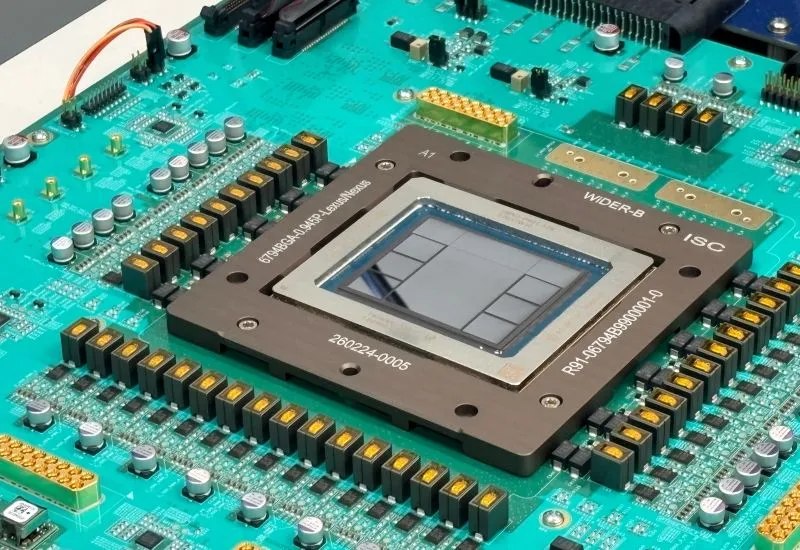
A few months ago, startup OpenAI launched its own artificial intelligence chip, Jalapeno, which Broadcom helped develop. This week, the creators of ChatGPT shared the first test results of their hardware creation, admitting that it outperforms the Nvidia solution on at least two criteria: specific performance and responsiveness.
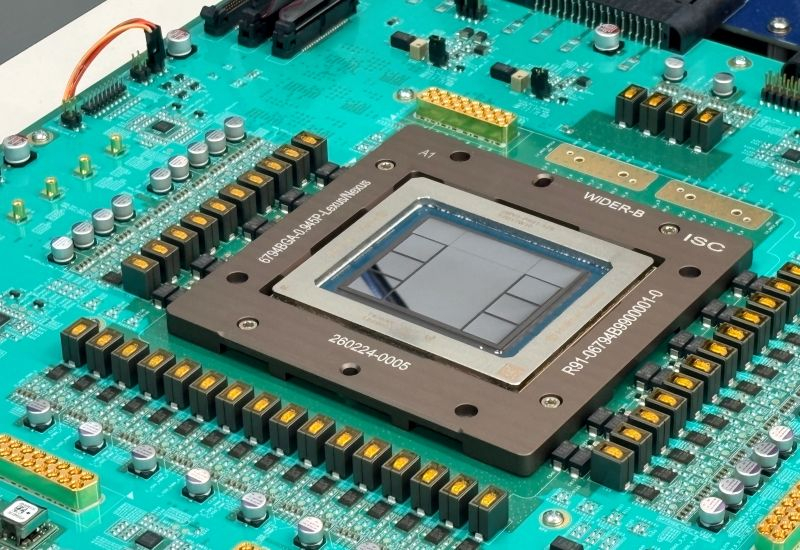
Image source: OpenAI
Jalapeno was compared to the current Nvidia GB300 accelerator using the Blackwell architecture. It surpasses that chip in terms of artificial intelligence workloads, both in terms of power consumption and latency of release responses. The Jalapeno chip will work regularly with OpenAI AI models by the end of the year. OpenAI chip director Richard Ho said Bloombergas these chips are deployed, startups will be able to start making significant cost savings: “It’s a very good wafer – they will drop significantly”. At this point, the cost savings are as large as OpenAI originally expected. As jalapeño production scales up, these chips will take on more and more artificial intelligence tasks. OpenAI partnered with Broadcom to develop the proprietary chip in record time. OpenAI artificial intelligence models are used for this purpose. Second-generation AI chips are also on the way, and their development will be completed in the next few months.
Ho said different chips often improve performance and response time, but Jalapeno offers both. OpenAI will determine which AI models Jalapeno can handle better, and end customers will be able to save costs or get faster performance through their implementation. OpenAI representatives said lab studies show the chips offer high performance while reducing latency, both of which the startup’s customers want. Within its own infrastructure, Jalapeno will help OpenAI reduce energy costs, as one such chip consumes only 700 W.
It’s important to understand that Jalapeno is designed for inference, not for training AI models like Nvidia’s solution. Furthermore, it does not compare to the Vera Rubin generation accelerator that will begin shipping to the market in the near future. OpenAI relies on Cerebras chips for some computing workloads, but they only perform well on smaller models. Jalapeno allows you to run large applications, but that doesn’t mean OpenAI will abandon the Cerebras component of its computing infrastructure. Richard Ho said components from all suppliers will be in demand. The company is preparing to talk publicly about its developments in semiconductors to spur innovation in artificial intelligence chips.
OpenAI publicly tested Jalapeno on one of its smaller open source models, as well as the DeepSeek and Moonshot AI models. In the latter case, the advantage of the wafer proved to be greatest. The chip also performed well when testing large-scale OpenAI AI models that have yet to be launched. The startup is already developing its own third-generation artificial intelligence chips, hoping to use them to reduce the energy costs of computing infrastructure. The startup has no plans to abandon Nvidia chips because it still relies on them for its development.
If you find an error, select it with your mouse and press CTRL+ENTER.