
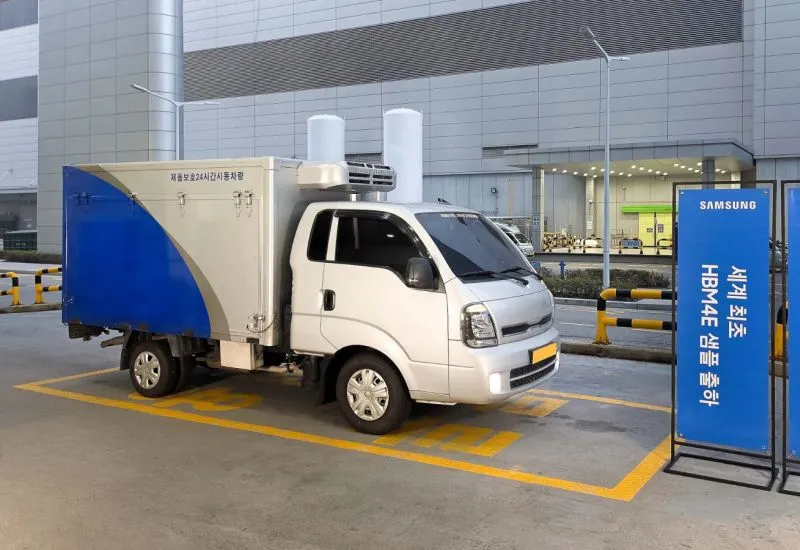
Amid memory shortages and rising prices, both suppliers and buyers are more likely to sign long-term contracts. This allowed the former to secure large advances and secure product sales, while the latter attempted to provide itself with the necessary memory purchases. Samsung has allocated as much as 70% of its memory capacity to long-term contracts.
Image source: Samsung Electronics
as mentioned before TrendForce South Korean media quoted that in fact this will mean that 70% of the production capacity before the specified date will be used to provide memory to major customers such as Nvidia, Microsoft and Google. The needs of others will be met on a residual basis, and they will be forced to buy memory at a higher price than specified in their long-term contracts. At the same time, if we talk about the 36 GB HBM3E memory stack (valued at $2,100 on the instant market), the price gap is already five times greater. Such memory stacks cost four to five times less under long-term contracts. A 16-layer HBM4 stack can cost up to $3,500 on the spot market.
South Korea’s official export statistics also prove the current distortion of the memory market. As of July, the supply of foreign AI system memories (including various types of HBM and LPDDR) dropped 13.2% from May to 591.74 million units. At the same time, its declared export volume increased by 18.5% to US$11.43 billion, and its average selling price increased by 36.6% to US$22.9.
Additionally, the boom in artificial intelligence has disrupted the usual trends inherent in the memory market. In the first half of this year, Samsung’s inventory value increased by 32% from the previous quarter, while SK Hynix’s increased by 26%. In the first case, the price of the product in production increased by 35%, in the second case, the price increased by 20%. In previous years, rising inventories heralded problems with product sales, but now they signal manufacturers’ willingness to be more aggressive in securing future supply. Taking NVIDIA as an example, its payment obligations for parts and raw materials increased continuously from US$119 to US$279 billion last quarter, which also shows the trend of memory manufacturer customers increasing purchases. In physical terms, however, their growth is more modest as prices are accelerating upward. TrendForce expects DRAM contract prices to increase by 13% to 18% this quarter compared with the previous quarter.
If you find an error, select it with your mouse and press CTRL+ENTER.