
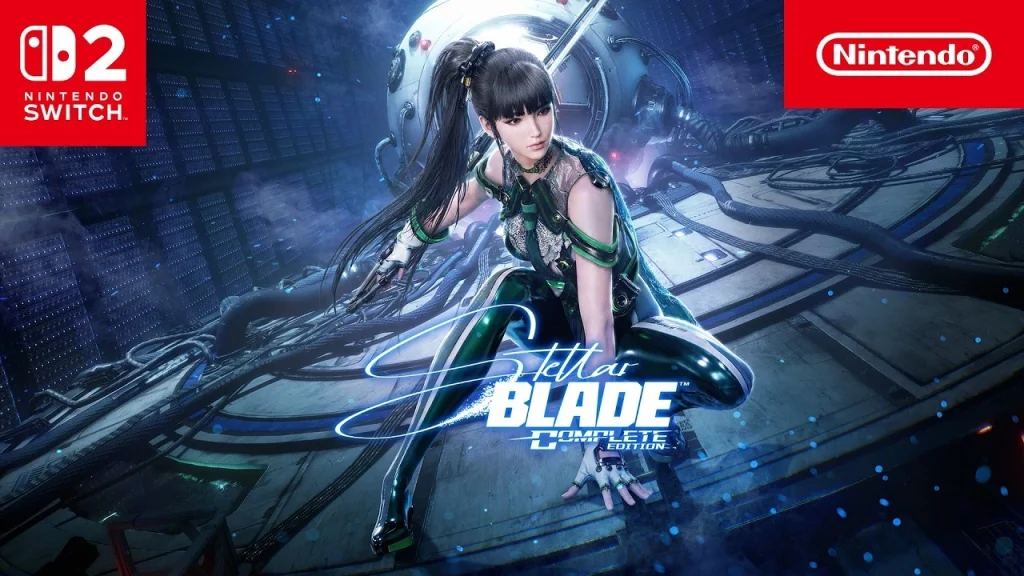


Shift Up is preparing a Stellar Blade version for Nintendo Switch 2, and the developers decided to combine NVIDIA and AMD technologies to achieve 60 FPS. The game will use DLSS for image scaling and FSR 3.1 to generate additional frames.
Shift Up CTO and CTO DongKi Lee said the developers are aiming for 60 frames per second in handheld and stationary modes. Since Switch 2 does not support DLSS frame generation, the team used the frame interpolation function of PC’s AMD FSR 3.1. It turns out to be a rather unusual scheme: DLSS is responsible for increasing the resolution, and FSR 3.1 then processes the result.
However, this approach raises some questions. If the game is actually running at a base frame rate of around 30 FPS, frame generation will only visually bring the image closer to 60 FPS, but will not eliminate the control lag characteristics of 30 frame mode. This is especially important for Star Blade, as its combat system requires quick reactions to perform precise blocks. So it’s better to maintain a stable 30 FPS without spawning than to create the illusion of 60 FPS with noticeable input lag. Hopefully Shift Up will completely disable FSR 3.1 frame generation, otherwise players will have to suffer.