
The lack of direct mechanical connections between a vehicle’s controls and parts and mechanisms is by no means a new idea. It has been used in aviation technology since ancient times and has been so successful that it is called “fly-by-wire”. Here’s how it works: Signals are sent from the controller to the onboard computer, which in turn controls the servos and actuators that drive various aircraft mechanisms.

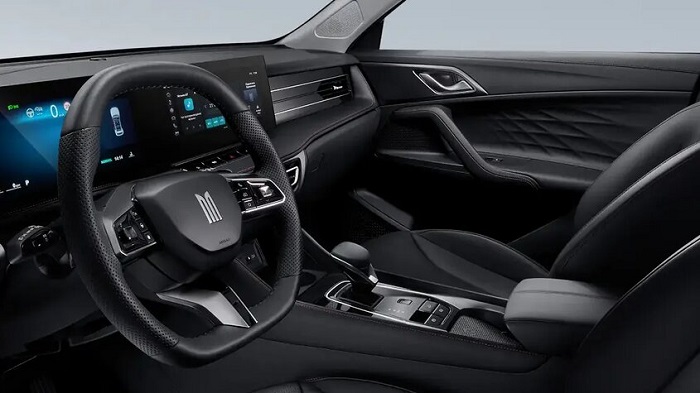
Photo credit: Moskovich.
Something similar is now slowly being introduced into automotive technology. In particular, in cars, there is no longer a direct mechanical connection between the accelerator pedal and the throttle, which not only allows more precise adjustment of the driving mode, but also allows the stability system to release this “gas” for the driver when necessary. And now “steer-by-wire” systems are gradually being introduced, which means that there is no longer a direct mechanical connection between the steering wheel, the steering shaft and the wheels.
For example, they plan to implement such a system on Moscow cars. To this end, Moskvich, JSC KAMA and the Chinese Hangzhou Shibao Company sign memorandum Regarding cooperation in the joint development and implementation of the “steer-by-wire” system for Moscow Enterprise Automotive. As you can appreciate, the companies’ participation in the program is unequal. Hangzhou Shibao will become the supplier of the system, KAMA will provide calibration, inspection and certification, and Moskvich will provide design documents and technical characteristics requirements.
How such an idea meets traffic safety requirements remains a big question. The scary thing here is not the tiny but still present delay in processing the signal to turn the wheel, but the fact that the system can “freeze.” Yes, the likelihood is negligible, but the more of all kinds of completely unnecessary electronic “stuff” you have in your car, the higher the chance that any one of them will malfunction. But after all, here we are not talking about turning on the heated seats (you can live without them), but directly about the direct functions of the car.