
Pawprint Studio has released Behind the Scenes, a twenty-minute documentary about its upcoming free Aniimo adventure. In the film, the developers talk about the creation of Idyll’s open world, the design of animo, their behavior and game systems.
According to the authors, they worked hard to make the creatures feel less like a set of decorative characters and instead be seen as full-fledged inhabitants of the world, with their own habits, habitats, and reactions to the player’s actions. The team began studying ecosystems by identifying the characteristics of each organism. Choose the right habitat for your animo by considering climate, behavior, and relationships with other species. For example, Celestis lives in the Meteor Forest, where purple arbutus trees grow. Upon first encounter, a player might see the creature feeding on fruit, then notice its ability to climb trees, and independently think there might be something interesting at the top of the tree.

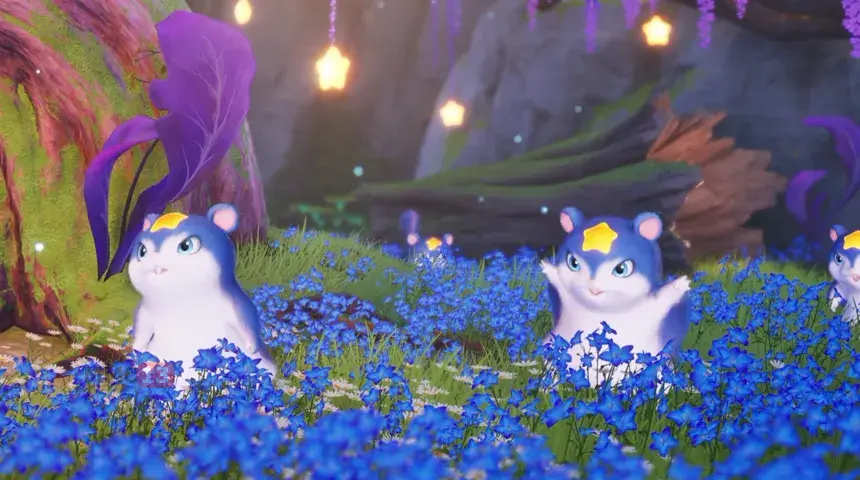
The behavior of living things also depends on the conditions of the world around them. Some animos are active at night, while others prefer to live together in certain places. Cheerilee has a special reaction to snowfall: her nose starts to run and her movements change. The developers liken the Sparkbiters to a pack of wolves, which have a cub behavior system. If the player transforms into the corresponding Animo, the cub will begin to follow him.
People pay a lot of attention to the appearance of creatures. The author doesn’t want all Animo to be the same cute characters. Games should contain strange, interesting, and unusual creatures, and their personalities should be read through their appearance. One example is Animo, which is based on Spotfish. The team combined its unique appearance with the image of melting ice cream, and the creature evolved into a mountain of ice cream. By design, it will remain shy and try to make friends with other Animo, while maintaining an awkward smile.
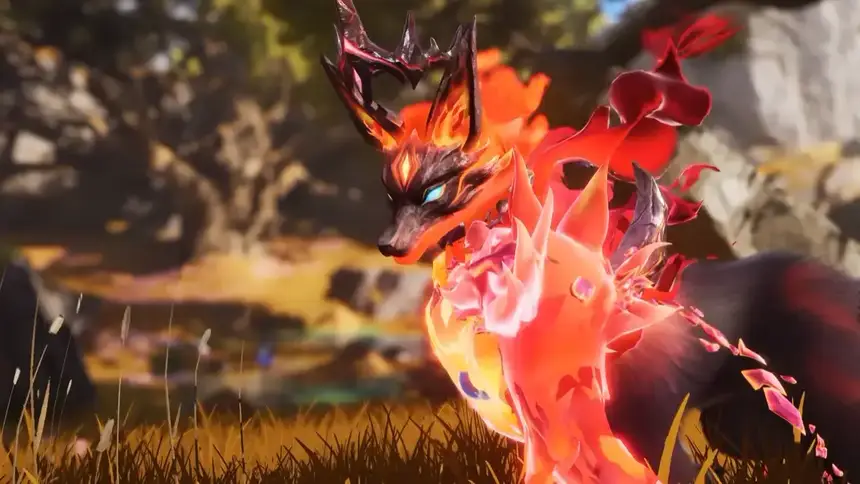
Biomaterials also change depending on the situation. The developers used the physics of real materials as a base, but redesigned them into a fantasy world. Most of the time, a new Animo looks like a small piece of charred wood. If you get him near lava or make him angry, his body will start to change color and glow. The snowy area is gradually covered with snow. The PC version of the game uses approximately 30 materials that can be combined to create hundreds or thousands of visual effects.
Animo developers create animations manually using keyframes. They decided not to use motion capture because they didn’t want to simply replicate the movements of a real creature. Each Animo has approximately a hundred animations, and the same animation will not be applied to different creatures.
Aniimo is also built around physics and rules that should be clear to players without any special explanation. Objects can be pushed, water can freeze, and wooden boxes can catch fire. The developers gave an example of a puzzle in which a chest is located in a chimney. Players can extinguish the fire inside and block the upward airflow, or guess that the airflow can lift the character itself. Another solution has to do with the physics of the anipod, which can be thrown to the chest until it falls.
“If an action looks natural and understandable, it should function in the world,” the developers explain.
Interaction with the Animo is based on three principles: instant control of the creature, the ability to fight alongside the Animo, and combining elements. The communication system begins with the attachment that occurs after the creature is captured. Players can then see the world through their own eyes and use their abilities.
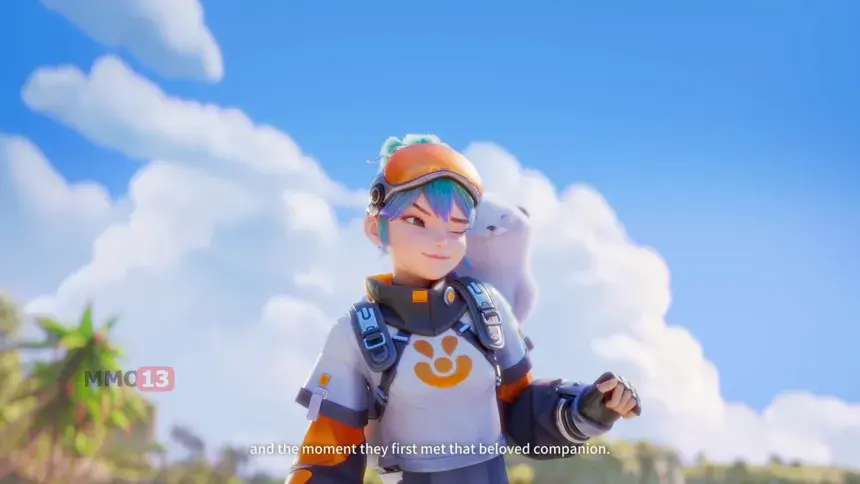
The developers also discussed the catching mechanism. In addition to the usual throws, the game will also introduce unusual methods of catching creatures. One of them involves a giant kolobok that can be thrown onto the road, where it will then roll forward and collect some Animo along the way. The creators wanted to keep the feeling of being hit hard, but avoid the feeling of the player hurting the creature, so when captured, the Animo is pulled into the device.
Manual configuration of physical interactions plays an important role in development. For example, the creators simulated the trajectories of full-foot throws separately, adjusting gravity at different stages of flight. They need to retain the natural behavior of the item, but make it easy enough to throw to catch the creature.
The developers tied the entire approach to the desire to create a world that was seen as real. According to their plan, players’ curiosity should be constantly supported by environmental reactions, and Animo should be treated not as a collectible but as a creature with its own habits and personality.
Aniimo will be released on PC (Steam, Epic Games Store, Microsoft Store), PlayStation 5 and Xbox Series X|S on September 16th, and on mobile devices running iOS and Android on September 23rd.
