

The European auto industry has been forced to fend off the intrusion of cheap Chinese electric cars through increased tariffs, but local manufacturers have received concessions that allow them to produce electric vehicles locally at competitive prices. For example, the second-generation Dacia Spring compact hatchback priced at 17,900 euros will be assembled in Slovenia and has a range of 250 kilometers.
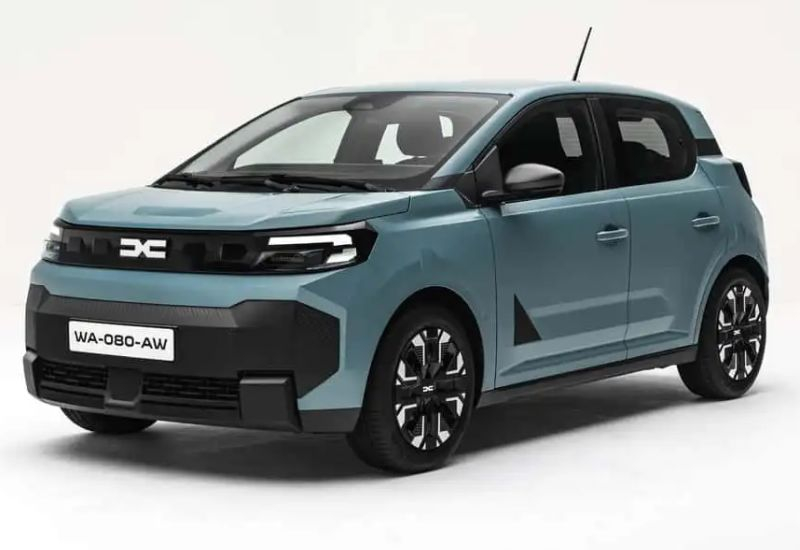
Image source: Dacia, Motor1
The car shares a platform with parent company Renault’s more compact Twingo E-Tech. In keeping with tradition, the dimensions of the second-generation Dacia Spring have increased slightly compared to its predecessor: 18 centimeters more in width and 15 centimeters in length. The total body length reaches 3.85 m and the width does not exceed 1.74 m. The feature is that the first-generation Dacia Spring was assembled in China but will now be produced in Slovenia, strengthening the boycott of other brands of electric cars supplied from China. Renault will launch three more Dacia electric cars by the end of the decade.
Rising fuel prices in Europe have fueled the growing popularity of electric vehicles in the local market; sales have grown by more than a third in the past six months, accounting for more than 16% of the primary car market. Development of the new Dacia Spring took 16 months and is also the result of increased competition from Chinese carmakers.
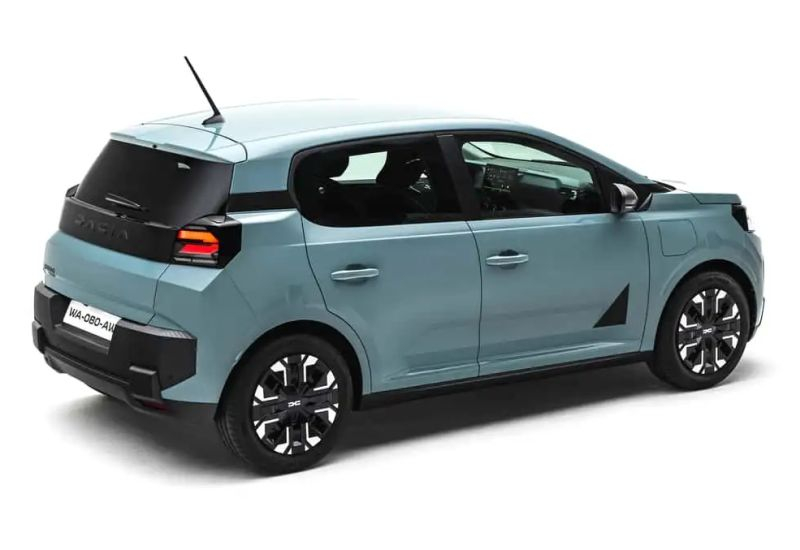
Single traction motor, 80 hp. The torque is 175 Newton meters, and it is equipped with a lithium iron phosphate battery with a capacity of 27.5 kWh. It can travel 250 kilometers on a WLTP cycle after being fully charged. By connecting the car to a 50 kW charging station, the remaining battery capacity can be increased from 15% to 80% in 28 minutes. For a 6.8 kW home charger, a similar charge recovery would take 9 hours. After spending a lot of money on a more powerful AC unit (11 kW) you can get similar results in 1 hour and 55 minutes. Dacia’s rather modest range figures suggest that most owners of the first-generation car averaged no more than 34km per day, with charging at home 75% of the time. In addition, while retaining the most expensive component of an electric vehicle, a traction battery with a smaller capacity is designed to reduce the cost of the entire vehicle.

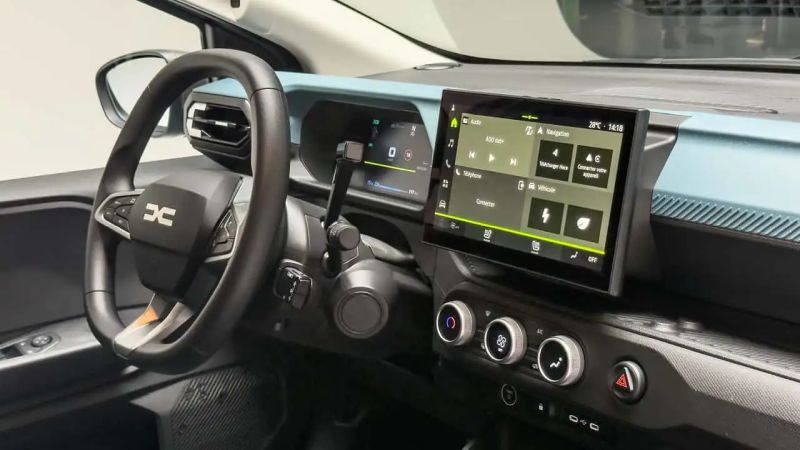
The interior of the second-generation Dacia Spring retains many physical buttons and knobs, which is sure to appeal to the conservative public. A 7-inch dashboard display is combined with a 10.1-inch central infotainment system with a touchscreen interface. The gearbox control lever has been moved below the steering wheel, and there’s also a joystick for controlling the audio system, similar to other models in the French focus. But the central tunnel was effectively abolished because it was not necessary. A multi-level organizer for storage is located between the driver and front passenger seats. They can also be located under the bonnet, where an 18-litre box is available for an extra cost, but most commonly charging accessories will be stored there. It is recommended that the rear sofa can fold the backrest in a 50:50 ratio and obtain 1283 liters of luggage space, but in the case of “full seats”, only 337 liters of volume are provided in the rear luggage compartment to meet these needs.
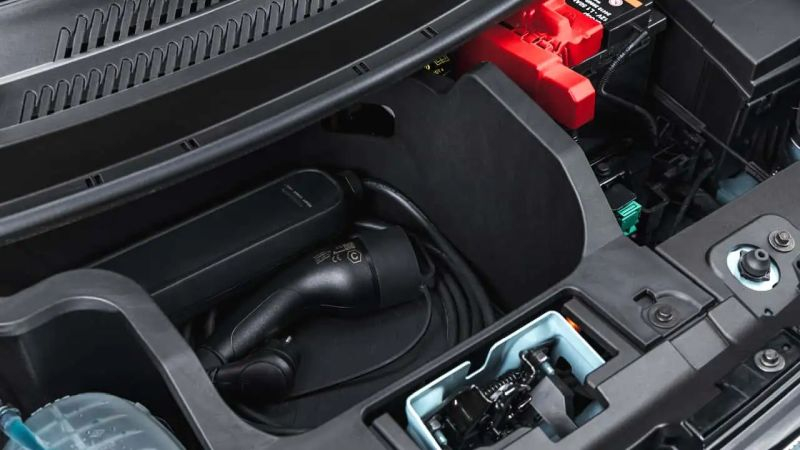
In addition to the rearview camera, the Dacia Spring is also equipped with an in-car camera, which is mandatory in Europe, to monitor the driver’s condition. It can also power less powerful external consumers via its onboard network, but you’ll need to buy the appropriate adapter for this. The base version of the car in Italy is estimated at 17,900 euros, with more expensive versions starting at EUR19,500. Prices can be further reduced given the various local subsidies offered by EU countries.
If you find an error, select it with your mouse and press CTRL+ENTER.