
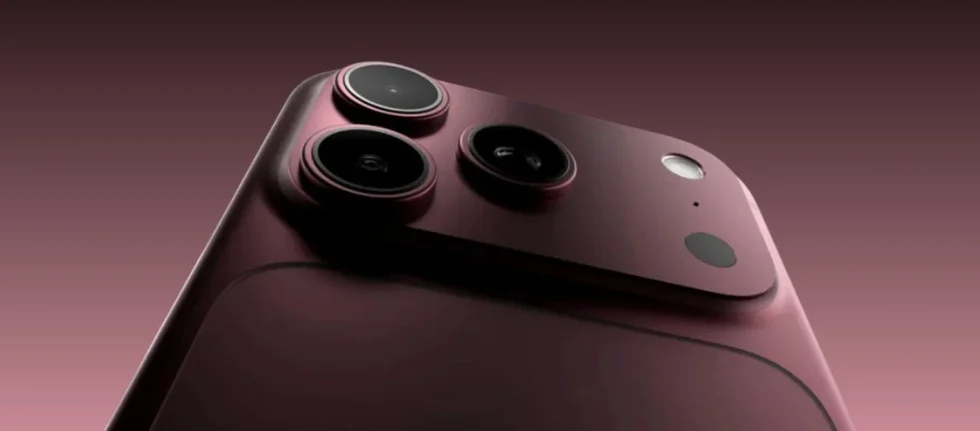
With the arrival of the iPhone 18 Pro, one question will inevitably arise for those who bought last year’s model: Best to switch from iPhone 17 Pro to the new model? Looking at the official specs side by side, the generational leap appears to be quite selective. Apple made specific changes to the main camera, chip, battery life and charging speed, while many other features remain largely unchanged. The display, size, update rate, and a good portion of the photography department are actually very close to the iPhone 17 Pro, as is still supporting the Apple Intelligence feature.
Apple launches iPhone 18 Pro and Pro Max: News, technical features and prices


The main camera is the most obvious change
The most interesting difference is undoubtedly the main camera. The iPhone 17 Pro uses a 48 MP sensor with a fixed f/1.78 aperture, while the iPhone 18 Pro uses variable opening system There are four available values: f/1.48, f/1.8, f/2.8 and f/4.0. This allows you to physically intervene in the amount of light reaching the sensor and the depth of field, which is an important feature, especially for those using smartphones for more advanced photography or content production.
The rest of the photography world has changed much less. The ultra-wide-angle is still 13mm 48MP with an aperture of f/2.2, while the telephoto lens maintains a 48MP sensor, with an equivalent focal length of 100mm for 4x zoom and 200mm for 8x zoom. In fact, those coming up from the iPhone 17 Pro didn’t find the new telephoto lens, and there wasn’t a huge leap in zoom capabilities, which greatly reduces the overall impact of the update on people who mainly use the secondary focal length.

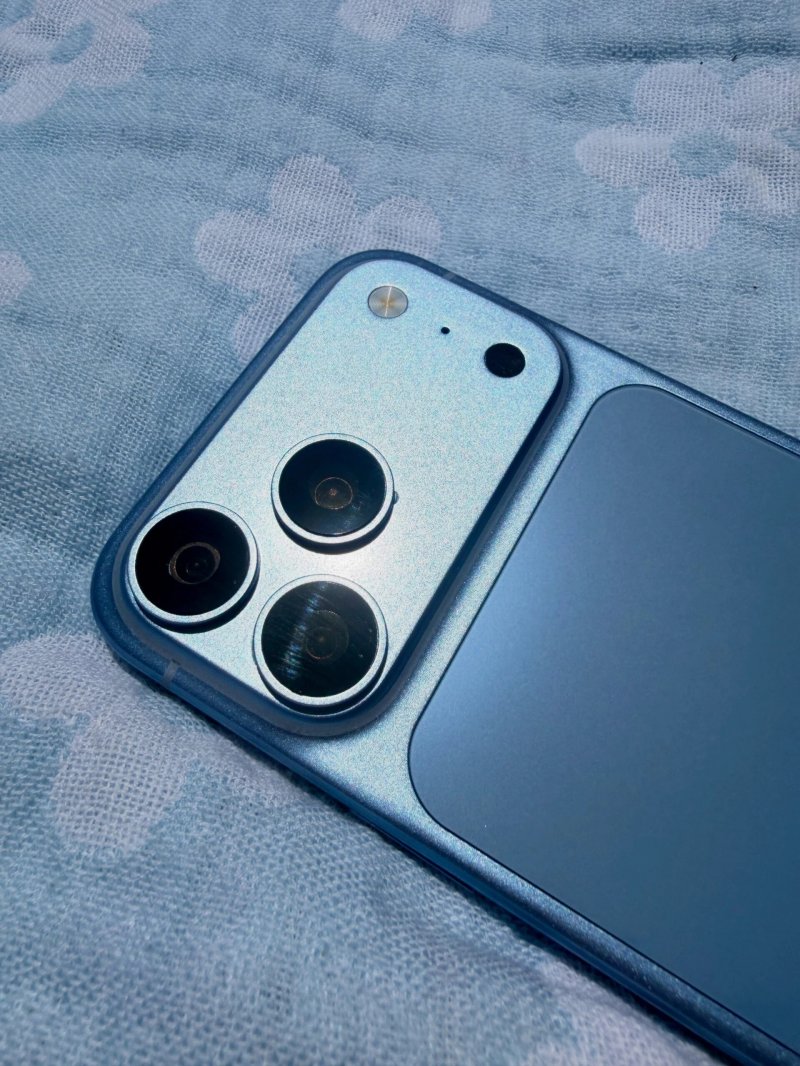
iPhone 18 Pro also brings some new features in terms of video, but the starting point is already very advanced. iPhone 17 Pro supports 4K Dolby Vision recording up to 120 fps, external ProRes RAW 4K120, Apple Log 2 and Genlock. The new model adds theater mode up to 4K60, more manual controls, improvements to focus management, and several features designed for creators and professionals. However, for the average user, this improvement won’t be as noticeable as with the main camera.
Another concrete leap forward comes from the A20 Pro chip. Apple upgraded from the A19 Pro with a 6-core GPU to a new 2nm processor with a 6-core CPU, 7-core GPU, and two 16-core neural engines. The company talks about Graphics performance improved by up to 40%larger memory bandwidth and significantly higher AI processing power. These advantages may appear in games, video editing, rendering, photography processing and locally running artificial intelligence models, but it is difficult to expect the same significant difference in daily use of social media, browsers, messaging and streaming media.
Better battery life, but little change in display and design
The battery is probably the second element that makes upgrading interesting. Apple claims iPhone 17 Pro has up to 31 hours of video playback time Up to 34 hours on iPhone 18 Proan increase of about 10%. The gap is even wider on the Max models, from the iPhone 17 Pro Max’s claimed 37 hours to the new 18 Pro Max’s 43 hours. Wired charging has also improved: the 17 Pro hit 50 percent in about 20 minutes with at least 40 W of power, while the 18 Pro dropped to about 15 minutes with 60 W or more.
There are far fewer changes on the display. Both iPhone 17 Pro and 18 Pro use 6.3-inch Super Retina screens. The width, height and thickness remain the same, while the dynamic island has been redesigned to take up less space and can watch up to three live events at the same time.


However, there is one thing that is just the opposite: weight. The iPhone 17 Pro weighs 204 grams and the iPhone 18 Pro weighs 211 grams. The differences become even more pronounced on the Max models, iPhone 18 Pro Max weighs 249 grams Compared to its predecessor’s 231 grams. For those who prefer the relative convenience of a smartphone, especially a larger one, this is a trade-off to consider.


However, Apple Intelligence cannot be considered a sufficient reason to replace your phone. iPhone 17 Pro continues to support iOS 27 and is compatible with AI functions. Therefore, the advantage of iPhone 18 Pro lies first in the stronger local processing capabilities guaranteed by A20 Pro. In other words, this isn’t a case of the new model getting a completely proprietary software platform compared to the previous generation.
Putting all these elements together, The transition from iPhone 17 Pro to 18 Pro makes sense, especially under certain circumstances. Those more focused on shooting or recording video may find the variable aperture and new controls to be really useful updates, while gaming, heavy editing, and battery life are other areas where the new hardware can make a difference. For more traditional use, however, the iPhone 17 Pro retains an almost identical display, a very similar ultrawide screen, and telecom equipment that is still highly performant and fully supports new software features. The 18 Pro is undoubtedly better, but for those who already own the previous generation model, the yearly leap still can hardly be considered necessary.
Then there is another unknown in the Italian market: in addition to the Apple Intelligence functionality already available, Siri AI is not yet planned to be launched in my country. At least in the short term, this reduces the specific weight of the most powerful SoC in the field of artificial intelligence; it cannot be ruled out that when all functions are finally available in Italy as well, the comparison has been transferred to the next iPhone.