
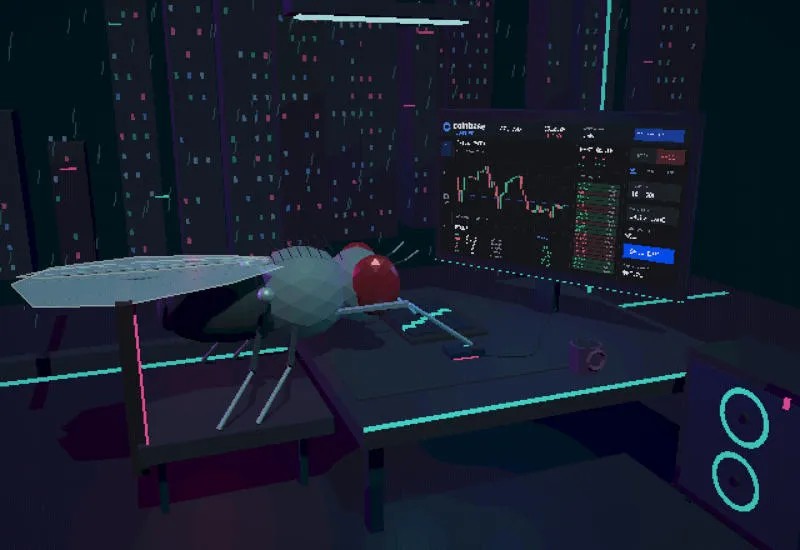
Animal brain modeling experiments have suddenly become a current technology trend. An engineer at cryptocurrency platform Coinbase turned a fruit fly brain simulation into a day trader, a trader who opens and closes positions within a single trading day. The project is named stinkflyexperience pod delivery live.
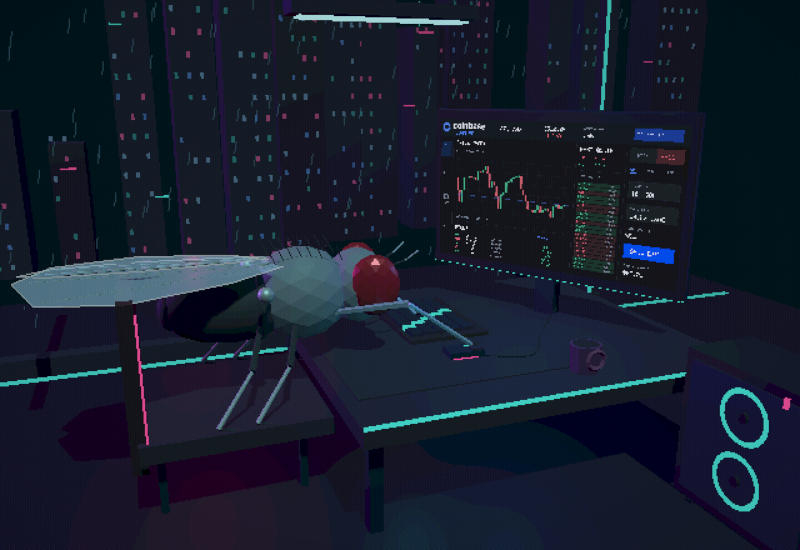
Image source: stonkfly-Three.vercel.app
This open source project includes models of a male fruit fly’s brain and eyes and displays price history charts. Virtual Flies buy, sell or hold assets and receive rewards for profitable transactions. An increase in the value of the portfolio results in the release of dopamine, a strengthening signal in 15 neurons; a loss activates two neurons related to the avoidance response, and trading commissions are counted as losses. The authors stress that no pain or emotion mechanisms are involved. The virtual fly demonstrates a smarter approach than human traders: it does not use leverage and short positions, that is, it does not go short.
The brain model includes 166,700 neurons and 25.6 million synaptic connections. The virtual fly sees the graphics as 320 × 180 pixel images projected onto the left and right eyes, with overlapping center areas. The sensor simulation input is the RGB pixel value, not the price data itself. By default, the fly “thinks” and performs an action every 500 milliseconds, market data is updated every 60 seconds, the bet amount is limited to $10, and the daily transaction limit is set to no more than 24 transactions.
The authors emphasize that the project does not prove anything other than a connection between input signals, visual stimulation and synaptic changes. He warned against jumping to the conclusion that a fly can become a trader: Now that cryptocurrencies have started to grow, even beginners can be successful. The emulator runs under Apple macOS or Linux, and system requirements include 16 GB RAM, Python 3.11, and a C++ 17 compiler. By default, transactions are conducted on a virtual platform with an initial balance of $100, but based on real market data for the BTC/USDC currency pair. There are also instructions for setting up a live trading account.
If you find an error, select it with your mouse and press CTRL+ENTER.