
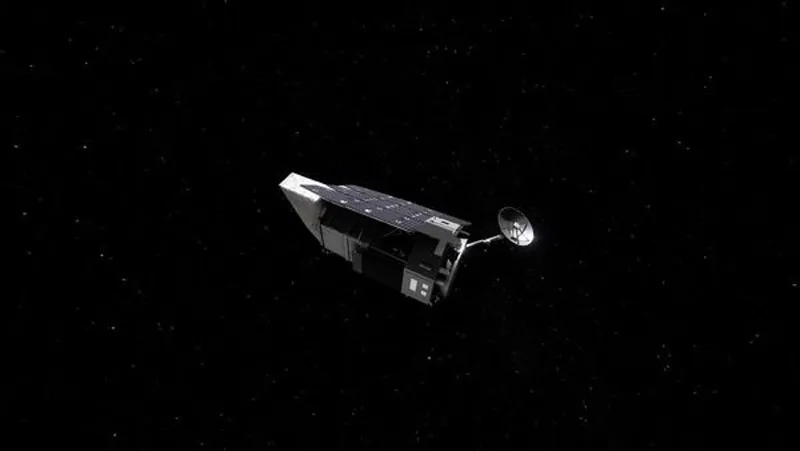
NASA reportThe latest Nancy Grace Roman Space Telescope gained a lot of extra operating time thanks to fuel savings during its flight to the L2 Lagrange point. Well-coordinated flight control, high-precision launch of the SpaceX Falcon Heavy rocket and successful first orbit correction more than doubled the potential duration of the observatory’s scientific operations – up to 22 years or more.
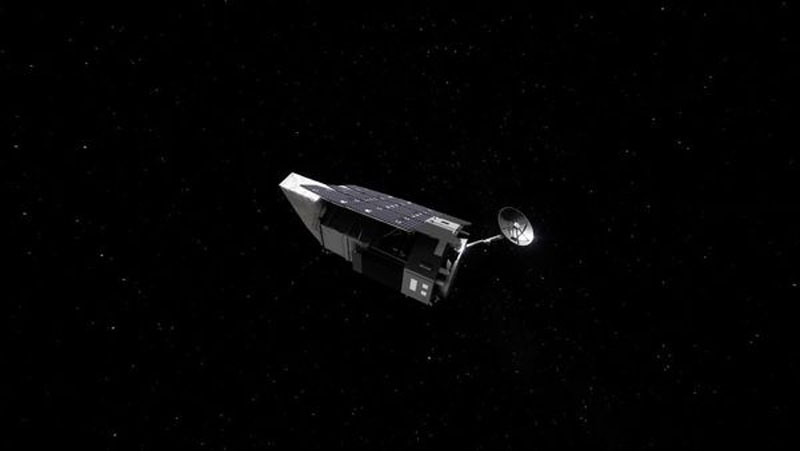
Image source: NASA
Based on the mission and preliminary design, the Roman Telescope was allocated five years for the main science program and five years for the expansion program, providing a total of ten years of active observation. The complex of flight activities during the first phase of the flight has guaranteed a fuel supply for at least 22 years of observations, which cannot be overestimated.
The main source of savings is the first course correction after the telescope is launched. “Roma” was executed with such precision that the engine required much less fuel than expected – 18 kilograms instead of the planned 200 kilograms. The maneuver was achieved with an astonishing 99% accuracy, and for that we have to thank the team who performed the calculations.
The device uses a hydrazine chemical engine to adjust its orbit, enter a working orbit around the L2 point about 1.5 million kilometers from the earth, and then maintain its position. Once in orbit, the telescope will make small corrections approximately every 28 days to compensate for disturbances from gravity and solar radiation pressure.
Additional fuel supply also emerged due to optimization of equipment design and pre-flight preparation. Initially, calculations provided for greater mass reserves and increased fuel consumption, but ultimately the actual mass of the completed observatory was lower than the design quality. So instead of saving the mass of “iron”, more fuel is poured into the tanks and, as they say, fills them up.
The precise first course correction made it possible to postpone the second and final correction until the end of September, and was also expected to shorten correction time and save fuel consumption. Approximately one hundred days later – in early December – the observatory will arrive at its home point (L2) and make final major maneuvers to consolidate its area. Thereafter, corrections are performed approximately once a month.
Extending the life of Rome has important scientific implications. The telescope is equipped with a 2.4-meter mirror and a wide-angle infrared wide-field instrument. Its field of view is approximately 100 times larger than that of the Hubble Telescope. Over the years, he will explore dark energy and dark matter, create large-scale maps of galaxies, use gravitational microlensing to find exoplanets, and study planetary systems around other stars. Another decade of observations will significantly expand the data volume and improve the accuracy of cosmological measurements.
If you find an error, select it with your mouse and press CTRL+ENTER.