
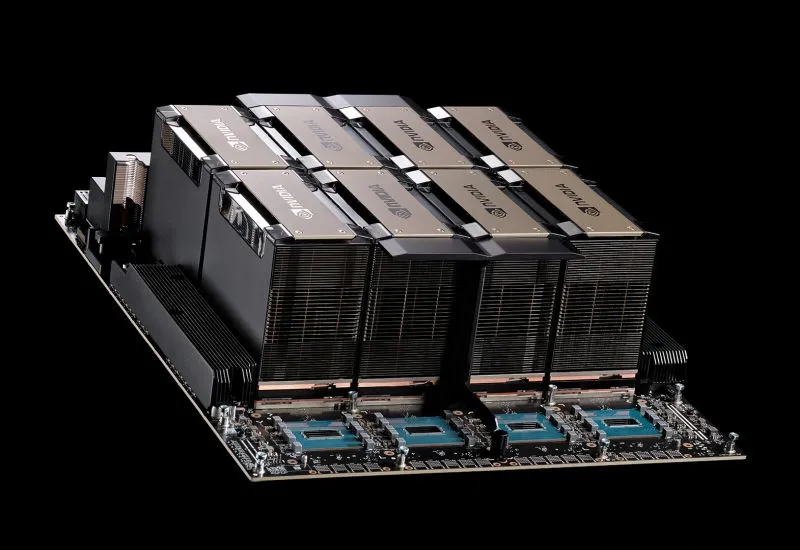
Over the past few years, the U.S. authorities have severely restricted the supply of advanced accelerators produced in the United States to China, allowing only the obviously backward Nvidia H20 to be shipped to China through legal channels. However, China’s computing industry has been developing by leaps and bounds. The authors of the new report believe that as much as a third of China’s capacity is built on smuggling accelerators, and their colleagues describe three main supply models.
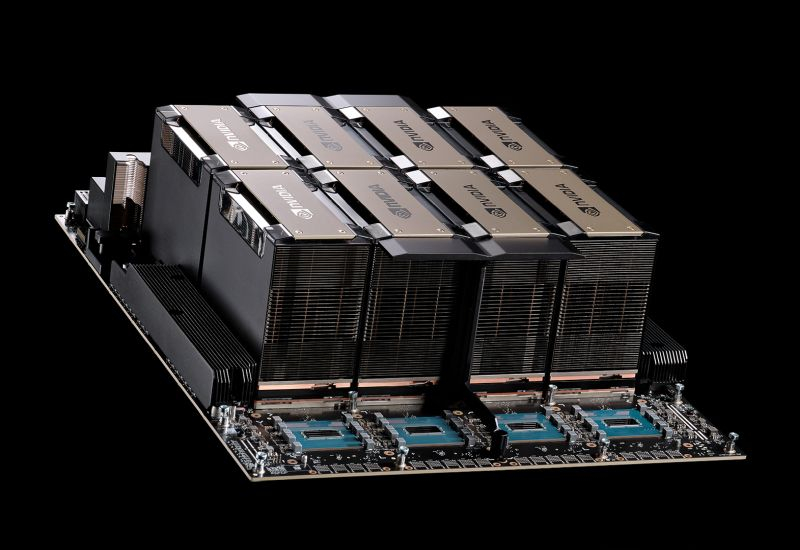
Image source: NVIDIA
Non-profit organization C4ADS, mainly funded by US authorities, e.g. notes Tom’s Hardware recently released the results of its investigation into its methods of supplying banned U.S.-made artificial intelligence accelerators to China. The author of the report stated that there are three main ways for U.S. accelerators to be “smuggled” into China. First, they are purchased directly by individual research institutions on an as-needed basis. Secondly, they enter China through neighboring countries in Southeast Asia. Third, they were purchased through numerous shell companies.
The Epoch AI report even suggests that as much as a third of China’s computing power may be based on smuggled accelerators. The supply of Nvidia A100 and H100 accelerators to China was banned several years ago, and even the less powerful H20 and more modern H200, as well as the AMD Instinct MI325X, were only allowed after the applicant obtained an export license, which was issued after each application was considered individually. It’s worth adding that Chinese authorities don’t really welcome local developers buying foreign-made accelerators, and it’s clear that all of these factors contribute to the development of a gray market supplying related products to China. Large Chinese companies are regularly allowed to purchase accelerators in bulk abroad if they can prove the feasibility of the purchase. It is believed that at least ByteDance, Alibaba and Tencent will take advantage of such exceptions in 2026.
Using Chinese academic institutions to purchase accelerators in the United States implies their “disguise” in the complex structure of the products they purchase, and this scheme does not allow us to talk about large quantities. The C4ADS report stated that from July last year to January this year, the organization successfully tracked 56 chips worth US$1.7 million, which eventually flowed into China under the program. The 2024 report already contains an amount of approximately $6.48 million, but also covers sanctions from previous years. The authors believe some of the academic institutions mentioned in the report have ties to the Chinese Communist Party.
The second way to purchase sanctioned accelerators for China is to take advantage of logistics routes through neighboring countries such as Vietnam, India and Malaysia. According to C4ADS statistics, between 2022 and 2025, A100, H100/GH100 and A102 accelerators were delivered to China through this method, with a total amount of at least US$13.4 million. Because researchers were unable to identify all delivery cases, the actual number is likely much higher. The wafers arrive in Vietnam from Taiwan, as the first country has the facilities to test and package these wafers, using this as an excuse to make it easier to organize transfers to China.
An important transportation hub in this conspiracy turned out to be Hong Kong, where one import company declared the import of accelerators worth US$8.7 million in one day in March 2025. From the perspective of U.S. regulators, there were significant errors in the customs documentation in this case, but the Chinese authorities had no complaints.
However, the largest entity covered in the C4ADS report is Megaspeed International, which imported accelerators originating in the United States to China between 2023 and 2025, worth a total of $4.6 billion. Its actual ownership has not yet been determined. It has representative offices in Singapore, Indonesia and Malaysia and will be officially owned by Swiftdata Singapore from 2023. Previously, it was owned by China 7th Avenue Holdings and was officially associated with the gaming business. Transactions in 2023 show that Megaspeed’s main shareholder is Chinese entrepreneur Huang Le. It’s not yet possible to find out who owns parent company Swiftdata. Presumably, Megaspeed managed to arrange the purchase of Nvidia Blackwell generation accelerators based on Chinese customer demand and strictly prohibited their official delivery to China.
The study’s authors suggest that U.S. authorities should establish a system of local audits of supply chains, which would mean the presence of inspectors from other countries along the entire accelerator route and a regular exchange of information through international channels. Researchers say private companies may simply not have the resources to tightly control chip supplies to China, given changing laws and regulations. Nonetheless, supply chain participants should still review their counterparties’ compliance with U.S. export controls on a regular basis and not be limited to one-off inspections, as C4ADS believes.
If you find an error, select it with your mouse and press CTRL+ENTER.