
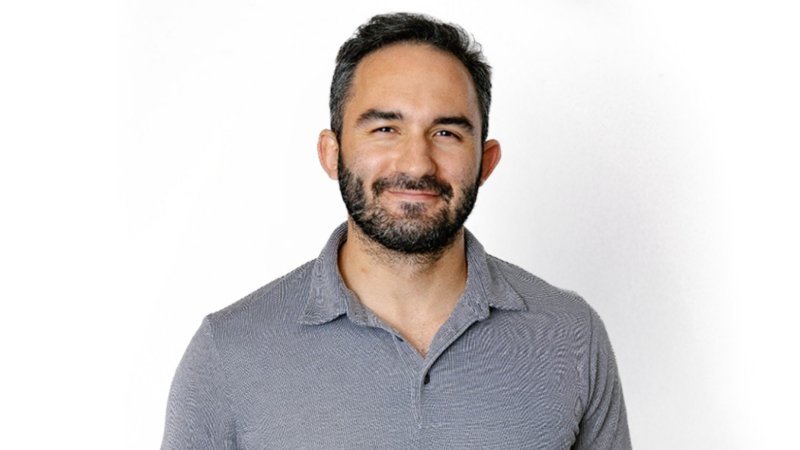
Anthropic is taking its artificial intelligence ambitions directly into the lab. The company established a biological laboratory in the San Francisco Bay Area where it conducts physical experiments while using Crowder models for computational work. The structure was confirmed by Eric Kauderer-Abrams, the company’s head of life sciences.
The stated goal is Accelerate biological research and solve rare diseases or a condition considered difficult to treat. However, Anthropic noted that the lab is not dedicated exclusively to drug discovery and that some activities are still delegated to external partners.
Anthropic focuses on laboratory automation
The transition from virtual to physical experiments should allow Anthropic to directly verify the functionality of its model. The company is also committed to equipment automation and its philosophy is Use Claude to coordinate robotic systems and scientific instruments Limited human intervention while maintaining researcher oversight.

Strategy Also includes Claude Science and model hardware standardsa specification that allows artificial intelligence agents to interact with tools such as microscopes, liquid handling systems, and robotic arms. Anthropic also acquired Coefficient Bio and is hiring employees specializing in protein characterization, nucleic acids and laboratory activities.
‘Artificial intelligence could kill us all’: Amodei asks to slow down, Trump says no


Another area of interest involves so-called “undruggable” diseases, that is, diseases for which developing treatments is particularly complex. Among possible applications, Anthropic cited the design of bispecific and trispecific antibodies capable of acting on multiple biological targets. company However, the specific plan has not been made public Developed in-house. Additionally, no clinical trials have been conducted yet. Even in the pharmaceutical industry, the path between molecular identification and approved treatment can take years, and many drug candidates do not make it past the safety and efficacy stages.
The lab expansion comes as Anthropic becomes increasingly wary of using artificial intelligence in biology. In a report released in September, the company described instances in which Claude was used in biological research activities with potential dual-use applications, namely Can be used for both beneficial and harmful purposes. As a result, Anthropic has increased control over its models and launched a validation program for life sciences professionals.
The challenge is how to leverage artificial intelligence Speed up research without promoting dangerous activities. Anthropic said it wants to distinguish between apps used for scientific research and those that may increase biological risks.
The lab therefore represents a step forward in models where artificial intelligence no longer simply analyzes data, but is directly involved in the execution of experiments. For Anthropic, it is now necessary to demonstrate that this integration can produce concrete results in research while controlling the risks associated with automation and access to increasingly advanced biological capabilities.