
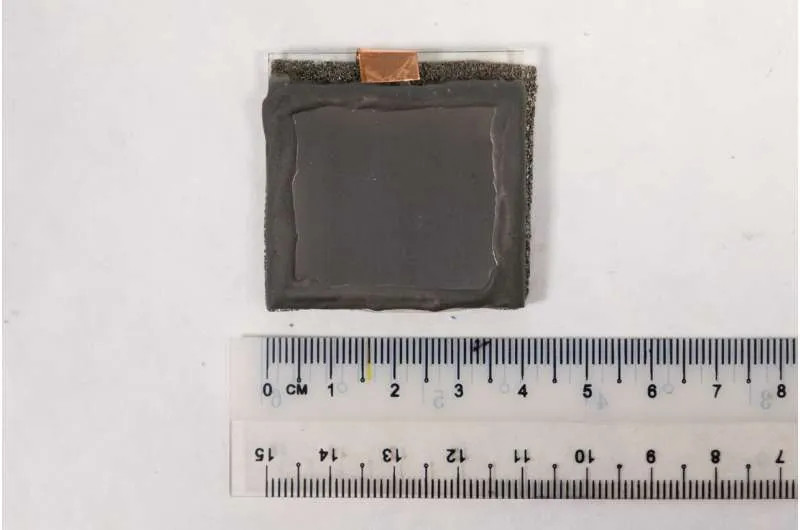
Scientist at Nanyang Technological University, Singapore developed The “artificial leaf” is a photoelectrochemical device that can simultaneously generate hydrogen from seawater and remove the toxic industrial pollutant hydrazine. The system runs directly on sunlight and requires no external power supply.
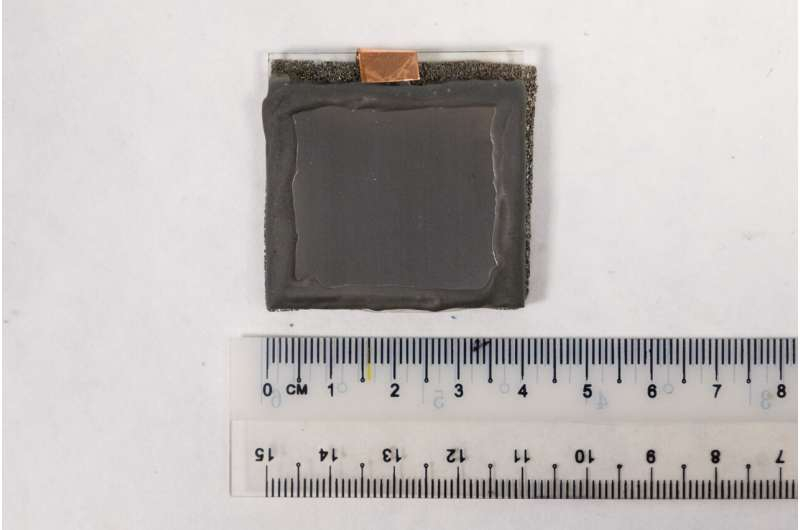
Image source: Nanyang Technological University
Unlike conventional electrolysis, in which oxygen is formed at the anode, in the device proposed by the scientists, the anode reaction involves the decomposition of hydrazine into hydrogen and nitrogen. This requires less energy while producing additional hydrogen.
The key component of the device is a lead halide perovskite-based photocathode that converts sunlight into electrical current. To protect it from seawater damage, it is covered with titanium foil and a conductive epoxy resin composite containing silver and copper particles. The anode contains a catalyst based on iron, cobalt and chromium, which provides corrosion resistance. This method also inhibits the formation of toxic chlorine compounds, which is one of the main problems with direct electrolysis of seawater.

In experiments with artificial seawater and real seawater, the photocathode exhibited a photocurrent density of 25 mA/cm22. Under illumination equivalent to the intensity of sunlight on the earth’s surface on a clear day, the device operated stably for more than 72 hours, with a hydrogen production rate of 466 µmol/(cm2h). At the same time, the concentration of hydrazine dropped from 0.5 mol (approximately 1.6% by weight) to 0.5 ppb in 30 hours, which is more than 20 times lower than the 10 ppb limit set by the US Environmental Protection Agency.
Scientists believe the concept could be used for more than just purifying hydrazine in water. The next step is to create catalysts that remove other pollutants while converting waste into useful products—fuels and industrial feedstocks.
If you find an error, select it with your mouse and press CTRL+ENTER.