
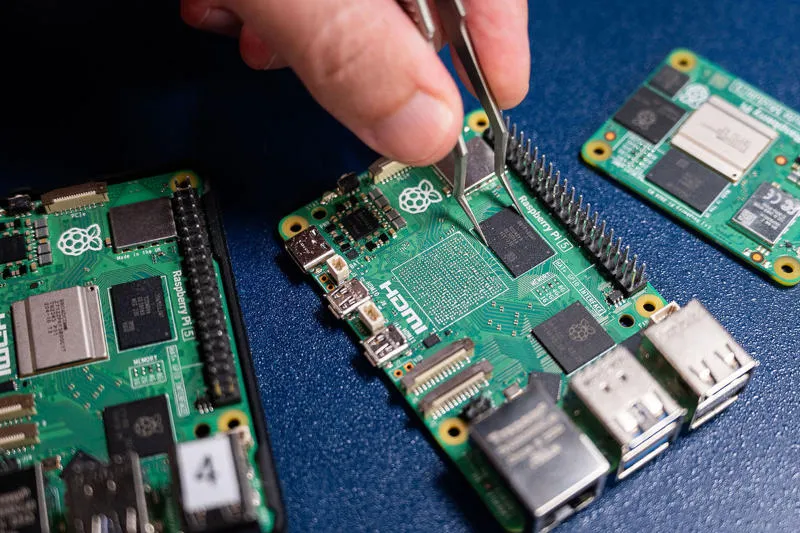
Two years ago, the Raspberry Pi company implemented a feature in the firmware that would not allow owners of single-board computers to independently replace RAM chips, even if similar modules of the same size were removed from other Raspberry Pi boards. In this regard focus on Authoritative blogger Jeff Gearing.
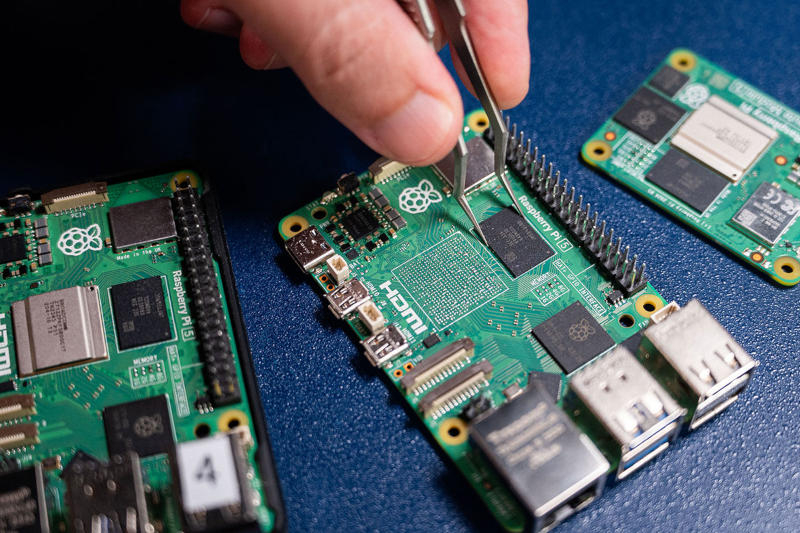
Image source: jeffgeerling.com
Experts believe the manufacturer’s decision was justified: Someone probably bought a Raspberry Pi 5 with 1 or 2 GB of memory, soldered a cheap and sometimes unreliable 8 GB die into it, and then sold it as a new 8 GB model. Of course, the British company doesn’t want to take responsibility for such devices – it has every legal right to limit the ability to modify its devices, but that doesn’t mean the community should welcome this decision.
The firmware update that introduced this limitation was released in late 2024, so it is impossible to attribute the unpopular measure to the difficult situation in the memory market. There is no easy way to bypass this limitation other than using an outdated firmware version dated September 10, 2024 or earlier. Raspberry Pi officials have yet to comment on the issue, with only one post from a company engineer on its forums informationin which he stated that owners of copies modified in this way would contact the company itself, not the place where they purchased the device.

Setting memory timing, especially on modern LPDDR chips, is not an easy task; poor soldering quality or a chip that struggles to pass factory testing can lead to unexpected failures. When heating and overclocking, the situation will only get worse if you don’t use proven configurations and optimal settings. On the other hand, this step seems too radical for a company whose philosophy is based on the ability to experiment with hardware.
As an alternative, experts recommend reviewing the experience of older models before the Raspberry Pi 3 B, which had a “warranty bit”: a value in the firmware that, when the limitations of the “config.txt” file are deliberately bypassed, for example when overclocking exceeds recommended safety limits, changes from “0” to “1”, that is, the user thus waives the warranty. You can protect yourself against schemes that involve selling computers and replacing memory chips: Companies publish model codes, and you can check how much memory should be installed on a specific motherboard. But this requires opening the computer, and there’s no way to determine the amount of memory provided by the manufacturer by its appearance. There is a jumper resistor on the board that corresponds to one of the memory volumes, but of course that will also be re-soldered when the die is replaced. One hobbyist suggested drilling holes in the circuit board instead of mounting the resistor, but this method requires changing the layout of the track first.
If you find an error, select it with your mouse and press CTRL+ENTER.