

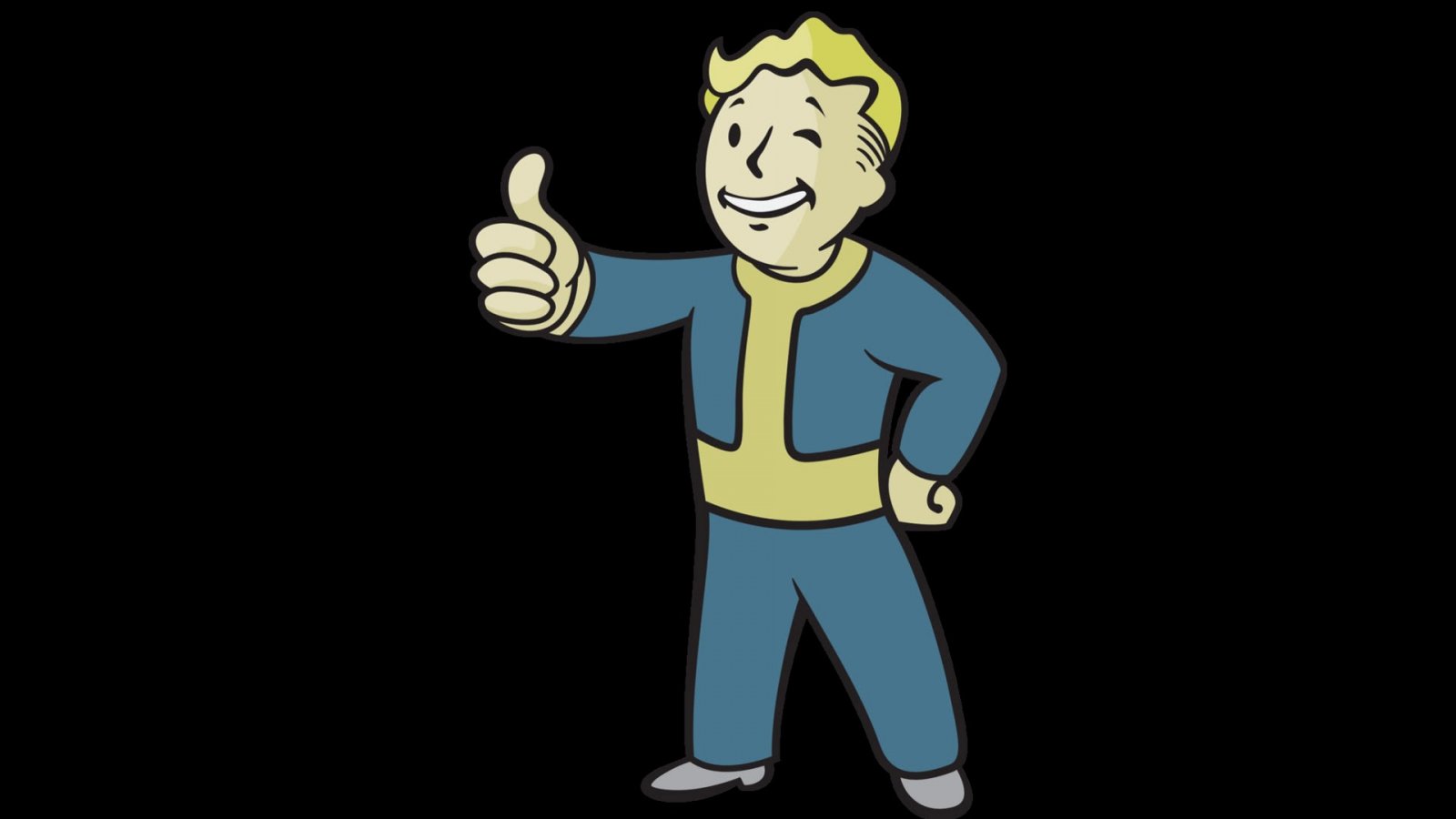
The co-creator of Fallout traces the creation and evolution of Vault Boy, explaining how the character was born out of a need for a clearer interface.



Fallout 4: Anniversary Edition
tim cainthe father of the series fall outposted a new video on his YouTube channel in which he talks about vault boya true icon of the post-apocalyptic gaming world. Kane begins the film by clarifying that Vault Boy has undergone a long evolution, with multiple people involved in its development, before emphasizing how difficult it is to attribute the creation of a single element of such a complex video game to one person. An idea can be conceived by someone, modified by another developer, implemented by a programmer, and then tested by a QA team, which may lead to further changes. Even mistakes can helpin case.
The birth of icons
In the origins of Fallout master plana tabletop role-playing game system developed by Steve Jackson Games. The project was originally envisioned with far more characteristics than it currently has, including capabilities, strengths, weaknesses, and attributes.
For each of these characteristics, it is required Create an iconused for interfaces and certain situations where there is not enough space for text description. 2D artist Arlene Summers created over a hundred, while Chris Taylor designed the character’s interface, called the “skill deck,” a filing cabinet containing skills, attributes, and other characteristics.
Will Obsidian become a support team under Bethesda? President responded, referring to radiation


The number of icons grows to almost to 200. Kane also stated that due to his color perception issues, he requested that color not be used as the only unique element. Therefore, each symbol must be recognized by its shape.
However, the problem remains: small illustrations are not always immediately relevant to the functionality they represent.
Leonard’s solution
At that time Leonard BoyarskyThe person who co-created the series with Kane had the idea of replacing icons with small drawings depicting people performing actions or representing related characteristics. Caine said he was inspired by the character Monopoly Pennybags del Monopoly.
The concept received a positive response from the team. George Almond made some variations on the characters created by Boyarski and intervened in the proportions and overall appearance. Later it was Illustrations by Trey Isaac Required for skills, attributes, strengths, weaknesses, and characteristics.
Vault Boy’s story is intertwined with Fallout’s transition from the GURPS to the SPECIAL system. Kane recalled that Steve Jackson Games had some criticism of the project, and Vault Boy was explicitly listed as one of the items to be removedas it was deemed inappropriate for the tone of the game.
Cain also clarified that Vault Boy existed before it lost its GURPS license, contrary to what some members of the team later recalled. In support of his reconstruction, he also cited Production meeting minutes at that time.
new special system The whole process was quick, completed in about two weeks. Perks were also introduced when Interplay’s then-head Brian Fargo asked for something other than skills to be added. Therefore, the team tried to reuse illustrations that Trey Isaac had already created as much as possible, adding new ones when necessary.
team effort
Kane later explained that Vault Boy was born as an answer to an interface problem: previous icons failed to create a A direct connection in the player’s mind between symbols and features.
Over many iterations, Trey Isaac created hundreds of illustrations that eventually appeared in Fallout’s skill screens, manuals, and introductory sequences. over time, These images become part of the series’ imagealso appears on merchandise and collectibles. For Fallout 2, the work was turned over to another artist, Brian Menze, who was the author of the Vault Boy version of the game and, according to Kane, may have been the author of the version later used in Fallout: New Vegas.
Kane concluded that different interpretations of the Vault Boys can be found depending on which Fallout chapter is referenced. The most well-known iconic figures in the series today are It is the result of the joint efforts of countless peoplestarting from the idea of Leonard Boyarsky, through the work of George Almond, Trey Isaac, Brian Menze and other development team members.