
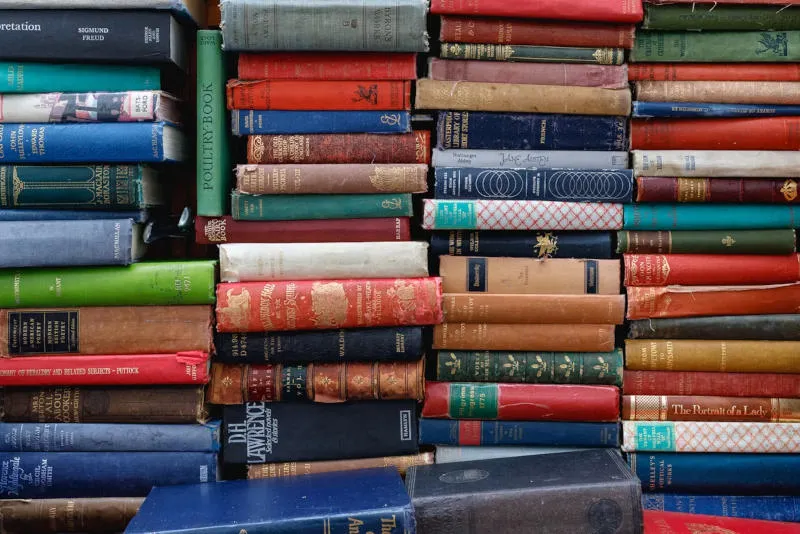
Sales at second-hand bookstores in Japan have increased fivefold. Books were purchased in tons: one batch of 50 tons was sent to the United States, presumably for scanning and subsequent destruction. Some suspect that many of these purchases are aimed at centers abroad where books are scanned to train artificial intelligence.

Photo credit: Ed Robertson / unsplash.com
The surge in buying activity has caused conflicting feelings among business owners: According to one version, many old publications were sent to a logistics center in Okayama Prefecture, where they were scanned and destroyed – processed into pulp by one of the tech giants developing artificial intelligence. It was previously reported that companies in the artificial intelligence industry are buying up paper books in large quantities in the United States and Europe – and now it has become knownJapan is implementing a similar program.
The number of orders sold by Japanese bookstores through online platforms has increased significantly. Hundreds of books are sold through these channels every day; sometimes sales surge fivefold. There is one documented case of a 50-ton shipment of Japanese books being sent to the United States to be scanned and subsequently destroyed – the order was allegedly from Anthropic. A second-hand bookstore in western Japan received an email from an overseas company requesting the purchase of tens of thousands of books. Wholesale orders come from a number of different accounts but all involve shipping to the same logistics center in Okayama Prefecture – they have not commented on what happened and declined to answer questions.
The fact that books are purchased for scanning with the purpose of training artificial intelligence and subsequent destruction is also reflected in the choice of genre: a bookstore in Tokyo said that previously, novels and comics sold best, but now there is an increased demand for books on philosophy, history (including political history, medicine, and law), as well as publications dedicated to the life and culture of the Edo period. Second-hand bookstore owners have mixed opinions. On the one hand, there is now a real boom, with sales increasing dramatically. On the other hand, the complete withdrawal of old books from circulation will inevitably affect business prospects, scope and pricing. If this trend continues, there will be a problem of important cultural works disappearing from circulation. Another ethical consideration involves the use of copyrighted material for artificial intelligence training: In Japan, scanning is legal as long as it is not proven to infringe on the interests of the copyright owner. But with such a large-scale and secretive operation, it is unlikely that the scanned books will be cleared.
If you find an error, select it with your mouse and press CTRL+ENTER.