
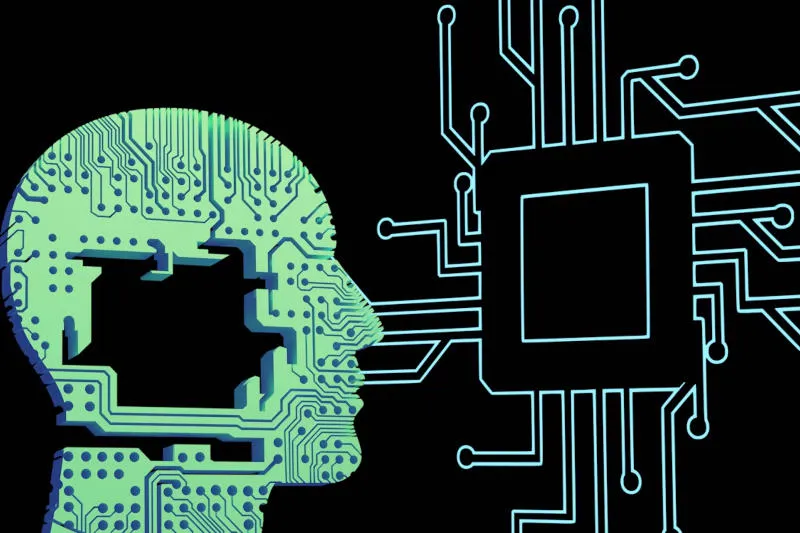
Scientists at China’s Tsinghua University have proposed a method that allows different artificial intelligence models to communicate directly with each other without generating text. The approach is called cache-to-cache (C2C), and the source code for the solution is already available to developers.
Photo credit: Steve A Johnson / unsplash.com
Now, when multiple language models work together in a single data processing pipeline, the interaction between them does not happen efficiently enough – one person has to convert the results of their “inference” into literal sentences so that another person can read them. Computational resources are consumed when generating text, and some fine details are lost. The AI model stores the data of all previously processed information in RAM (cache). C2C technology eliminates the use of literal language – one model transfers the contents of its RAM to another model’s memory.
The Fuser helper program is responsible for the transfer process – it converts and adjusts the data so that the second program can use it. Different AI models use completely different internal formats, capacities, and structures to store data, so simply transmitting raw information may cause responses to fail or lose consistency. To avoid this, C2C provides a smart filter that determines which incoming material should be accepted and digested immediately. Some internal layers accept new information immediately, while other layers continue to perform calculations autonomously without external intervention. Researchers say this approach can speed up AI models by 100-150% when performing collaborative tasks. The work accuracy is 14.2% higher than that of offline data processing; compared with text format, the accuracy of direct information exchange is improved by 3.1-5.4%.
Currently, this method only works for models with open weights, as it requires direct access to the model’s cache and layer structure. The researchers note that producing text when the two models work together always slows down the machine because it forces the artificial intelligence to “think” like a human.
If you find an error, select it with your mouse and press CTRL+ENTER.