
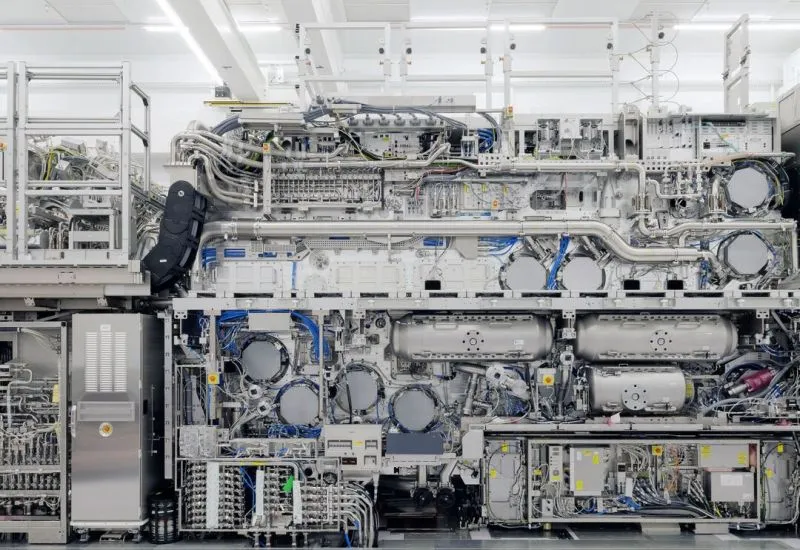
Netherlands-based ASML is the world’s largest supplier of advanced lithography scanners, but the 43-year-old manufacturer has had a long and difficult road to achieving that status. Christophe Fouquet, current head of ASML, explains how the company achieved its current success and why it has been unable to expand production at the pace customers expect.
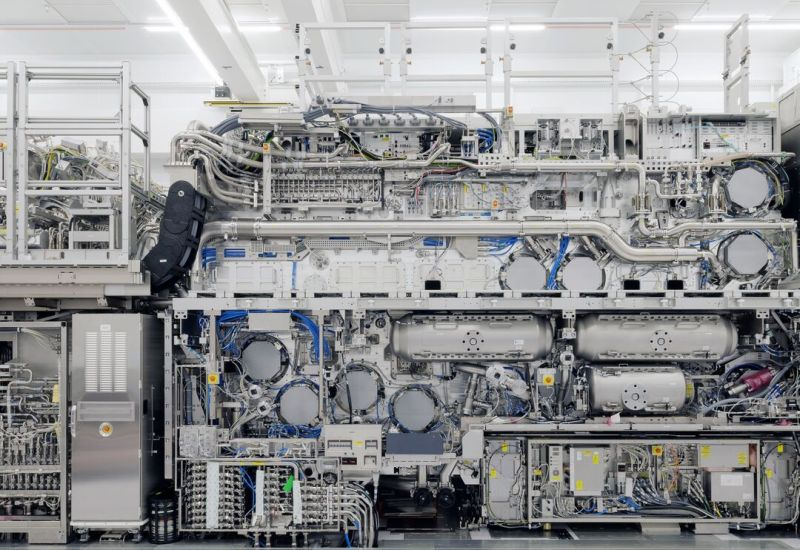
Image source: ASML
ASML CEO made these remarks in an interview with the publication financial timeswhich covers a wide range of issues. First, he explained why the company was unable to increase output of its wafer production equipment in a short period of time to meet the needs of the global semiconductor industry. As Fouquet said, if billions of dollars could be spent to expand production by 20%, he would do so without hesitation. In fact, ASML’s own massive supply chain makes it difficult to implement such changes quickly.
In total, 2,000 different companies are dedicated to producing ASML products, providing them with more than 100,000 parts. On the one hand, this does not allow for a rapid increase in production, since all members of a long supply chain must reach the new level simultaneously. On the other hand, this “knowledge intensity” of ASML products gives it a good competitive position in the market. ASML develops products faster than any other company, according to the company’s CEO. In some cases, as company leaders are convinced, monopolies can be useful for technological breakthroughs.
Delegating capabilities to suppliers allows ASML to leapfrog Japanese rivals such as Nikon and Canon, which still insist on using DUV equipment that is no longer state-of-the-art by ASML’s standards. The Dutch manufacturer relies on its partners in key areas of technology development. Zeiss provides the optical components and Trumpf laser sources, while VDL provides the mechatronics business. “We really need the best brands around the world to do this. I can say that if we did it all ourselves (required for EUV), we would not be able to achieve this under any circumstances.” ——Fouquet admitted.
If contractors encounter financial problems, the company will try to support them. It acquired laser component maker Cymer in 2013, and ASML recently acquired an 11% stake in French artificial intelligence startup Mistral. Artificial intelligence can be applied to a wide range of ASML’s areas of activity, as the company spends a lot of time and energy on research and development.
Fouquet believes that the impact of artificial intelligence on society and industry will be felt in the next ten to fifteen years, and currently we can only see the tip of the iceberg. He firmly believes that EUV lithography technology will develop actively during the same period. The transistor structures will be mounted on top of each other, and the apertures of the mirror elements will be enlarged to focus the laser more accurately.
If you find an error, select it with your mouse and press CTRL+ENTER.