
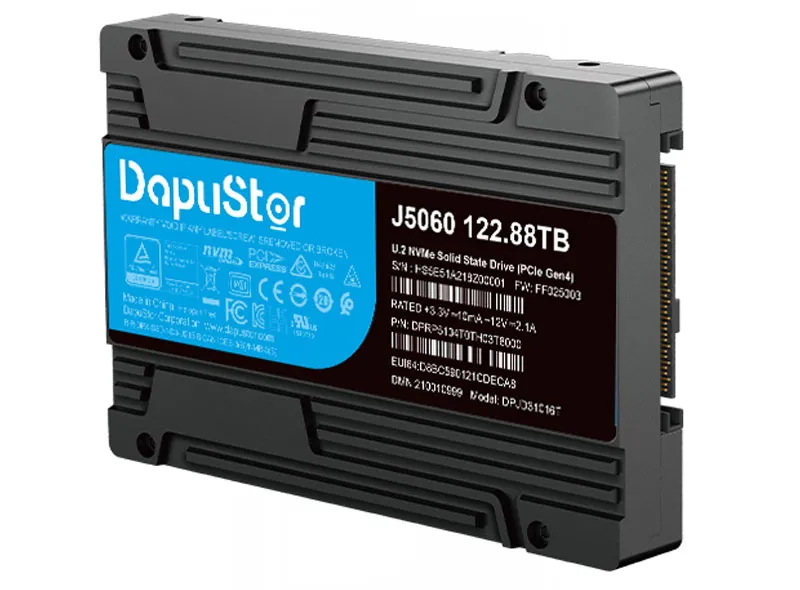
Dapu Storage Company, None information Resource Blocks and Archives introduces new dual-mode configurations to its SSD range J5060For the data center. The proposed architecture allows you to combine the advantages of QLC and SLC products.
Drives based on SLC flash memory chips (one bit of information per cell) offer reliability (a large number of rewrite cycles – from 50,000 to 100,000), high speed and minimal risk of errors. However, such solutions have relatively small capacities and high costs. In turn, QLC devices (four bits of information per cell) offer large capacities and significant read speeds, but require the use of complex error correction algorithms and require smaller resources (can withstand 500 to 1000 rewrite cycles).
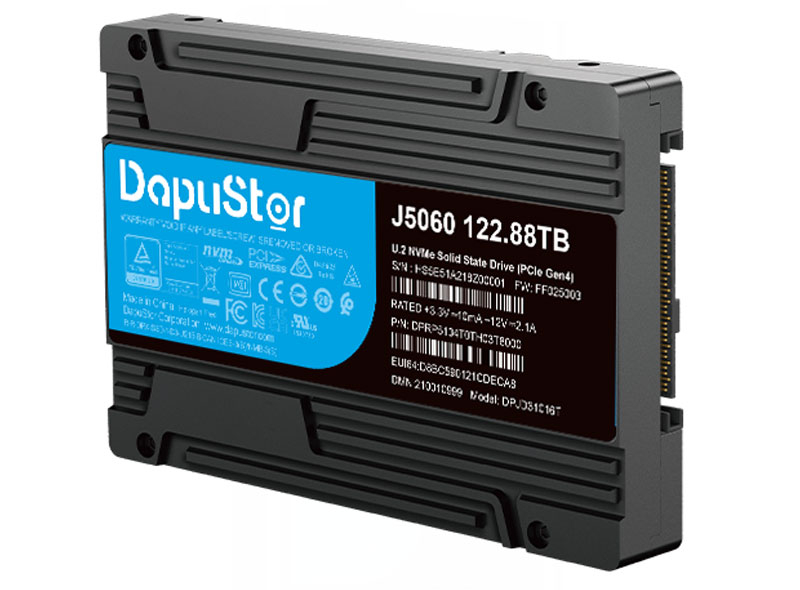
Image source: DapuStor
DapuStor recommends allocating part of the QLC memory in the J5060 drive structure to a pseudo-SLC (pSLC) area. This section shows that the average write latency is less than 8 µs, which is comparable to a full SLC device such as the Kioxia FL6. pSLC segments are ideal for database logs, metadata caching, etc.
Take the 30.72 TB SSD for example: for it, DapuStor technology allows you to allocate 400 GB, 800 GB or 1.2 TB of space to the pSLC area, sacrificing four to five times the QLC capacity. That is, depending on the configuration, 6% to 20% of the QLC capacity is reallocated based on the needs of the pSLC. All settings are performed at the software level.
DapuStor estimates that dual-mode SSDs provide at least a 7x improvement in random write performance (IOPS) compared to drives using pure QLC memory. At the same time, the pSLC region can withstand 25 times more write cycles compared to QLC, which overall extends the life of the storage device. For systems with a large number of SSDs, the presence of pSLC regions allows you to effectively redistribute the load while improving reliability. DapuStor said its solution is ideal for AI tasks that require high throughput, low latency and large amounts of data storage.
source: