
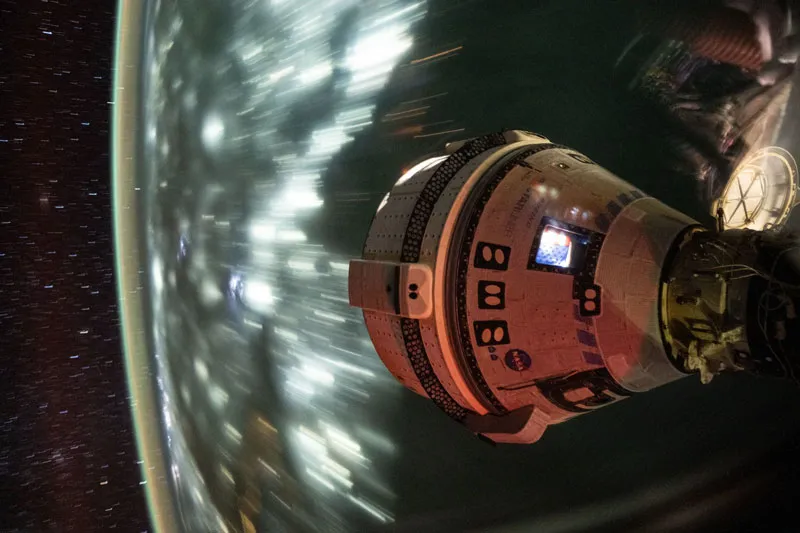
At a joint NASA and Boeing briefing declare Regarding the business plan to continue using the CST-100 Starliner to send astronauts into space. The latter is best remembered for 2024’s astronauts Butch Wilmore and Suni Williams’ Robin Sonnard, who were stranded on the International Space Station for nine months after their spacecraft malfunctioned. Although the ship has problems with its reliability, it will continue to undergo modifications and will even receive certification of new rockets.
Image source: NASA
The first phase of Starliner’s return to service will be the uncrewed Starliner-1 mission, scheduled to launch in December 2026 or January 2027. During this flight, the ship will deliver equipment to the International Space Station and the validity of the changes must be confirmed. The focus will be on upgrading the service module’s propulsion system, testing thermal conditions and collecting data needed for final certification of the astronaut delivery system.
The main changes to the ship were related to attitude control engine problems discovered by Wilmore and Williams during crew flight test missions. A NASA investigation found that the attitude control system’s motors were operating outside of originally specified engineering parameters due to a combination of design features and thermal effects. Boeing engineers have redesigned the faulty parts of the service module and are also creating a new engine valve design to eliminate the risk of seal deformation and powertrain deterioration, particularly leading to helium leaks.
After analyzing the results of the Starliner-1 mission, NASA and Boeing plan to make additional modifications to the spacecraft, updating the batteries and making minor changes to the parachute system. The next manned space shuttle Starliner 2 mission is currently planned for around 2028. NASA is considering returning to the program by keeping two independent U.S. crew vehicles in low-Earth orbit to support the International Space Station and future commercial orbital stations.
This is particularly important despite SpaceX’s reluctance to agree to a new contract with NASA. The new Starship rocket system simply cannot carry the Dragon spacecraft and trucks, so SpaceX can also understand that the era of Falcon 9 rockets and payloads is coming to an end.
NASA will also assist Boeing in certifying ULA’s new Vulcan rocket. Starliner is designed and certified to fly on United Launch Alliance’s Atlas V rocket. There are only six Russian RD-180 engines left for the Atlas V missile, and there will be no more. Although NASA has commissioned Boeing to fly the ship for two more missions – the fifth and sixth, which may require a crew – subsequent operations of Starliner will require other aircraft carriers. Vulcan rockets seem to be a suitable successor to Atlases, although they still suffer from the “childishness” issues inherent in the early stages of every new product.
If you find an error, select it with your mouse and press CTRL+ENTER.