
valve Announcing a major overhaul to one of the key elements of the Steam store. As early as early 2027, the company plans to abandon the current manual and calendar principles of creating partitions “Discounts and Events” And replace it with a dynamic personal recommendation system. According to Valve, this will allow users to showcase more games at discounted prices while increasing the chances of lesser-known projects reaching potential audiences.
The content of this section is now formed based on a precompiled calendar. Certain promotional periods are provided by developers and publishers through steam factory Or appointed directly by the Valve team. Due to the limited number of items available, not all promotions or games included in promotions will receive significant visibility on the store homepage.

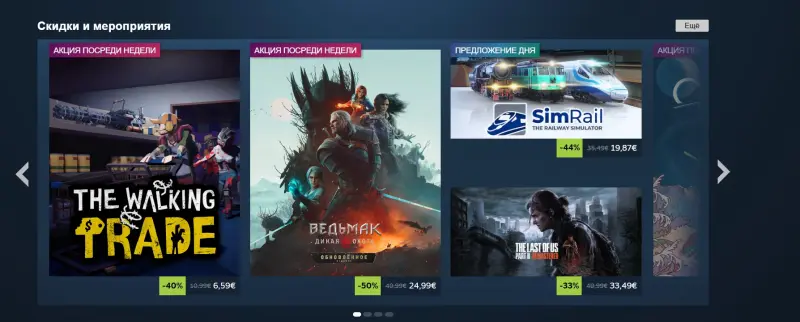
Valve decided to test the effectiveness of a fully dynamic approach. Over the past few months, the company has been running a limited experiment in which some pre-selected placements were replaced with personal recommendations. The system takes into account the interests of a specific user and selects games for him that correspond to his gaming activities and potential preferences.
The experimental results are very significant. According to Valve, with this approach, Steam is able to show users approximately ten times the number of games in the Discounts & Events section in a single day. At the same time, the company has seen an increase in game page traffic, wishlist additions, and purchases. It’s these results that lead Valve to believe that this algorithm option is more suitable for stores that offer a large number of different items and offers at the same time.
However, these changes do not mean steam Major calendar sales will be abandoned. Seasonal events will continue: for example, the 2026 Fall Sale will run from October 1 to 8, and the Winter Sale will run from December 17, 2026 to January 4, 2027. Themed festivals (such as the traditional Steam Festival) will remain unchanged. The innovation mainly involves the mechanism of placing personal discounts and promotions in appropriate areas of the store.

For developers, the new system may be particularly important. Current approaches require accounting for the calendar and competing for a limited number of promotional slots. Valve believes that this format is not well suited to modern Steam, as the number of interesting offers continues to grow and the tastes of the audience vary widely. By switching to personalized recommendations, more games will be able to gain impressions without having to be included in a small, pre-built list.
Small studios are particularly likely to benefit. For indie developers, getting on the Steam homepage remains one of the hardest ways to reach a new audience, as the store is updated with new projects every day. Personalization theoretically solves this problem: users will see games that match their interests more frequently, rather than the most prominent offers from the same set.
There is another drawback. The algorithm proposes a better adaptation to the player’s known preferences, but at the same time can more frequently present him with familiar game types and genres. Therefore, since everyone has a common calendar, some users may be less likely to encounter completely unexpected items that they will focus on. How serious this problem is will only be clear once the system is fully online.


Valve has yet to announce an exact transition date. The company continues to tweak its algorithms, warning that new systems may not necessarily work perfectly from day one. However, developers have been informed of the upcoming changes, and Steam has stopped accepting new applications for some old curated placements – Weekend deals, mid-week deals и daily deals. Planned operations will be carried out in accordance with previous agreements. In the coming weeks, Valve promises to reveal more details and launch new tools for managing discount campaigns.
At the same time, Steam is gradually moving other elements of the store toward a more personal format. For example, in 2026, Valve expanded the functionality of wishlists: they can now be shared via special links, include individual categories and filtered selections, and thanks to visitor purchases, recipients can gift games even if they don’t have their own Steam account. These features are already in play and are not directly related to the upcoming reform of the discount section.