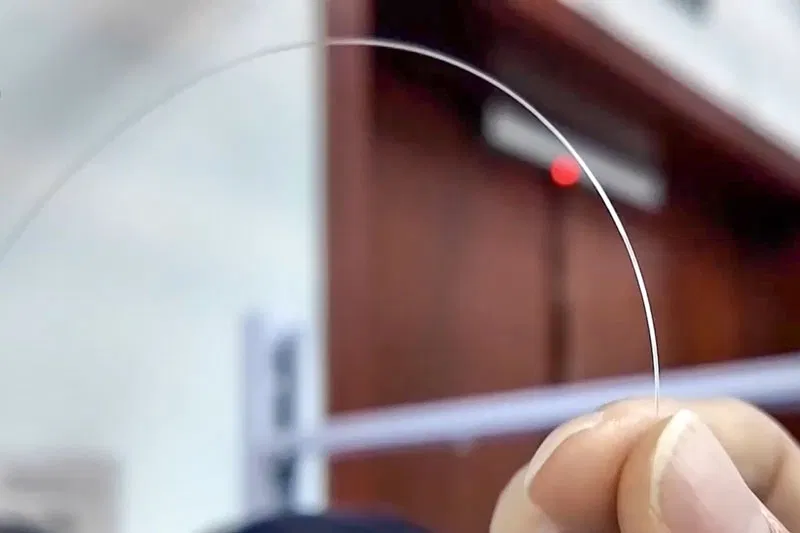
When all hardware capabilities have been exhausted to increase data transfer speeds and reduce delays, hidden reserves are used. Such a reserve has become a hollow optical fiber, in the gas-filled core of which light propagates at a speed close to the speed of light in a vacuum, which is a third faster than in glass.
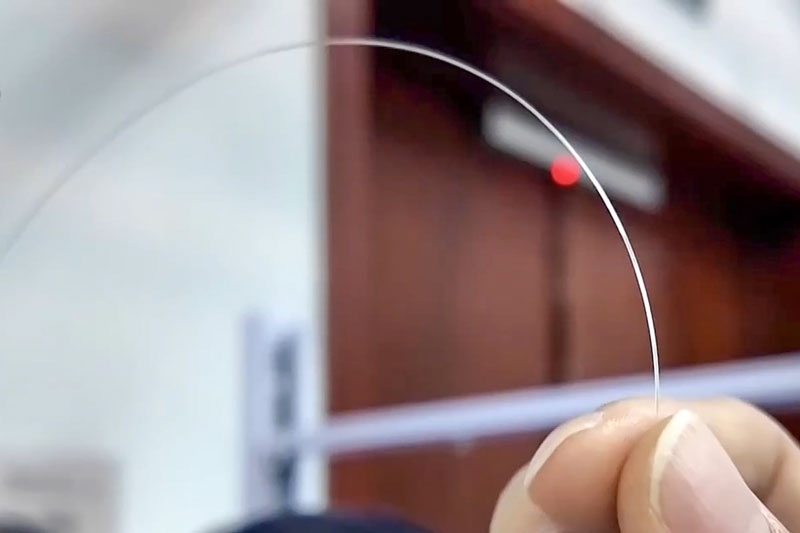
Image source: CCTV
Last year it became knownthat Microsoft has begun using hollow-core HCF (Hollow Core Fiber) optical fiber to connect its data centers within a distance of fifty kilometers. Chinese researchers spent testing a fiber optic communication line on such a fiber with a length of more than 1000 km, which became the first publicly known case of such an experiment. The experiment involved China Telecom Research Institute, optical fiber manufacturer YOFC and telecommunications equipment company ZTE.
The experimental line had a length of 1007.48 km. An important caveat is that the line was a lab-assembled array of more than 300 spools of fiber, each containing 2 to 5 km of fiber, and not an actual backbone. But for its deployment, conventional telecommunications equipment available for sale was used.
Data was transmitted simultaneously in both directions over one fiber at a speed of 64 Tbit/s in each direction, that is, the total throughput reached 128 Tbit/s. One-way transmission latency over 1000 km was 3.43 ms, compared to about 5 ms for conventional solid-core fiber.
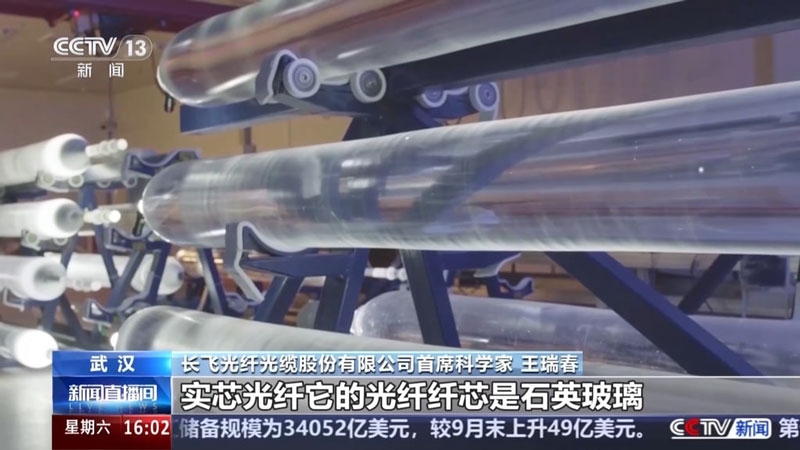
Improved optical fiber production technology helped achieve the goal of transmitting data over a hollow optical fiber over a distance of 1000 km. In particular, it was necessary to suppress the absorption of light in the operating wavelength ranges caused by carbon dioxide and carbon monoxide.
In contrast to Microsoft’s experience with using HCF fiber over relatively short distances, Chinese developers are implementing a project for backbone data transmission lines, where the benefits from this technology will be much greater, including when transmitting data for artificial intelligence systems and working with big data.
Thus, in China the strategy of “data from the West, computing in the East” is being implemented. Powerful computing clusters are being built near power generation sources, many of which are in eastern China, while data is generated primarily in the business and scientific centers of the country’s west. In such conditions, the increase in the capacity of trunk lines literally out of the blue – thanks to optical fiber with a “hole” – is difficult to overestimate.
If you notice an error, select it with the mouse and press CTRL+ENTER.