Google has unveiled a new AI model, Gemini 4 Hydrogen, for day-to-day operations, programming, and task execution using autonomous AI agents. The model performs tasks 2.5 times faster than Gemini 3.8 Flash, hallucinates less and is available to all users.
Image source: Google
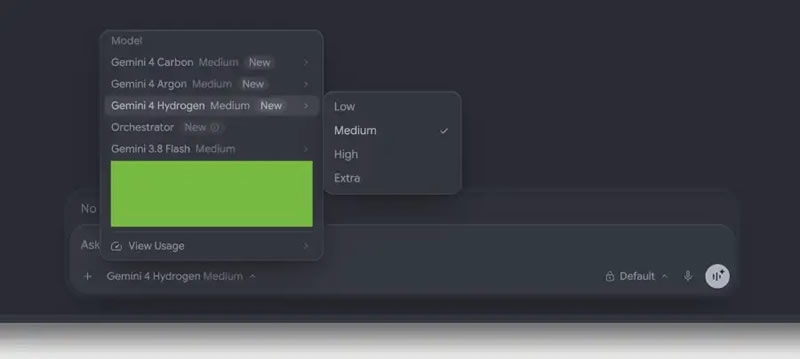
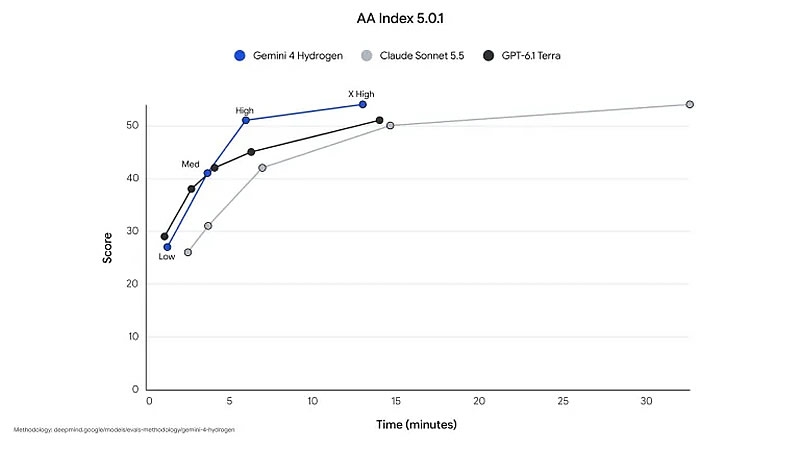
Unlike the Gemini 4 Carbon and Gemini 4 Argon, which are designed for complex tasks, the Hydrogen is designed to quickly complete a wide variety of everyday tasks. It supports a context window for 1 million input tokens and can generate up to 1 million output tokens. Users have access to four levels of reasoning: Low, Medium, High and XHigh, allowing them to choose a balance between speed and depth of analysis.
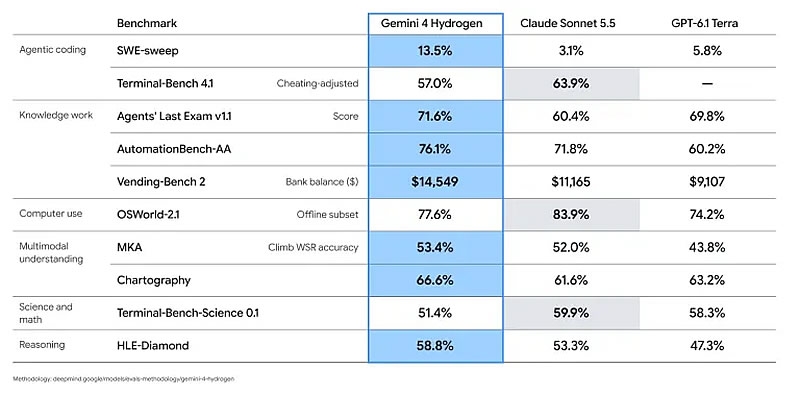
In the Terminal-Bench 4.1 test, the model scored 57% versus 18.2% for Gemini 3.8 Flash. In the Artificial Analysis Intelligence Index’s aggregate benchmark of LLM models, Hydrogen received a score of 51 at its standard high level of reasoning, ahead of Gemini 4 Argon with a score of 50 points. When using the maximum XHigh level, the score reaches 54 points. In separate tests, an increase in operating speed by 2–2.8 times and a reduction in token consumption by 12–23% compared to the previous model were also recorded.
At the same time, Google introduced Orchestrator for the Antigravity agent platform, which automatically switches between different models depending on the nature of the task. For example, Gemini 4 Carbon can act as a coordinator, distribute work among Hydrogen-based agents and check their results. In the Terminal-Bench 4.0 test, Orchestrator performed close to Carbon, but required an average of 24% less computing resources, finishing all jobs 19% faster.
In the Gemini app, the new model better follows instructions, maintains the style and format of responses, and makes better use of connected services and tools.
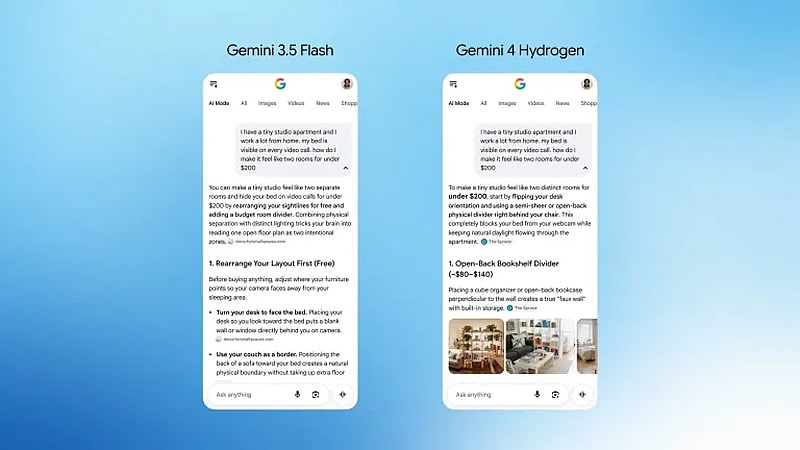
In Google Search, it improves understanding of complex queries, generates more descriptive answers, and offers a richer set of links.
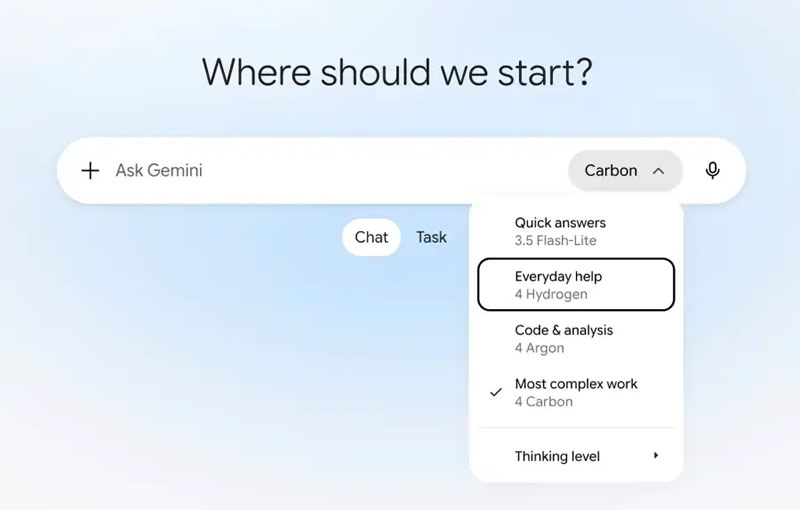
The model has already appeared in the Gemini application and the Google search engine, and is also available to developers and corporate clients. The cost of using the API is $1.50 per million input tokens and $7.50 per million output tokens. The model is spreading all over the world.
If you notice an error, select it with the mouse and press CTRL+ENTER.