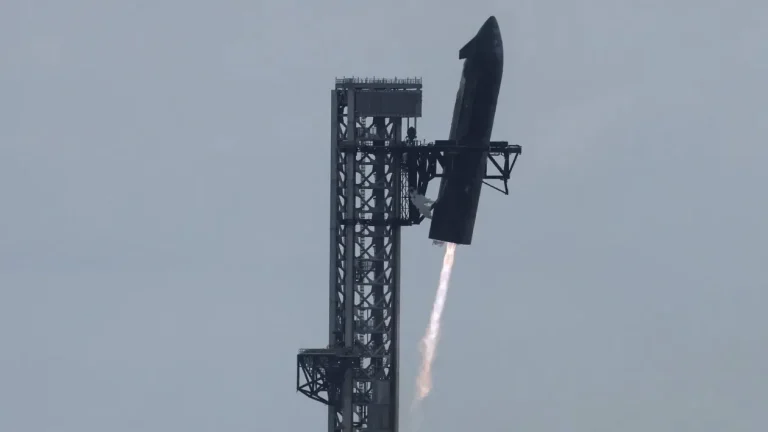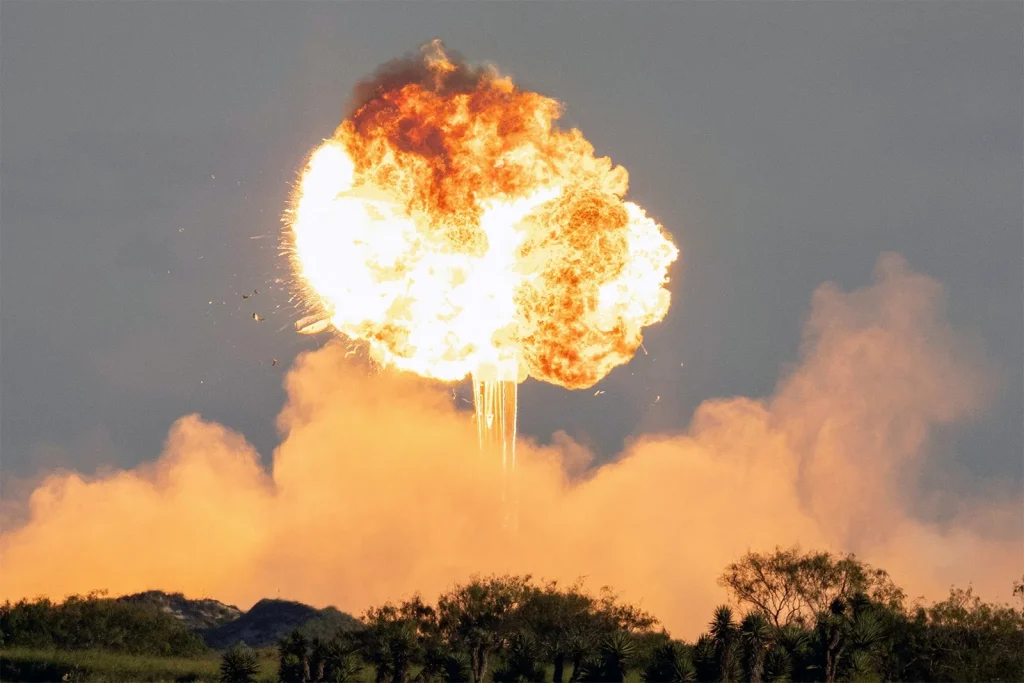
Starship’s 15th test flight, which began on November 13 and is currently ongoing, was the first time SpaceX expected to catch both stages of a single rocket. A few minutes after the launch, the mechanical “arms” of the launch tower were supposed to pick up the Super Heavy accelerator, and after about 22 and a half hours, the Starship itself, returning from orbit. However, the booster canceled its approach to the tower and exploded over the Gulf of Mexico. SpaceX said that the decision to cancel was made by onboard automation.
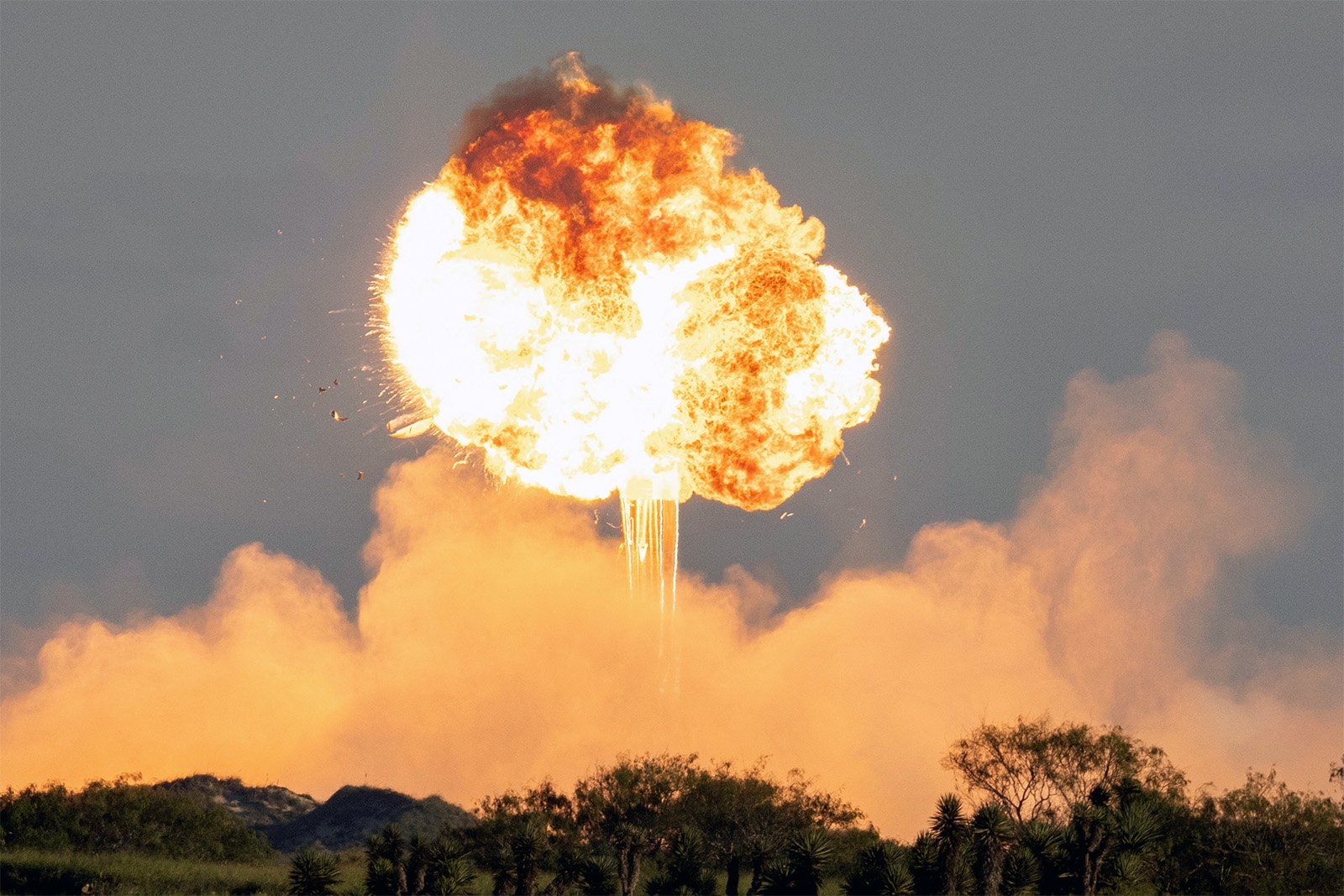
Image source: AFP
According to SpaceX spokesman Dan Huot, the booster initially received permission to be captured. After stage separation, Super Heavy turned around and turned on its engines to fly back. Later, at the end of the flight due to inertia, the automation detected a problem in the guidance, navigation and control system. The accelerator stopped approaching the tower and headed to the area off the coast provided for such a case. Huot did not specify what kind of failure the automation detected.
During the climb, the Super Heavy had all 33 Raptor engines running normally. When turning towards the cosmodrome, 32 engines developed thrust. Whether the loss of one of them is connected with the subsequent cancellation of the capture is still unknown. For landing braking, the booster turned on 13 engines and hovered briefly over the water. Then the thrust was turned off and the flight abort system was activated. The booster exploded just above the surface of the bay about six and a half minutes after launch.
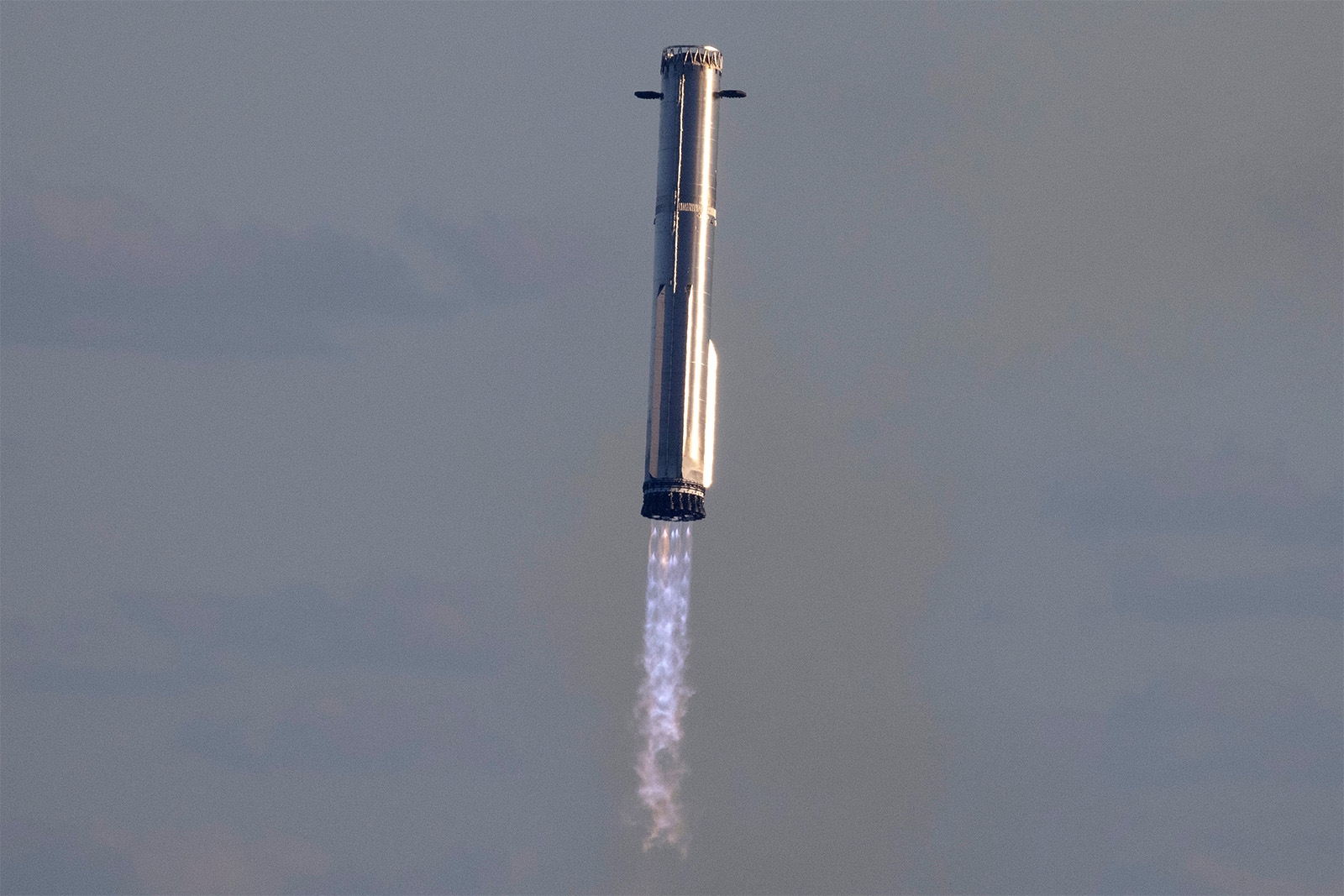
Image source: AFP
The Starship itself, designated Ship 42, entered an orbit at an altitude of about 275 km. About 40 minutes after launch, all 26 Starlink V3 communications satellites separated from it. On three of them cameras were installed to inspect the ship’s thermal protection. SpaceX engineers studied these images along with footage from ground cameras and, according to Huot, assessed the thermal protection condition as suitable for return.
At the time of publication, Ship 42 continues to fly around the Earth. According to the plan, it will make about 14 orbits, after which SpaceX will for the first time try to catch the ship returning from orbit using the launch tower grips. Until now, the company has succeeded in such a maneuver only with Super Heavy boosters – three times during previous test flights.
If you notice an error, select it with the mouse and press CTRL+ENTER.