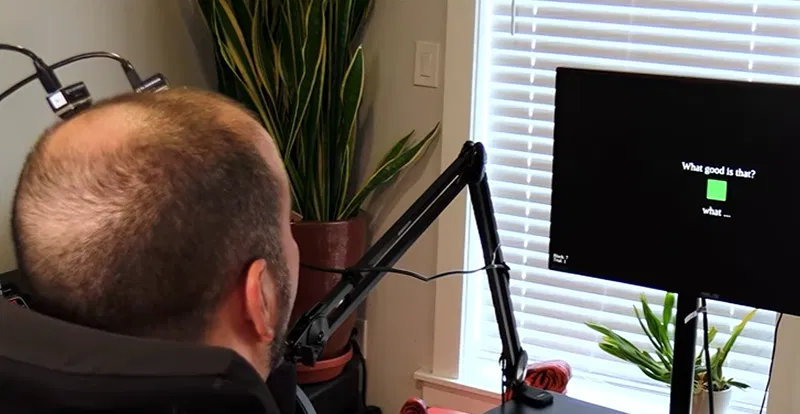
Next week, a team of scientists from the University of California, Davis, will present experimental results demonstrating significant progress in restoring speech in patients with amyotrophic lateral sclerosis (ALS). This marks the transition of technology from the “proof of concept” stage to practical application.
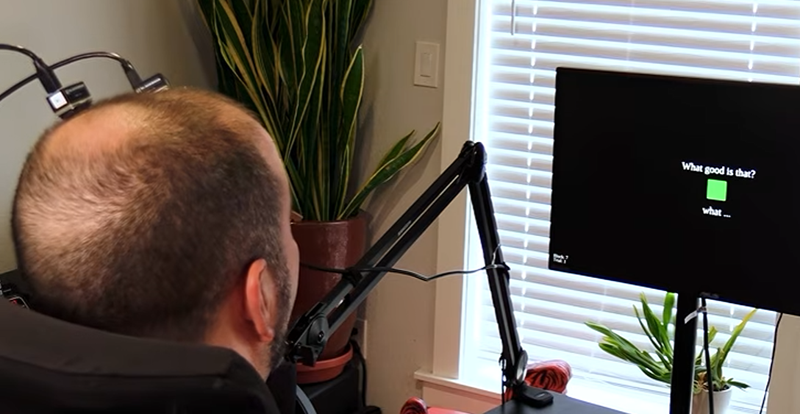
Image source: YouTube
In 2025, the research team reported that they had achieved latency as low as 10 ms when generating expressive speech in real time – directly from the brain to the voice. However, listeners could accurately recognize only slightly more than half of the words spoken by the patient.
By analyzing the same data set and improving the algorithms, the scientists were able to improve speech intelligibility to 94%. According to experts, this is a truly clinically significant improvement, and not just a flashy example of machine learning.
However, Mariska Vansteensel, a researcher in the field of brain-computer interfaces from the Medical Center of Utrecht University (Netherlands), noted that since the technology was tested on already collected data, it is important to check how effectively it works in real time, as well as evaluate its applicability for people with varying degrees of speech loss.
She also added that for practical use such systems must be completely implantable, while existing systems require the user to connect to a computer through special connectors implanted in the head.
Two patients participated in the experiment. Casey Harrell, who has ALS, had 256 electrodes implanted in his brain. Using the system, in two years he “spoke” almost 2 million words: he communicated with his family, wrote letters, and worked on the Internet using a laptop.
The second participant in the experiment, a 58-year-old patient, a former singer who lost the ability to speak due to ALS, was implanted with 384 electrodes. Thanks to the experiment, she was able not only to reproduce the musical nuances of speech by controlling the pitch of the sound, for example, conveying a questioning or joyful intonation, but even to sing a scale. From an excess of emotions and joy, the woman began to cry.
Research continues to test the effectiveness of the algorithms on a wider group of patients, as well as to make the systems completely autonomous. Companies such as Neuralink and Paradromics are currently developing and testing wireless systems, but it is too early to talk about their commercial use.
If you notice an error, select it with the mouse and press CTRL+ENTER.