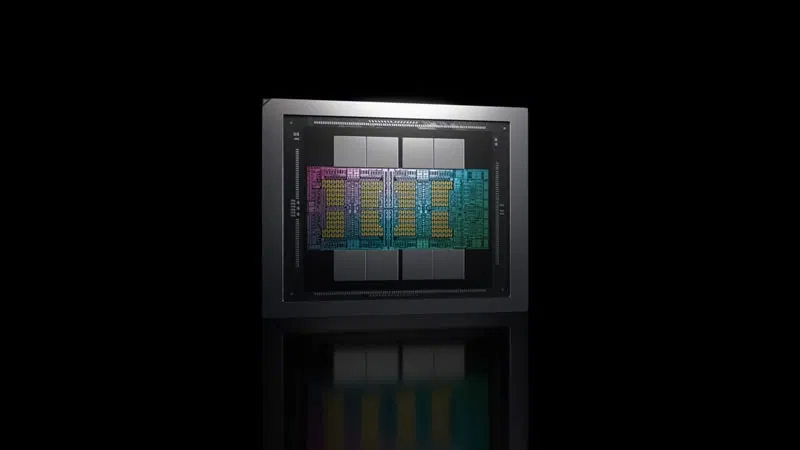
Company Nvidia announced the Rubin HPC graphics processor designed for high-performance scientific and engineering computing, as well as big data analysis. The accelerator will receive over 50,000 CUDA cores, which is almost 2.5 times higher than the GeForce RTX 5090 gaming video card.
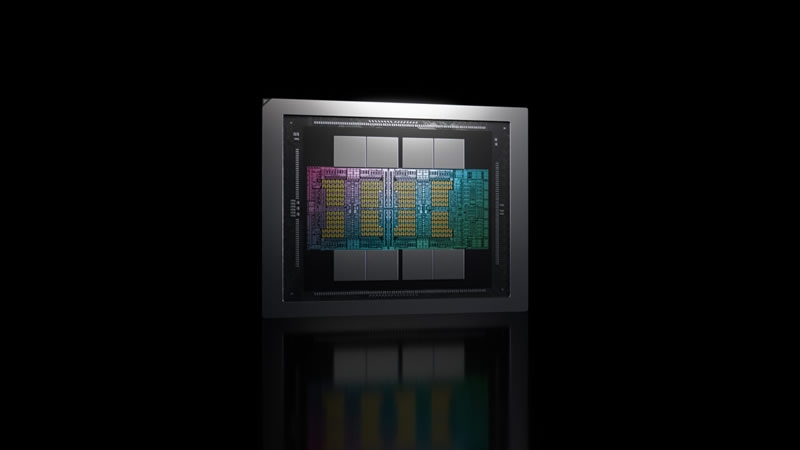
Image source: Nvidia
Rubin HPC will become part of the Vera Rubin platform, but will be focused not so much on training and running AI models, but on complex computing tasks. Among the areas of application, Nvidia names climate and engineering modeling, genomic analysis and financial risk assessment.
One of the key features of the GPU will be the technology for accelerating the processing of sparse data (sparse data acceleration). The technology should provide more efficient data transfer to computing cores so that they spend less time waiting for information. This is especially important for scientific tasks related to processing large amounts of data and repeated execution of the same type of calculations.
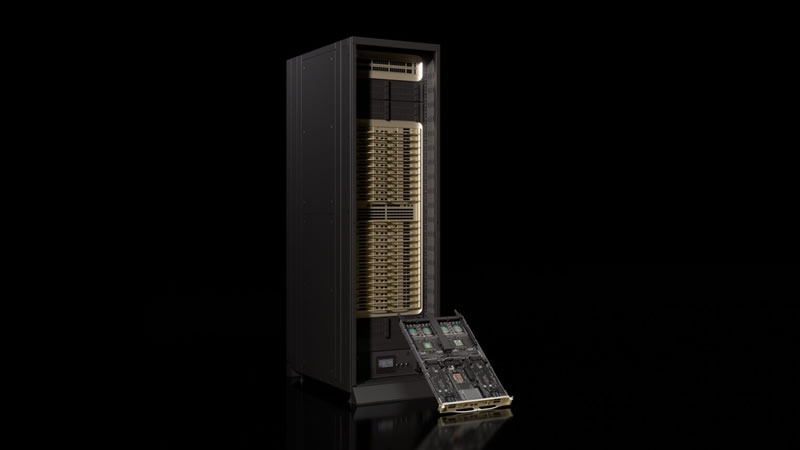
For data exchange between GPUs, support is provided for the seventh generation NVLink, which is a high-speed point-to-point serial communication technology (interconnect). Rubin HPC will also work with Nvidia CUDA-X libraries containing optimized algorithms for scientific computing and analytics. In particular, they will be able to be used by AI agents to conduct simulations and test various hypotheses.
Nvidia has not yet revealed the exact number of CUDA cores, video memory size, its bandwidth, power consumption and performance in FP32 and FP64 computing. The cost of the accelerator and the configuration of systems based on it are also unknown; the names of Rubin HPC production partners have also not yet been disclosed.
The GPU is expected to become available in 2028.
If you notice an error, select it with the mouse and press CTRL+ENTER.