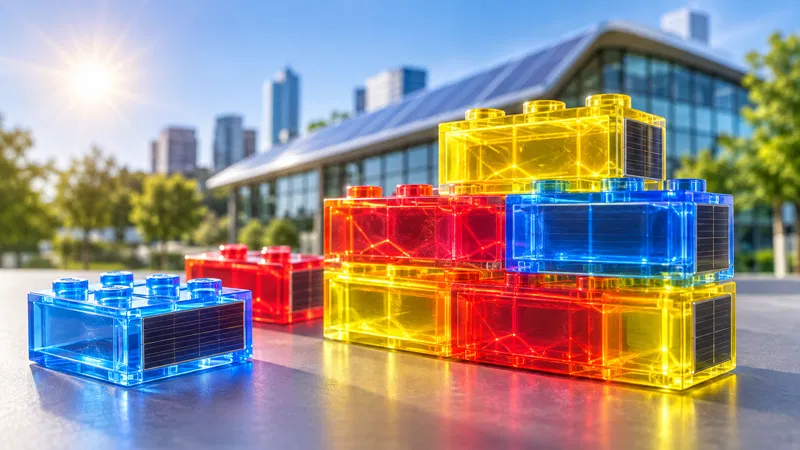
Scientists from the Technical University of Eindhoven (TU/e) have created modular solar blocks that can generate electricity, reminiscent of LEGO bricks. The blocks accumulate light and release it in the form of a luminescent glow, which is absorbed by perovskite cells attached to them. Colored solar blocks can be used to create self-powered architectural forms to decorate the urban environment.
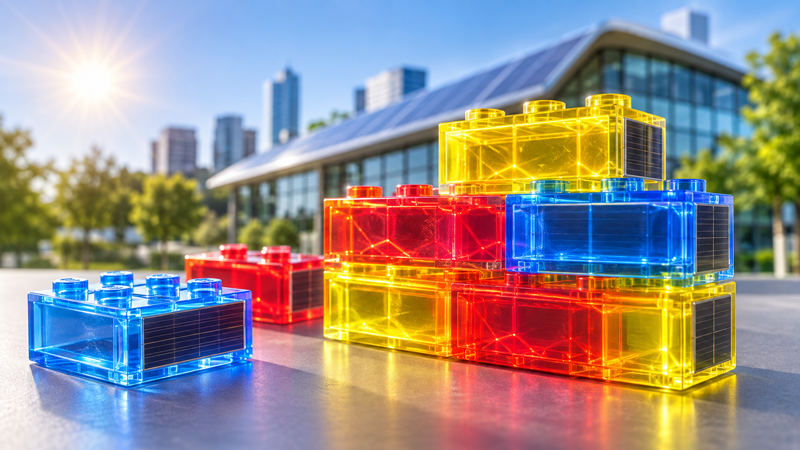
Image source: AI generation ChatGPT/3DNews
Somehow unexpectedly the project was called… LEGO (Luminescent Electricity Generating Objects). Prototypes of red and yellow colors manufactured made of transparent polymer with the addition of fluorescent dyes. Dyes absorb specific wavelengths of incident light and then re-emit it at a longer wavelength. Thanks to the effect of total internal reflection, the re-emitted light spreads inside the material and is directed to its side faces, where photovoltaic cells are installed.
Researchers plan to use perovskite solar cells as the first energy converters. This design allows you to collect light not only from direct solar radiation, but also from diffuse daylight or artificial lighting. At the same time, the color of the dye affects the characteristics of the device: according to the head of the research work, Martijn van Best, red blocks should demonstrate higher efficiency than blue ones.
The expected efficiency of converting light into electricity is less than 10%, which is significantly inferior to conventional silicon solar cells. However, developers do not consider maximum electrical efficiency as the main goal: the technology is designed for objects that simultaneously perform other functions. For example, noise barriers built into bus stops, park benches, or other architectural elements of the urban environment could provide energy for LED lighting, information displays, or anything else appropriate for a particular case.
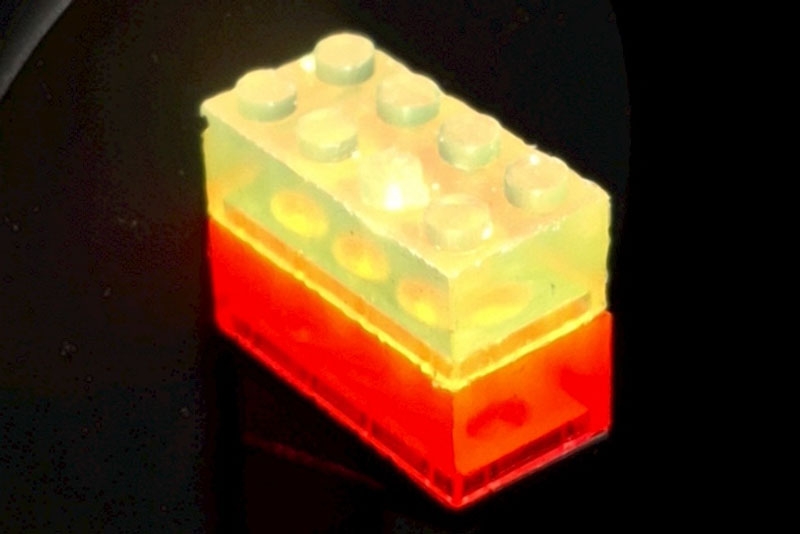
Image source: TU/e
The project is still in its early stages: experimental red and yellow samples have been made from polydimethylsiloxane (PDMS), a transparent silicone polymer, and computer models have been prepared to predict the optical properties of the material. Now scientists are studying how the connection and stacking of several blocks affect the passage of light and the generation of electricity, and are also solving the problems of integrating photocells and electrical contacts.
The first intended use will be SparkBlocks educational kits, produced jointly with the Canadian company Block&Code. It is assumed that solar blocks will be able to replace the battery modules currently used in children’s construction sets and power small electronic devices.
In the future, the team intends to increase the size of the elements to real building bricks and explore the possibility of using them in buildings and urban infrastructure. The timing of commercial introduction and the final characteristics of the products have not been determined.
If you notice an error, select it with the mouse and press CTRL+ENTER.