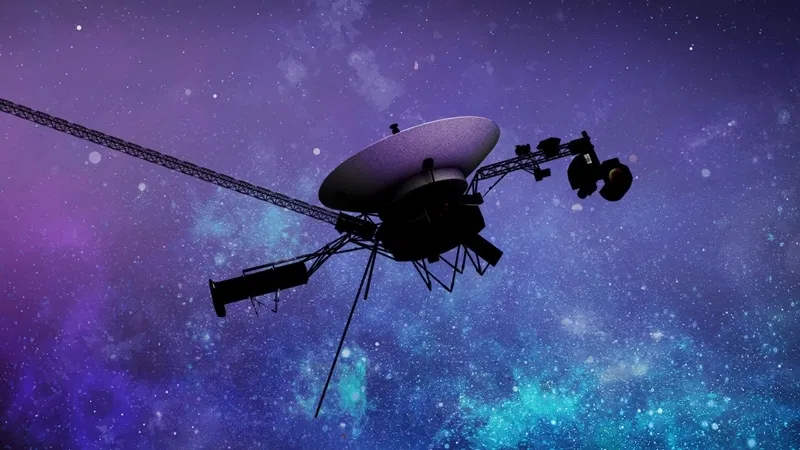
On November 18, 2026 at 13:16:07 Moscow time, the automatic interplanetary station Voyager 1 (Voyager 1) reached a historical mark – a flight distance of one light day from the Earth. The station flew to this point in space for 49 years, two months and 11 days. But the main miracle is that Voyager 1 continues its scientific work.
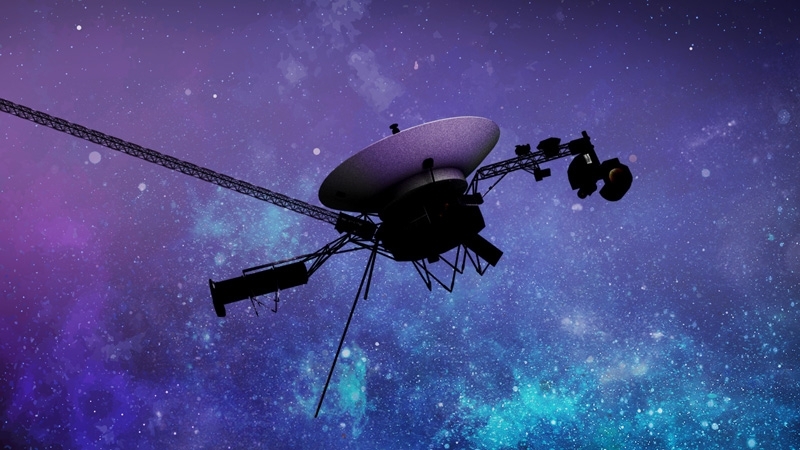
Image source: NASA
A light day is a unit of distance, not time: it shows how far light (in fact, any electromagnetic radiation) travels in 24 hours. A radio signal, propagating at the same speed, now spends about a day just on the way from the Earth to the device and the same on the way back. If we measure the distance in conventional units, then it is approximately 25.9 billion km, although Voyager 1 was not moving in a straight line and its speedometer, if it had one, would have shown a different number.
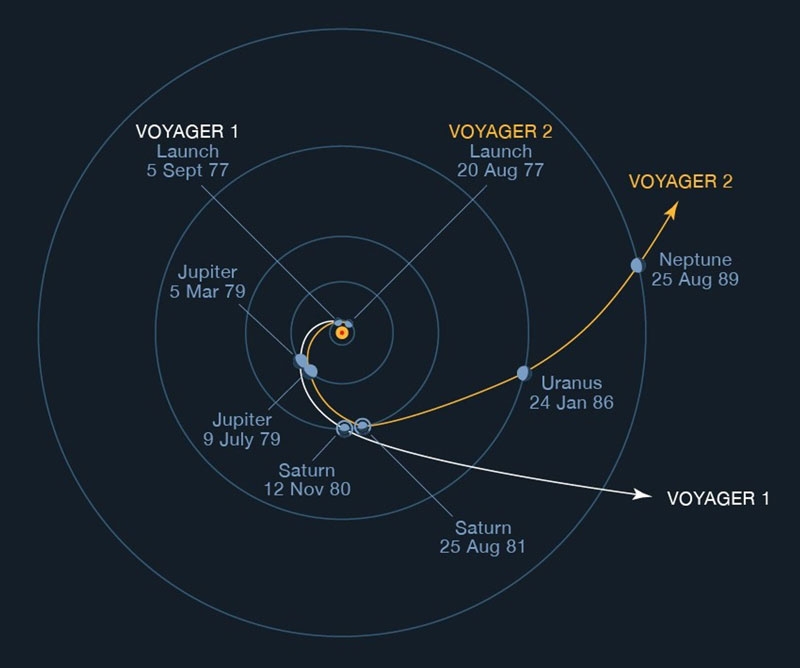
Voyager 1 began its journey into infinity on September 5, 1977. Its current speed relative to the Sun is about 61,000 km/h. Even at its current speed, it would take Voyager 1 about 40,000 years to pass close to the star Gliese 445 (AC +79 3888), more than 17 light-years from Earth. By calculations NASA, the device will pass approximately 1.7 light years away.
Voyager 1 was launched to explore Jupiter and Saturn, and in August 2012 it crossed the heliosphere and entered interstellar space. It now continues to transmit scientific data from a region beyond the bubble of particles and magnetic fields created by the Sun. NASA employees are doing their best to prolong the operation of on-board equipment, turning off less and less important scientific instruments and even managing to save on seemingly untouchable things, such as heating the fuel supply system to the engines.
Together with Voyager 1, its twin Voyager 2 is moving into interstellar space, which will reach a similar distance of one light day from Earth only in November 2035. In addition to scientific equipment, on board both devices are gold-plated records with recordings of sounds, music, images and greetings in different languages - a message to potential extraterrestrial civilizations.
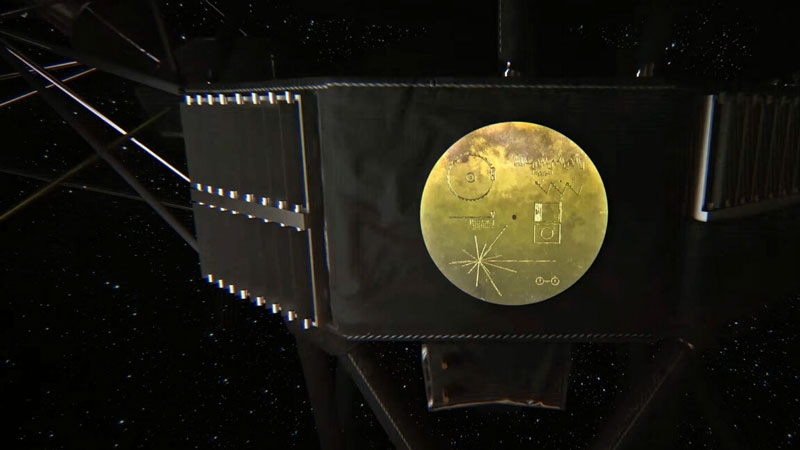
It is interesting to note that initially three such records were made – one each for the Voyagers and one spare. Later, NASA hatched plans to launch ten more such devices, so made at least ten more copies of records. Their copies are today stored, in particular, in the US Library of Congress, the Smithsonian Institution, the UN and several NASA centers. Even Elon Musk once said that he also has one, although it is unknown whether it is a genuine copy or a copy.
If you notice an error, select it with the mouse and press CTRL+ENTER.