The Dutch government has opposed an American initiative that would extend US export restrictions to semiconductor manufacturing equipment supplied by European companies to China. The country’s authorities considered it unacceptable for Washington to independently determine trade rules for Dutch manufacturers, including ASML.
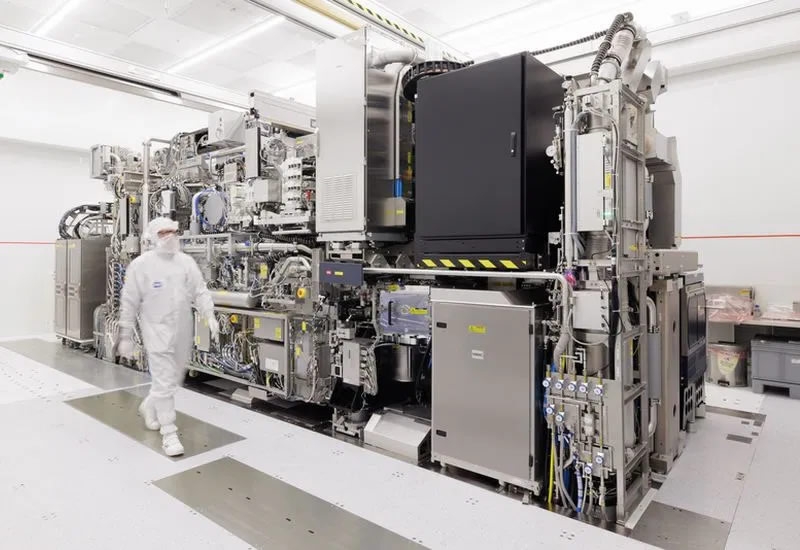
Image source: ASML
The reason for the disagreement, as reported Politicobecame bipartisan bill MATCH Actgaining support in the US Congress. It calls for the Netherlands, Japan and other allies to bring restrictions on the sale and service of advanced chip manufacturing equipment in China into line with American rules within 150 days. Otherwise, the US Department of Commerce would be able to apply its own export restrictions to equipment coming from these countries.
The initiative could have particularly serious consequences for ASML, the largest Dutch manufacturer of lithography equipment, since China accounted for almost a third of the company’s revenue last year. The bill provides for additional restrictions on the supply of equipment for chip production, as well as on the maintenance of equipment already sold.
At the same time, the Netherlands independently introduced restrictions on the export of some deep ultraviolet (DUV) units back in 2023, and ASML has never supplied the most advanced lithographic systems with extreme ultraviolet (EUV) radiation to China.
ASML warns that further tightening of restrictions could be counterproductive. The company’s chief financial officer, Roger Dassen, previously criticized the bill, noting that restrictions on equipment supplies would only accelerate the development of Chinese technology. Dutch MEP Bart Groothuis also opposed the American approach, pointing out the contradiction: the United States demands to limit the supply of equipment for chip production, while simultaneously continuing to sell China its own advanced AI accelerators.
The problem affects more than just ASML, as lithography production depends on an international network of suppliers. For example, the German Zeiss produces high-precision lenses and mirrors used in the equipment of the Dutch company. Therefore, the consequences of the MATCH Act may also affect other European businesses.
Support for the bill in Washington has increased following reports of former Nvidia CEO Jensen Huang’s ties to an alleged Chinese spy. Supporters of the initiative believe that Beijing’s access to advanced technologies must be limited, and American measures will not be effective without the participation of allies. However, critics point out the contradictions of such policies and insist that export controls should be agreed upon between countries, rather than imposed on one of them.
If you notice an error, select it with the mouse and press CTRL+ENTER.