The head of the department responsible for camera and photography software has left Apple, in a rare change in the leadership behind one of the iPhone’s most important features.

At the end of October, John McCormack, who worked at the company for eight years, left Apple. He was responsible for the development of the Camera and Photo applications, as well as the technologies that define the process of shooting, viewing and editing photos and videos. Apple has not yet appointed a new vice president to the position previously held by McCormack. His responsibilities have so far been distributed among former deputies, who have now transferred to another leader.
McCormack’s departure is a significant event for one of the key advantages of Apple’s flagship product. The iPhone is rightfully considered the most popular camera in the world, with trillions of pictures and hundreds of billions of selfies taken every year. Improving photo and video capabilities is a critical part of Apple’s marketing strategy, encouraging consumers to buy new generations of devices.
McCormack played a key role in the development of these features, coordinating the work of software engineers with hardware specialists – cameras and chips. Modern mobile photography relies heavily on image processing algorithms and machine learning, making software as important as lenses and sensors.
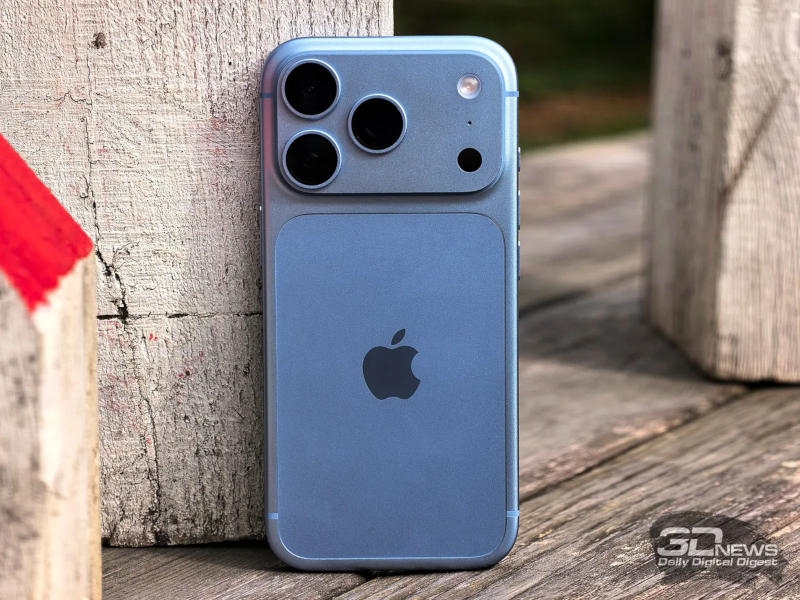
Among the projects he has worked on is the updated front-facing camera introduced in the iPhone 17. This year, the iPhone 18 Pro series introduced a variable aperture camera that gave the user more control over lighting and depth of field. The camera app has a customizable interface with professional controls.
McCormack’s departure comes at a time when Apple is facing a fundamental shift in photography, with Google and Samsung introducing generative artificial intelligence (AI)-powered features that can dramatically alter images, blurring the line between capturing a real moment and generating an image.
McCormack was a strong opponent of the use of generative AI in creating or editing photographs – he believed that photographs should reflect moments that actually took place in reality. And this increasingly comes into conflict with Apple’s recent course towards the active implementation of AI tools. “Photography is a recording of what actually happened. It is extremely important for us to create tools that preserve the authenticity of this moment,” he said. The executive retired, and this is not related to any conflicts or disagreements with Apple over AI strategy.
Previously, McCormack reported directly to Apple’s senior vice president of software engineering, Craig Federighi. Federighi’s division is now looking to accelerate the development of AI solutions and introduce new features faster. With McCormack gone, Mr. Federighi will be tasked with overseeing a leadership transition in this highly specialized area.
The Camera and Photo app development departments have been transferred to the subordination of Sebastien Marineau-Mes, who previously led them and is now responsible for integrating AI functions into all Apple operating systems. Previously, Jennifer Bailey, who was responsible for the Pay and Wallet areas, retired from the company. A series of changes in order to increase the efficiency and effectiveness of the company were initiated by the new Apple CEO John Ternus.
If you notice an error, select it with the mouse and press CTRL+ENTER.