The shortage and, as a consequence, the increase in the cost of RAM and flash memory continues to push up the prices of smartphones around the world. According to Counterpoint Research, premium flagship models will rise in price by more than 30% by the end of 2026 compared to the end of last year.
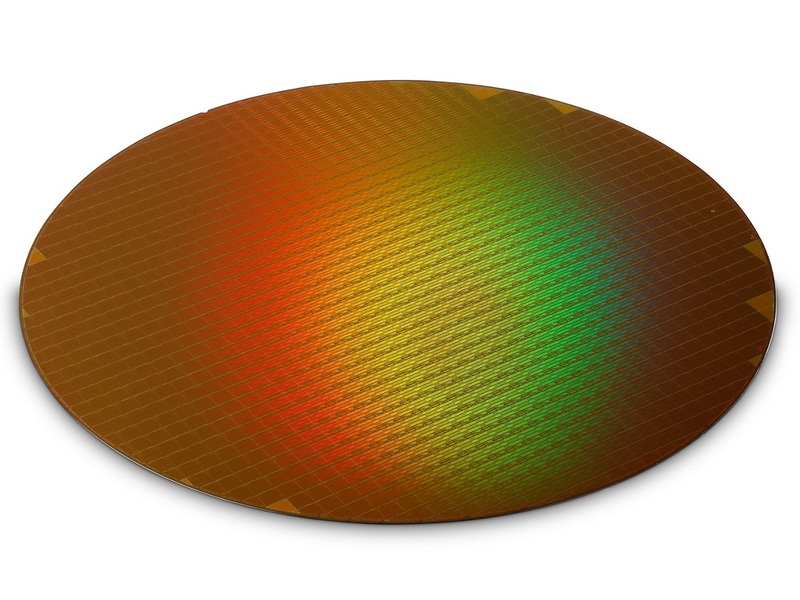
Image source: Micron Technology
Analysts emphasizedthat the rapid rise in prices of DRAM and NAND is changing the cost structure of smartphones. If at the beginning of 2025 these components accounted for about 13% of the cost of all components of premium devices, then in 2026 their share exceeded 40%. The calculations used a configuration with 16 GB of LPDDR5X RAM and a 512 GB UFS 4.1 drive.
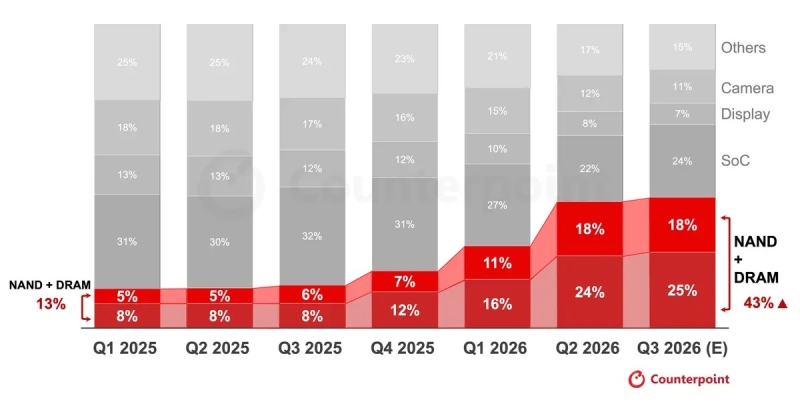
Image Source: Counterpoint Research
The rise in price of components leads to a revision of the usual price categories. Analysts use the Indian market as an example, but similar factors influence pricing around the world, so the picture is the same everywhere. If previously in India premium smartphones cost an average of about $540–760 in exchange rate terms, now they are gradually giving way to devices costing more than $1080. At the same time, prices for older Apple and Samsung models are close to $2,160. Just a few years ago, smartphones with this price were much less common.
Manufacturers around the world are facing rising memory costs as memory suppliers prioritize more profitable products for data centers and AI accelerators. Additional pressure comes from capacity constraints and high competition for available DRAM and NAND volumes.
The rising cost of components is forcing companies to reconsider device characteristics and pricing policies. In particular, Huawei has already warned of the need to increase prices for smartphones due to memory shortages. The company’s management acknowledged that rising costs are negatively impacting the profitability of the mobile business.
At the same time, customer requirements for expensive devices are changing. At prices above $1,000, brand recognition is no longer enough to justify a purchase, according to Counterpoint Research. Consumers expect higher performance, better cameras, longer battery life, longer software support, and more reliable designs.
Memory shortages are already forcing manufacturers to look for ways to cut costs. As previously revealed, some companies have begun installing refurbished DRAM chips in new smartphones. According to TrendForce, in 2027 the share of such devices could reach 7–9%.
If you notice an error, select it with the mouse and press CTRL+ENTER.