While Anthropic and other Silicon Valley AI giants attract tens of billions of dollars in investment, their Chinese competitors are struggling to keep up financially. The US and China continue to battle for AI supremacy, but Chinese tech companies face a growing challenge: finding the finance to keep up with Western competitors.
Image source: Igor Omilaev / unsplash.com
Both American and Chinese AI startups are facing rising costs to train increasingly powerful AI models. But while Anthropic raised more than $80 billion in its IPO this week, its Chinese rivals are operating in a much less favorable financial environment. The fact is that venture capital investments in China are much inferior to American ones.
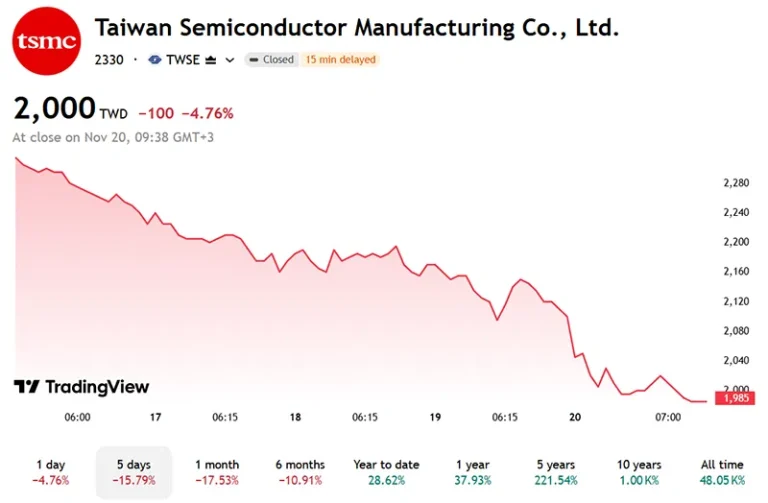
Alibaba, Baidu and Tencent, the three tech giants behind China’s leading AI companies, are struggling with negative cash flow. At the same time, investor enthusiasm for AI is fading. Since the end of July, the STAR 50 index (the Chinese equivalent of the Nasdaq) has fallen by 43%. China’s biggest tech giants will double their capital investment this year to $139 billion, although revenue from the AI startups they control makes up less than 8% of that, according to research firm Rhodium Group. Rhodium analysts believe that spending in this segment could exceed $193 billion in 2027.
“If you look at their performance, it seems like they are running on a treadmill that is accelerating and getting harder to run,” said Kyle Chan, a fellow at the Brookings Institution who specializes in Chinese technology and industrial policy.
Much of the discussion about China’s ability to compete in AI has focused on US export restrictions, which significantly impact the availability of advanced AI accelerators in the country. Chinese AI companies have found expensive workarounds, including leasing data centers in Southeast Asia. This week, US authorities introduced new restrictions that will close this loophole.
At the same time, money can be an equally serious obstacle. Even if Chinese companies manage to find the AI accelerators they need, they will still need to raise enough capital to buy them and also fund the development of advanced AI models. “Financial constraints will likely have a more significant impact in the long term than the accelerator shortage. The key problem is that the discrepancy between the revenue of Chinese models and capital expenditures is perhaps even greater than in the case of American companies,” said Logan Wright, a partner at Rhodium Group and co-author of a report on AI financing in China.
Image source: Igor Omilaev / unsplash.com
US AI companies spend about 5-6 times more than their competitors, but they also earn significantly more. China’s top six AI companies collectively earn about one-tenth of OpenAI and Anthropic’s combined revenue, according to nonprofit research organization Epoch AI.
Overcoming this imbalance is even more difficult due to China’s focus on open-source AI models. By allowing developers to freely use and modify their AI models, Chinese companies have accelerated the global spread of their technologies. However, this strategy has undermined the ability of AI companies to profit from the models they create. Companies may charge a fee for access, only to see competitors offering the same thing at a lower price. Fierce price wars have also taken a toll on profits.
Chinese AI startup Z.ai is among those who have learned this lesson. In August, the company released the open source GLM-5.3 Flash model and halved the cost of using it for two weeks to encourage customers to run the algorithm on the company’s servers rather than on their own. However, by November, about 20 of Z.ai’s competitors were offering access to the startup’s AI model at a price lower than Z.ai itself.
Another obstacle is adding to China’s AI funding woes. We are talking about access to advanced Nvidia accelerators, which Western competitors use to train the most powerful AI models. From 2022 to June 2026, US companies had capacity that was roughly equivalent to 20 million Nvidia H100 accelerators. During the same period, Chinese competitors had at their disposal the equivalent of approximately 2.6 million H100 accelerators, some of which were acquired through smuggling.
An Nvidia DGX B300 AI server was listed on the Chinese online used goods marketplace Goofish for nearly $3 million, which is about eight times its price in the United States. According to the source, sellers in this category have increased prices fivefold since the beginning of the year. This clearly shows the premium Chinese developers have to pay for access to cutting-edge solutions.
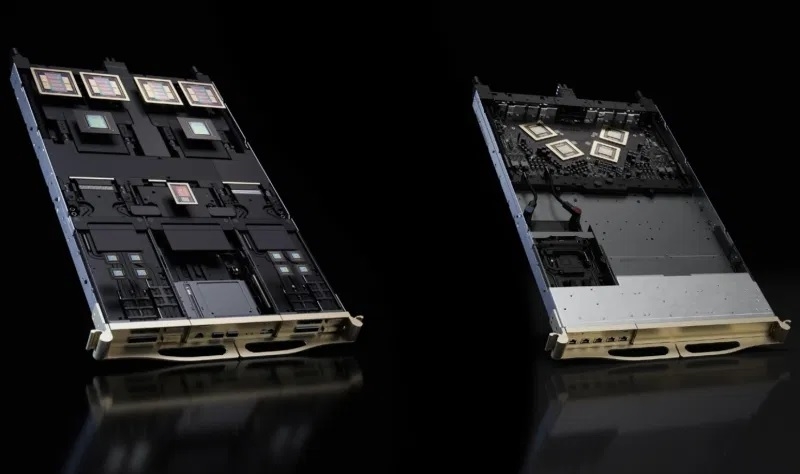
Image source: Nvidia
Pressure on Chinese companies may intensify. Outgoing Nvidia CEO Jensen Huang was one of the most influential advocates for doing business in China. This week Nvidia announced it would stop supplying its H200 accelerators to China. Previously, US President Donald Trump allowed these supplies at the insistence of Huang. Nvidia also announced the creation of an export control oversight committee.
To reduce dependence on American technology, Chinese developers are adapting their systems to use AI accelerators from Huawei, the Chinese telecommunications equipment and electronics maker that is leading China’s chip manufacturing efforts. The CEO of the startup DeepSeek, Liang Wenfeng, said that Huawei technologies lag behind Nvidia solutions by about two years. According to the source, during a meeting with investors, Wenfeng said that DeepSeek will need four times more Huawei 950 accelerators to achieve the performance level of Nvidia GB300. He also added that Huawei does not have enough production capacity. “We simply cannot afford to train the largest models currently available,” the source quoted Wenfeng as saying.
Despite this, the Chinese AI industry has repeatedly demonstrated the ability to achieve more with fewer resources. Chinese developers have created methods that make it possible to train and run AI models more efficiently. In Silicon Valley, Chinese companies are accused of copying advanced American technology through so-called distillation. This reduces the time required to create basic models without expensive computing infrastructure.
Chinese companies are finding it increasingly difficult to find investors willing to finance the AI race. DeepSeek, which has raised more than $20 billion, is preparing to go public in Shanghai early next year. DeepSeek’s investors include IT giant Tencent, battery manufacturer CATL and government investment funds. Few competitors in the home market have access to such financial reserves.

Image Source: Jacky Yu / unsplash.com
Foreign investment has also dried up. Dollar-denominated investment funds operating in China have declined sharply, in part due to the US government banning American venture capital from investing in certain Chinese technologies. In 2025, private investment in AI in China was $12.4 billion, compared to $280 billion in the United States.
Han Lin, head of the China division of consulting company Asia Group, noted that China has outstanding engineering talent and the ability to mobilize enormous resources for strategically important industries. “Advanced technologies also require something that is harder to mobilize—risk capital that can absorb failure,” Lin added.
China has announced investment funds to support the AI sector, but much of the funding has gone to the semiconductor industry rather than to companies developing AI models. Public investors face many of the same restrictions as private investors. Analysts say sovereign funds also need a compelling path to profitability.
It said it was difficult to imagine how Chinese AI companies would be able to balance their finances “without large-scale and sustained government funding.” The problem is not only whether Chinese engineers can create AI models that can compete with their American counterparts, but how much of the financial burden the state is willing to take on. “It is increasingly becoming a question of political will – what sacrifices are we willing to make to compete in this area,” says one expert.
If you notice an error, select it with the mouse and press CTRL+ENTER.