
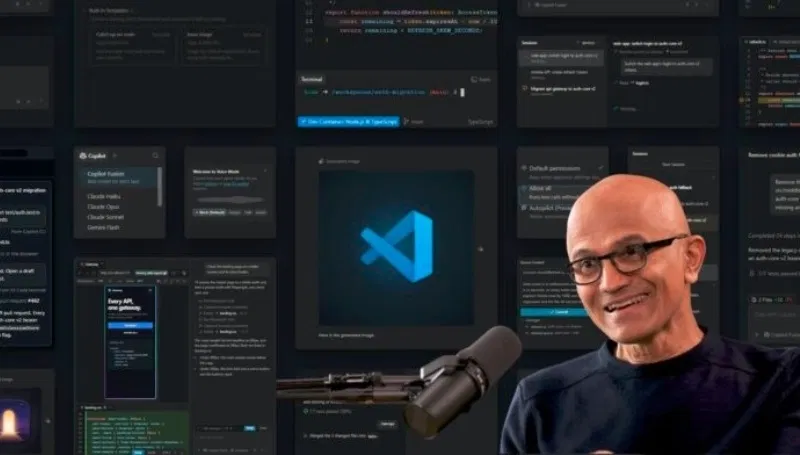
Developers are increasingly admitting that they have stopped using Microsoft’s VS Code editor. Microsoft CEO Satya Nadella admitted in a conversation with reporters that after the launch of the AI service Anthropic Claude Code, integrated development environments (IDEs) “seemed to fade into the background” in about six months. This is a major change, and the software giant does not yet have a ready-made plan to turn the situation in its favor.
Image source: windowslatest.com
It’s no secret that Microsoft has spent over a decade making VS Code the standard for developers. Even though the editor has lost ground in the past few months, Nadella believes in the future of the IDE. At the same time, the latest updates to VS Code indicate that the software giant is turning the code editor into a platform for managing AI agents.
According to Nadella, Claude Code changed the coding process faster than Microsoft expected. He admitted that VS Code lost its position in just six months after ten years of leadership. Microsoft introduced VS Code as a free cross-platform code editor at the Build conference in April 2015. A year later, the presentation of VS Code 1.0 took place, the number of active installations exceeded 2 million, and the number of active users – 500 thousand. In 2021, GitHub Copilot appeared in VS Code, which brought the function of automatic code completion using a neural network. In 2023, Cursor appeared, a fork of VS Code with a focus on AI, which began to compete with Copilot and relied on an agent-based mode of operation.
Nadella said that the success of VS Code was not accidental, but was the result of focused work. He added that the team built the product openly, and managers listened to feedback from the user community on a daily basis. Then artificial intelligence appeared. Nadella called the Copilot tips that the algorithm produced early in its development “magical.” When Claude Code appeared, it immediately became clear that this was a breakthrough product.
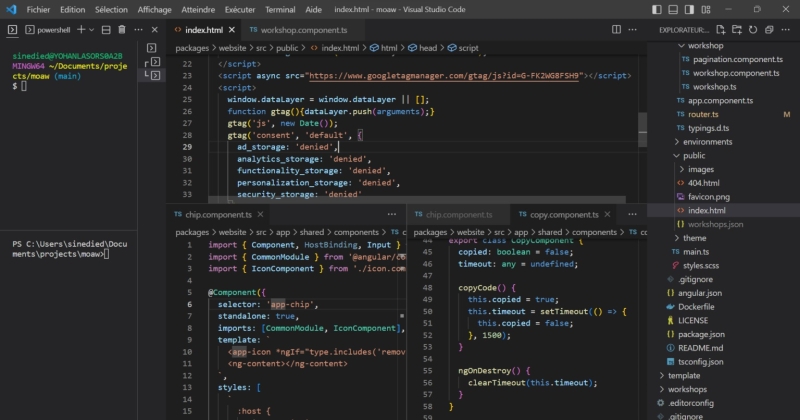
Despite the success of Claude Code, not all developers have given up using VS Code. Some of them believe that Microsoft’s strategy can be compared to the formula “Adopt, expand, displace.” The company made VS Code really good, open sourced it and gave everyone the opportunity to create their own editor, but at the same time made it almost impossible to create something as convenient. “Claude Code destroyed this seemingly impenetrable, decades-long strategy in less than six months,” one developer commented on the issue.
According to this year’s Stack Overflow Developer Survey, 70.9% of the 13,193 respondents continue to use VS Code. A year earlier, this figure was 75.9%. This is a significant decrease, and it makes sense that Claude Code topped the AI programming agent category with a score of 65.5%. This indicates that VS Code still has users, but now they interact with the application for significantly less time, using it, for example, to review generated code.
It looks like Microsoft is aiming to make VS Code a platform for managing AI agents. In the first half of the month, with the release of VS Code 1.146, more functions for interacting with agents, as well as a model comparison tool, became available to users. In VS Code 1.147, we added model routers that independently select the most suitable neural networks from those preferred by users to perform specific tasks. In addition to this, browser integration and other agent-based functions are implemented.
If you notice an error, select it with the mouse and press CTRL+ENTER.