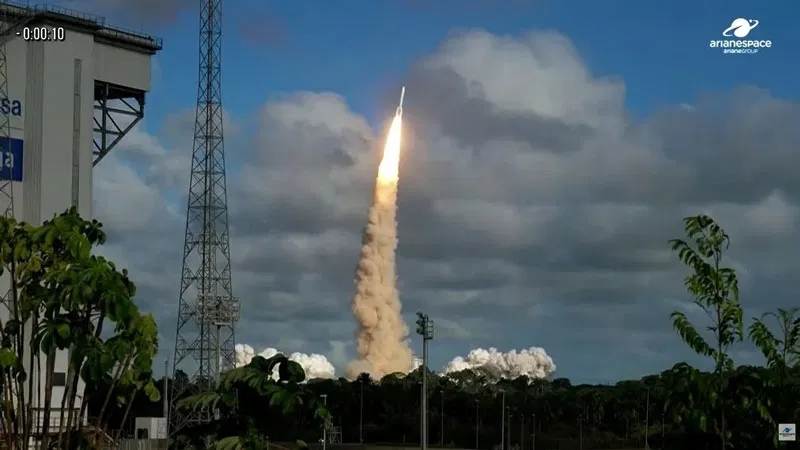
On November 24, 2026, the European Ariane 6 launch vehicle successfully launched 36 Amazon Leo Internet satellites into low Earth orbit. The launch took place from the Kourou spaceport in French Guiana at 08:14 local time (13:14 Moscow time). The satellites were delivered into an orbit at an altitude of about 460 km.
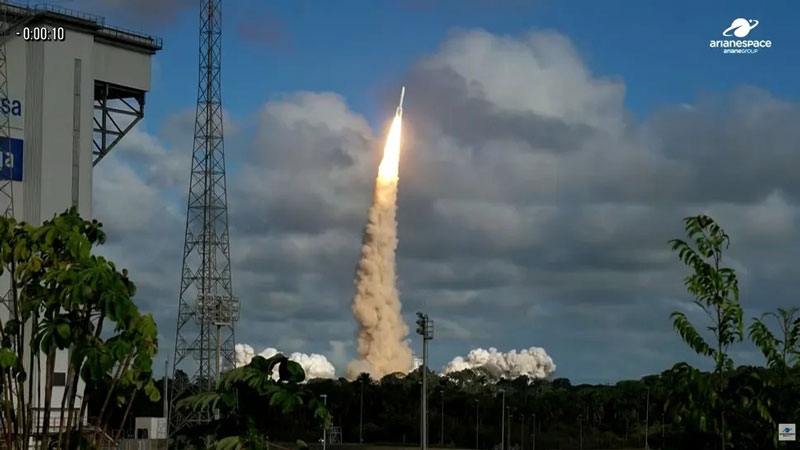
Image source: ESA
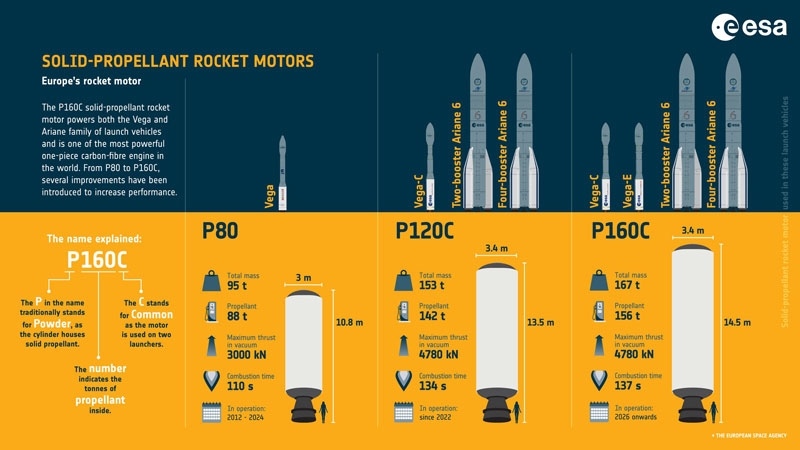
To start usedThe most powerful version of the rocket is Ariane 64 with four P160C solid propellant boosters. They replaced the P120C boosters used during the first flights of the carrier. Each P160C is approximately a meter longer than its predecessor and contains up to 156 tons of solid fuel.
According to the European Space Agency, the use of new accelerators can increase the payload to low orbit by about two tons, depending on the parameters of the target orbit. For Ariane 64, the stated payload to low Earth orbit reaches approximately 22 tons. For the first time in this configuration, the rocket launched on June 17, 2026, also during the mission to deliver Amazon Leo satellites into space.
Following the separation of the boosters and nose fairing, the core stage completed operation approximately eight minutes after liftoff, according to the mission schedule published by the European Space Agency. The upper stage performed two burns of the Vinci engine, which ensured entry into a given orbit and subsequent deployment of satellites. This was Ariane 6’s tenth flight and the fourth rocket launch for Amazon Leo in 2026.
Taking into account the new launch, the company delivered 136 satellites of this constellation into orbit. In September, Amazon increased its order for six additional Ariane 6 flights, bringing the total number of launches under the contract to 24. Just before this launch, the launch had to be postponed from November 23 to 24 due to a technical problem in the rocket’s ground support systems. According to Arianespace, after additional checks, preparations were resumed.
For Amazon, the Ariane 6 rocket remains the only available tool to expand the constellation. Plans for ULA’s Vulcan Centaur and Blue Origin’s New Glenn rockets had to be shelved. After the end of the Atlas V rocket’s career due to the abandonment of Russian rocket engines, problems with Vulcan and New Glenn, as well as queues for the SpaceX Falcon 9, Amazon has virtually no choice other than Ariane 6.
If you notice an error, select it with the mouse and press CTRL+ENTER.