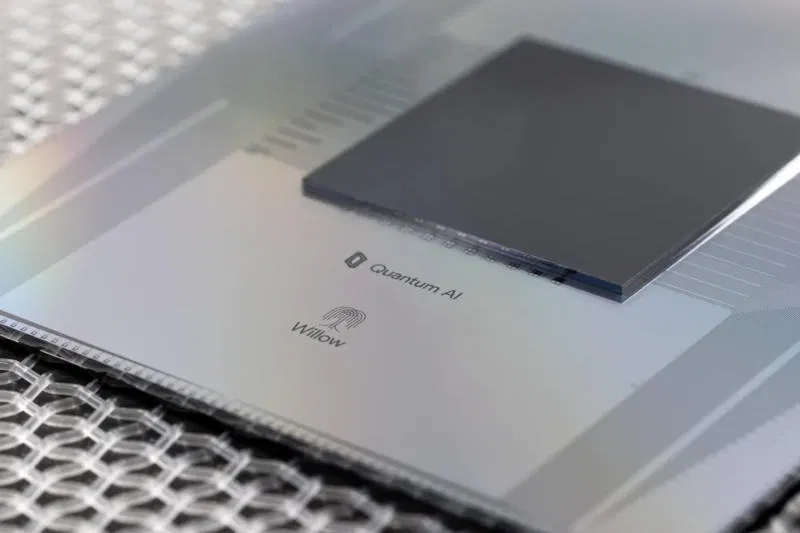
Google researchers have shown that an experimental quantum computer powered by the Willow processor can outperform any classical system in solving a logic problem called the “magic square.” This is achieved through the use of quantum context – a property in which the result of a measurement is not predetermined, but depends on the context of other measurements carried out in parallel.
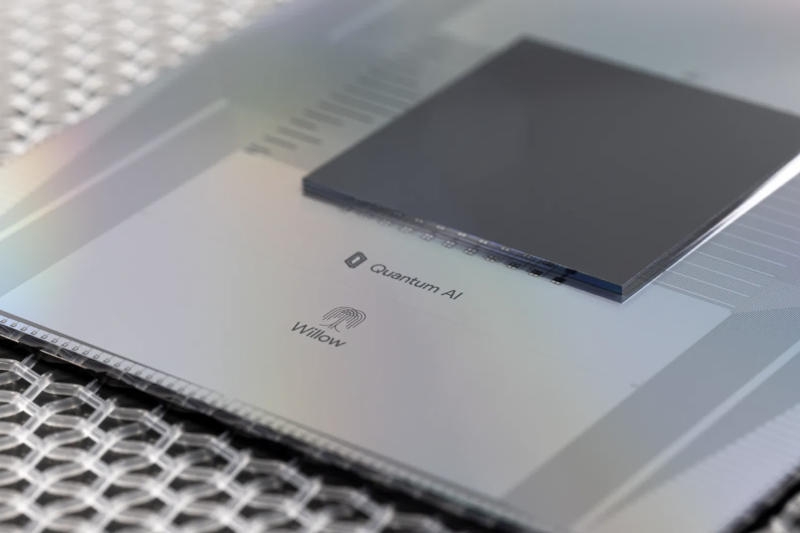
Image source: Google
The game allows you to measure the gap between two types of computing systems. Two participants are required to fill a 3 × 3 grid with numbers that satisfy certain mathematical conditions, while they are prohibited from communicating with each other. A classic computer can only achieve a limited number of victories, and Google’s machine showed the best result.
This advantage arose due to the peculiarities of encoding information with qubits: in a conventional computer, a bit takes on the value “0” or “1” even before it is checked – reading only determines the already existing value. Qubits work differently: the result of a measurement depends on what other compatible measurements are carried out in parallel. In a magic square game, participants can use this dependency to coordinate their responses more often than is possible with classic strategies—all without communication between players. Consistency in responses helps increase wins.
The classic strategy allows you to achieve 88.89% of wins, but in the case of the Willow processor, the system, after 900,000 game rounds, lost only about one time out of 60, showing a win rate of 98.30%.
The experiment was carried out on a Google quantum computer in Santa Barbara (California). The machine is built on the basis of superconducting qubits – metal circuits cooled to a temperature close to absolute zero. The game itself has no practical application, and the researchers admit this. This is a “toy” problem that demonstrates the capabilities of the equipment, and does not solve any real application problem.
If scientists find a way to harness the property of quantum context in practice, they will be able to perform calculations that are beyond the capabilities of even the most powerful traditional computers. In the meantime, Google is not focusing on solving the puzzle, but on the fact that the effect was manifested in the processor, which the company continues to improve.
If you notice an error, select it with the mouse and press CTRL+ENTER.