
The Japanese probe Hayabusa-2 flies for soil samples to the asteroid 1998 KY26. But all he will find there is a dead automatic station “Phobos-1” with the inscription “USSR”, scientists say, citing new models of the object’s movement.
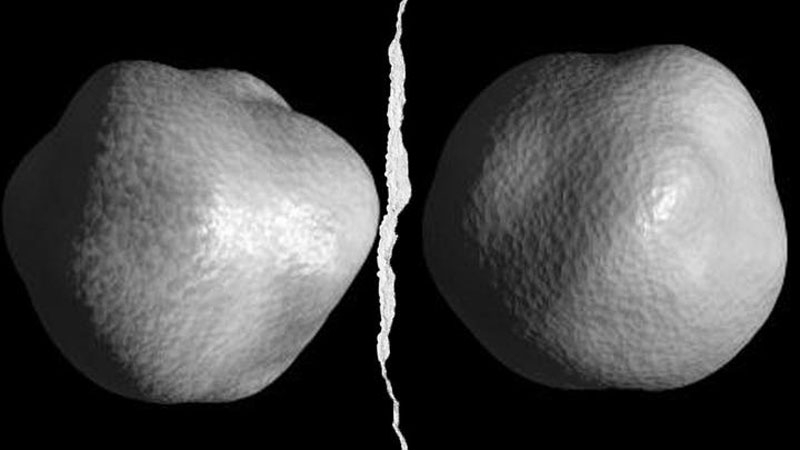
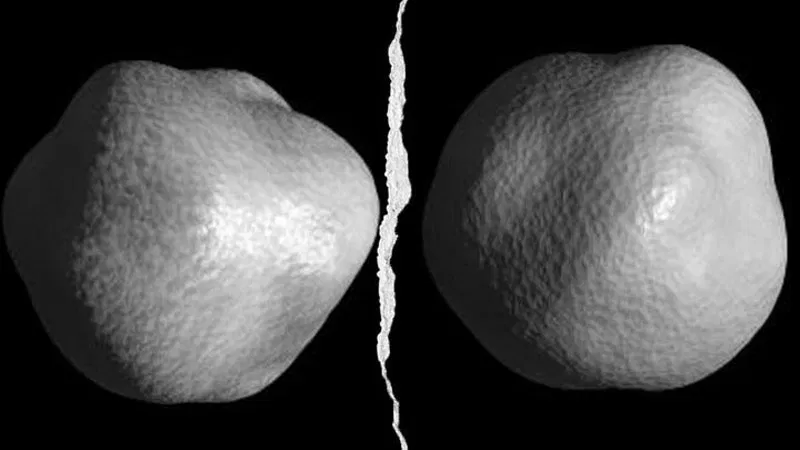
Model image of asteroid 1998 KY26. Image source: NASA
The Hayabusa2 probe has already written its name in the history of astronautics by being the first in the world to collect and deliver soil samples from the Ryugu asteroid to Earth in 2020. The fuel reserves on board the probe were sufficient for another similar mission and it was sent to the asteroid 1998 KY26, where it should arrive in the summer of 2031. Asteroid 1998 KY26 is a small object: compared to the 900-m Ryugu, its diameter was estimated at 30 m. After the start of the new mission, it became clear that 1998 KY26 could be only 11 m in diameter.
New observations also show that 1998 KY26 is spinning faster than expected, completing one rotation in less than 6 minutes. Its small size and rapid rotation make the Hayabusa 2 mission to sample soil from this asteroid very difficult and even unlikely. Moreover, the more closely astronomers study 1998 KY26, the more it surprises them: observational data and models show that the asteroid, as it moves, violates the laws of gravity – it moves with acceleration that cannot be explained by the action of objects in our system alone: the Sun, planets and other large celestial bodies.
One suggestion is that 1998 KY26 is a dark comet. Such objects contain frozen volatile substances that evaporate imperceptibly when exposed to sunlight and give the object acceleration. This assumption was later refuted by remote sensing analysis of the asteroid material, during which it was established with high probability that it was a rocky body. In addition, the asteroid is too small to move with constant acceleration for so long, as observations that have been going on for about 30 years suggest.
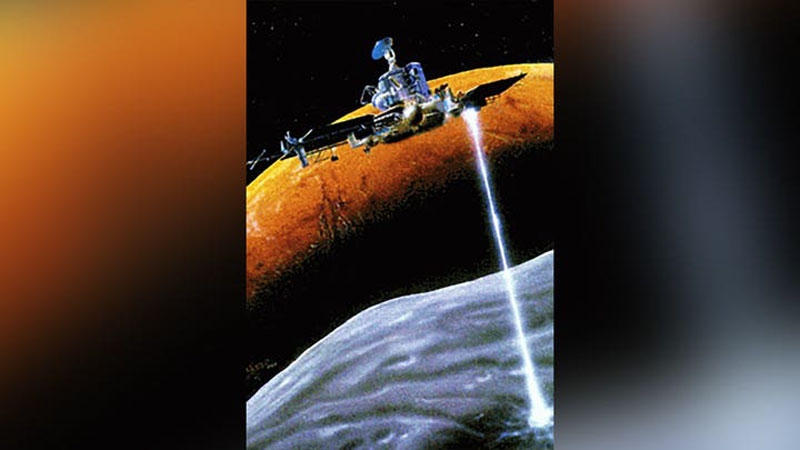
Phobos-1 station as imagined by an artist
Harvard astrophysicist, the world’s leading specialist in the search for alien spacecraft – Avi Loeb – put forward the other assumption, he said, is best consistent with observations and calculated models. Loeb claims that object 1998 KY26 is the Phobos 1 probe, lost in 1988, launched by the Soviet Union to study the moon of Mars. This version is indicated by the high reflectivity of the object, reflecting up to 50% of solar radiation, its small size and high rotation speed. All this is in best agreement with the calculated models and allows us to reproduce the observed data in most cases. The profile of the station allows it to move with acceleration under the influence of the solar wind.
“We assume that instead of an iceberg, the Hayabusa2 cameras will show the inscription “Made in the USSR,” Loeb told reporters.
This hypothesis did not go unnoticed by NASA. At the same time, the head of the agency, Jared Isaacman, immediately stated that, no matter what this object turns out to be, it will definitely not fall to Earth, and the rest can be sorted out.
If you notice an error, select it with the mouse and press CTRL+ENTER.