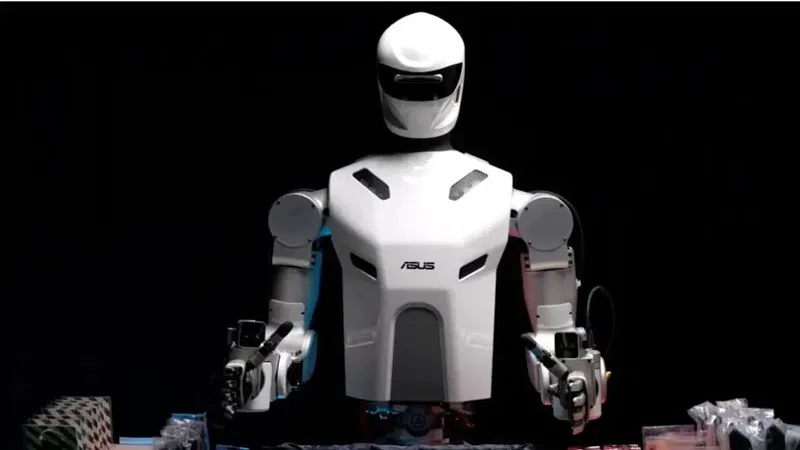
The Taiwanese company Asus introduced its first humanoid robot, Gallop, designed to perform production operations in electronics industry enterprises. The robot is being tested at the Asus group plant, where it is trained to assemble boxes with motherboards.
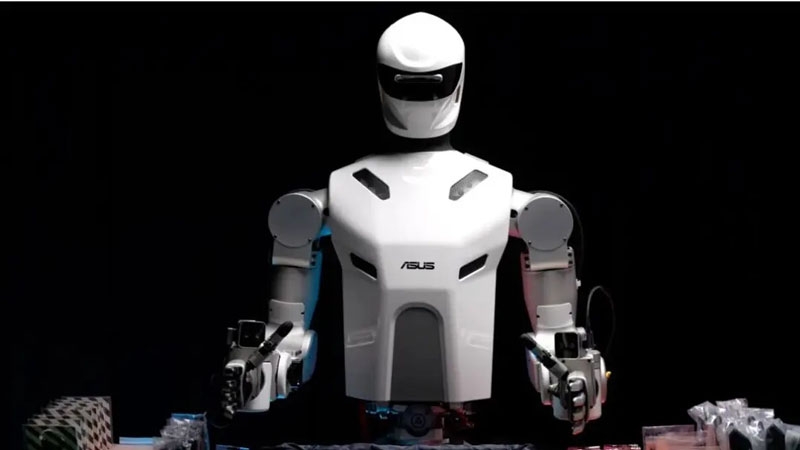
Image source: Asus
During initial training, the robot must learn to box 15 different components, many of which are small parts in thin, clear plastic bags. The duration of the operation is about 20 seconds per motherboard. Asus set a goal achieve task accuracy of 99.5% without exceeding time standards.
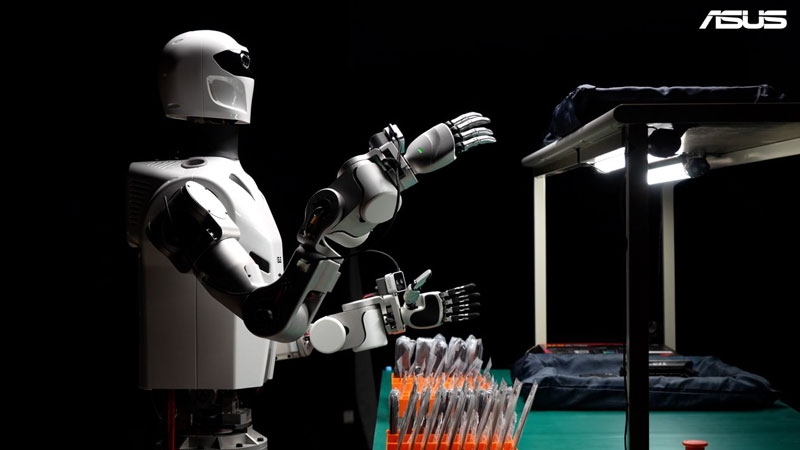
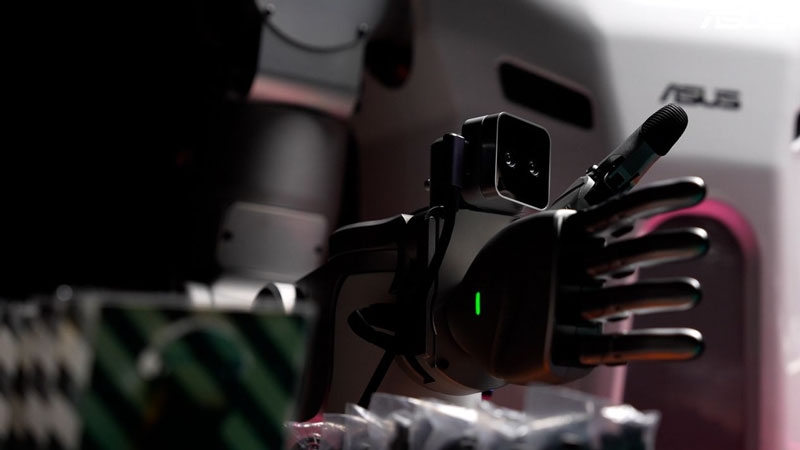
The Gallop robot is a humanoid torso with two manipulator arms on a stationary base. Its hardware and software platform is built on a single Nvidia Jetson AGX Thor computing module, located directly inside the robot. The software architecture is divided into four layers: the scheduler analyzes the environment and breaks the task into a sequence of actions; a separate supervisory system monitors the execution of operations and, if necessary, revises the plan; skill level is responsible for movement, grasping and placing objects; and the control level directly controls the work of the hands and manipulators. Fixed interfaces are provided between the levels, allowing you to replace the used artificial intelligence models without completely reworking the robot design.
Gallop training combines several methods. The robot first observes the work of experienced employees who, with their consent, use small cameras on their heads to record production operations. The software simulation then generates variations in the recorded actions, helping the system adapt to changing conditions. Additionally, an operator wearing a VR helmet and gloves can directly control the robot while performing operations with the same parts and cameras that are used in a real workplace.
Asus independently develops the robot body and manipulators with hands and fingers sensitive to tactile operations. The company purchases engines and other standard components externally.
The Gallop development program started in early 2026. Over the next year, Asus plans to equip the robot with its own multi-fingered hand with tactile sensitivity, install it on a wheeled platform and demonstrate it to potential customers at Computex 2027.
Meet Gallop at work. Its first job: packing motherboard accessories, 15 small parts, many in soft bags. It learns by watching our own workers, then practicing on the same parts. Albert Chang explains how: https://t.co/8gtKPDuey4 #Asus #AI #PhysicalAI https://t.co/CF3iCBmblh
— S.Y. Hsu (@SYHsuAsus) November 13, 2026
The launch of pilot projects with clients is planned in 2027, and entry into the market in the second half of 2028. The initial area of application will be electronics manufacturing. Going forward, the company is considering using Gallop in hospitals and other healthcare settings. Transferring skills to other robots promises to speed up the process of preparing robots to work independently. The company promises not to take jobs away from people, but only to free them from monotonous routine operations.
If you notice an error, select it with the mouse and press CTRL+ENTER.