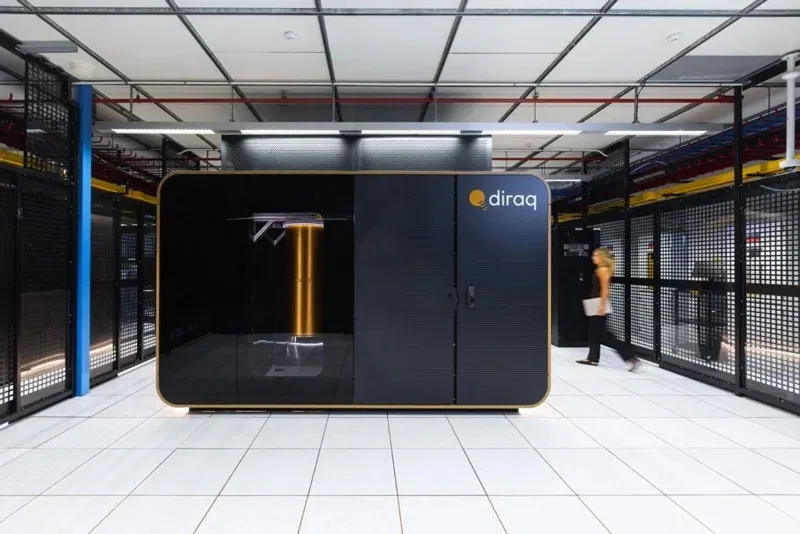
The Australian company Diraq was the first in the world to place an eight-qubit quantum computer based on silicon spin qubits in an operating commercial data center. The installation can be easily upgraded to 256 qubits without replacing the entire infrastructure, which is planned to be done next year. The new quantum system demonstrates tight integration with conventional computing infrastructure and could lead to a breakthrough in science, technology and economics.
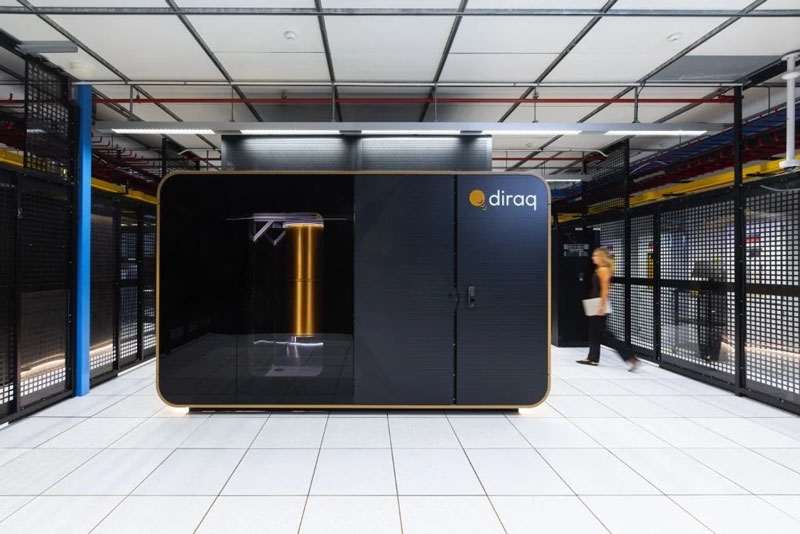
Image source: Diraq
Diraq Quantum System located at Equinix’s existing commercial data center in Sydney. It has already been put into operation and placed next to conventional computing servers. Thus, the company will test in practice the possibility of integrating quantum computing into the existing server infrastructure without building a specialized facility for quantum equipment, which in the case of superconducting qubits will be very bulky, complex and expensive.
A key feature of Diraq’s quantum platform is the use of spin states of electrons in silicon to create qubits. Unlike traditional semiconductor transistors, which represent information using electrical charge, the Diraq system operates using the spin of an electron.
It is important to emphasize that the company’s quantum processors are produced using classical CMOS technologies used in the manufacture of conventional microcircuits. This means that there are no problems either with the production of such quantum chips or with their scaling. In fact, there are problems with scaling, but they have little to do with production processes. Thus, upgrading the company’s quantum computers will be similar to upgrading classical computers – it may be enough to replace the central processor. This upgrade is also planned for the system hosted in the Equinix data center.
Deployed in a data center in Sydney, the installation consumes less than 20 kW and occupies approximately 15.8 m2. The company’s future practical quantum computer will consume about 300 kW, roughly a third of the power consumption of competing quantum platforms and highlighting the benefits of silicon spin qubits.
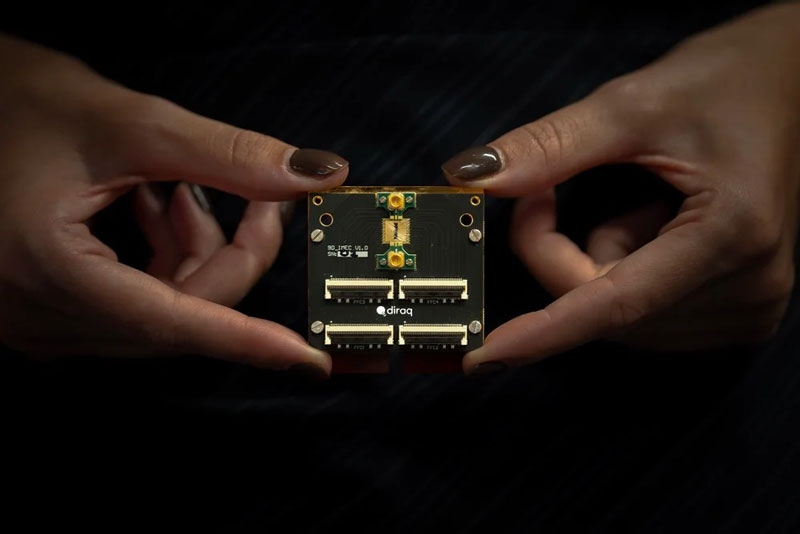
Eight-qubit processor based on silicon spin qubits. Image source: Diraq/Imec
The cryogenic cooling system and control electronics are located directly within the complex, so it does not require a separate cooling infrastructure. According to Diraq, the system is designed to work alongside conventional servers, and interaction with classical processors and GPUs will allow the exploration of hybrid computing, in which quantum and traditional computers perform different parts of the overall task.
So far, we are talking, first of all, about the integration of equipment into commercial infrastructure, and not about demonstrating practical quantum superiority. At the same time, the company simultaneously presented the Quantum at Work report, which assessed the potential use of future quantum computers in drug development. According to the company’s calculation model, increasing the success rate of clinical trials using quantum systems by just 10% could reduce the cost of developing a single drug by approximately $600 million. In the United States, this would theoretically allow up to 25 additional drugs to be brought to market annually, bypassing dummies. However, for now these are dreams that have little in their basis.
If you notice an error, select it with the mouse and press CTRL+ENTER.