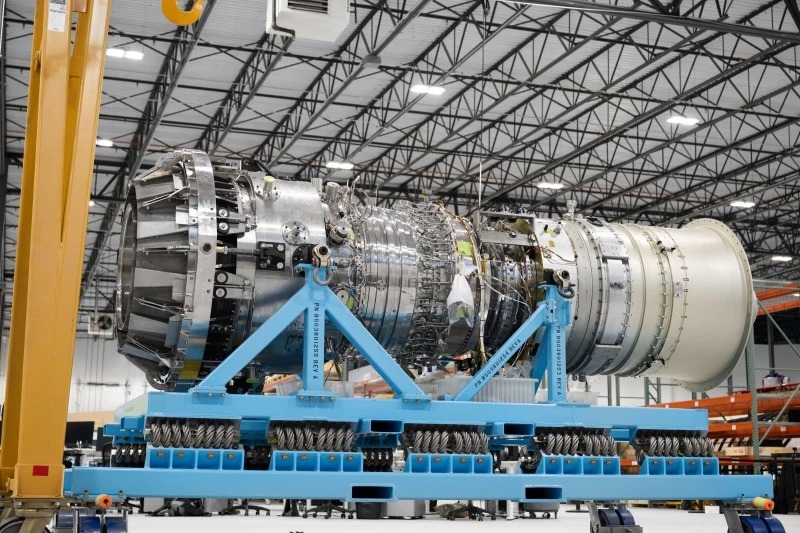
The American company Boom Supersonic for the first time launched a prototype of the Sprint Core gas generator – the central part of the Symphony engine for the Overture supersonic passenger aircraft. This significantly increases the chances of the return of supersonic passenger aviation after two decades of inactivity.
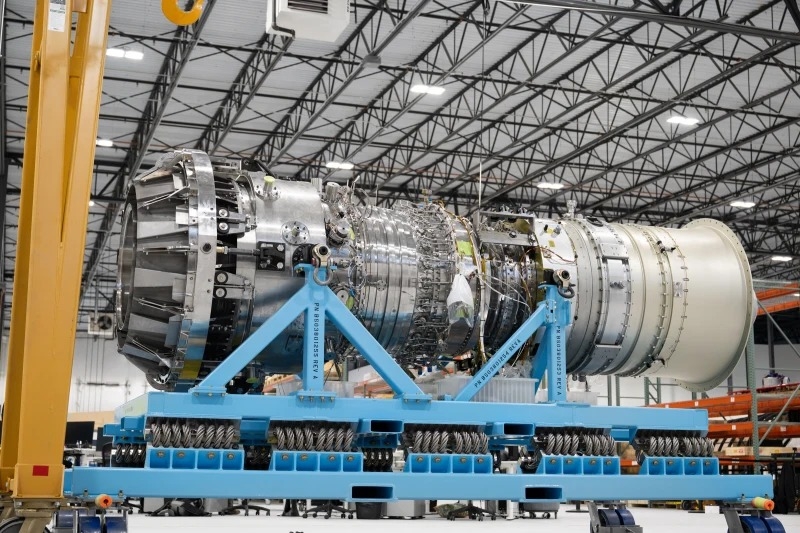
Image Source: Boom Supersonic
Trial took place November 21, 2026 at an airfield near Denver. The installation worked on the second try, although according to company founder and CEO Blake Scholl, the success rate was estimated at less than 50%. During a short test, the gas generator reached a rotation speed of 6500 rpm. Readings from almost 2,000 sensors were recorded in real time. In the coming months, the company intends to gradually increase the duration and load of testing.
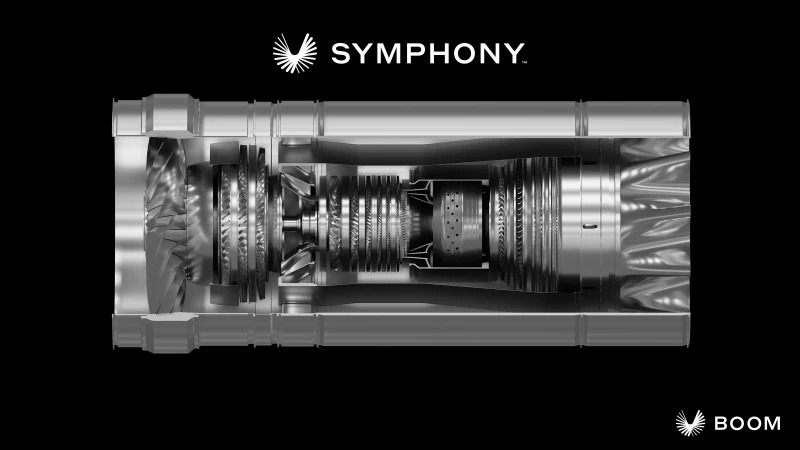
The peculiarity of the development is that the same gas generator will become the basis of two different power plants. In the Symphony aircraft engine, it will work in conjunction with a fan, providing a thrust of approximately 178 kN. The second version, Superpower, will lose the fan: hot gases will rotate a separate turbine connected to an electric generator. The resulting installation will be able to generate up to 42 MW of electricity and is intended primarily for powering large data centersincluding those serving artificial intelligence systems. According to Boom, both installations will share more than 75% of the same components.
The Sprint Core itself is a gas generator with a six-stage high-pressure compressor, a combustion chamber and a single-stage high-pressure turbine. The turbine takes energy from the hot combustion products and drives the compressor through a shaft. It is important to emphasize that so far only this central unit has been tested, and not a full-fledged engine. The company expects to begin testing the fully assembled powertrain around mid-2027.
Extremely few companies have made both an engine and an airplane. None has made a supersonic airplane and a supersonic engine—until today. Today a new engine company was born. Watch volume up, viewer discretion advised. https://t.co/ckLD9kKPDl
— Blake Scholl 🛫 (@bscholl) November 21, 2026
However, the new turbine will not begin its journey with aircraft, the certification of which is a separate headache. The first commercial implementation of the technology will be the Superpower industrial gas turbine. Boom expects to begin delivering new turbines to customers in mid-2027, and to produce 25 units annually by 2028 and 50 by 2029. To do this, the company is investing $150 million in its own production facility in Colorado, where it intends to independently produce components that make up about 85% of the engine’s mass, including turbine blades from single-crystalline heat-resistant alloys. As the company admits, suppliers are not ready to supply high-quality components, so everything has to be done ourselves.
Experience with the Superpower turbine and the reliability data collected will inform the development of the Symphony aircraft engine. At the same time, the timing of the appearance of the Overture airliner itself remains uncertain: the initial goal – 2029 – is already in doubt. Probably, the deadlines will have to be shifted by a year or two, or even to a later date.
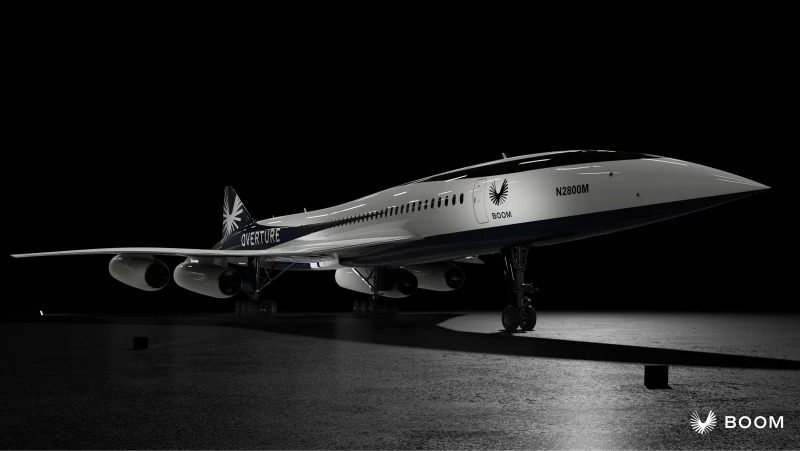
Almost two years ago, the prototype of the supersonic airliner Boom Supersonic XB-1 demonstrated silent flight at supersonic speed. The thunderclap when breaking the sound barrier and the noise created by supersonic aircraft led to a ban on flights over populated areas. The revival of supersonic passenger aviation promises to be quiet, thanks to both new materials and new technologies. The Overture airliner, designed for 60–80 passengers, promises to be among the first such aircraft. Its expected flight speed will reach Mach 1.7 (1,770 km/h), and the ticket price should remain at the level of modern business class.
If you notice an error, select it with the mouse and press CTRL+ENTER.