Chinese authorities have created a system for processing large amounts of data (Big Data), designed to collect information about people abroad in order to involve them in their interests or use them for their own purposes.

Image Source: Jacky Yu / unsplash.com
Beijing is tracking ethnic Chinese living abroad using an artificial intelligence-based big data analysis software system. In some cases, the system helps authorities develop influence operations aimed at high-ranking individuals in the AI industry. The NetAskari organization, which monitors the situation in China, was told about the project; it was able to familiarize itself with a number of documents.
In some cases, data collection is used to conduct targeted propaganda campaigns, similar to the methods used by Cambridge Analytica. In other cases, the system helps identify people of political or economic interest to Beijing—those who could become spies or be tacitly involved in intelligence activities in the future.
Nvidia CEO Jensen Huang sent an email to company employees on November 8 in which he admitted to a romantic relationship with Singaporean entrepreneur Alice Huang, who is suspected of working for Chinese intelligence. She organized the supply of Nvidia equipment to China in defiance of Washington’s ban. The United Front Department of the CPC Central Committee (UCF) is less ostentatious but has a similar goal of infiltrating Taiwan’s semiconductor industry.
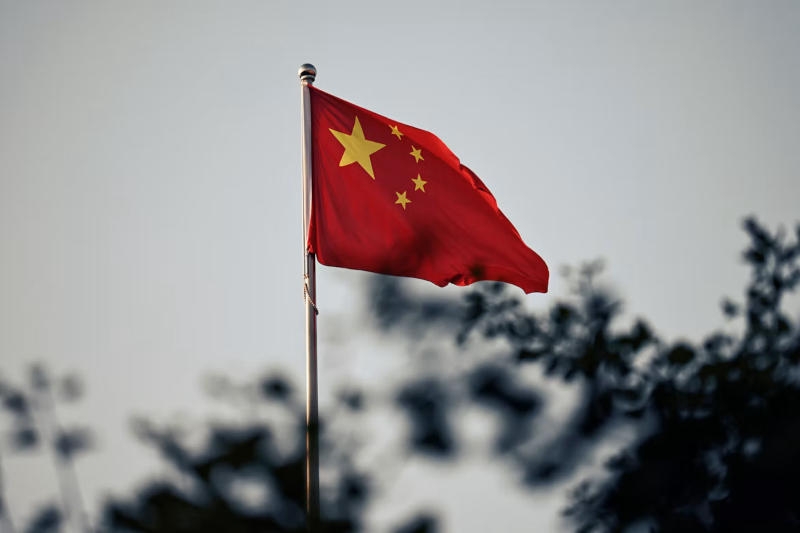
Image source: Sou Jest / unsplash.com
The OEF conducts influence operations both domestically and internationally. His activities include monitoring and shaping media narratives about China and other countries, interacting with the Chinese diaspora (for their benefit or harm), and trying to establish control over individuals and organizations that are influential or useful to Beijing in China and beyond. In particular, the identification of ethnic Chinese in the semiconductor industry is being carried out – one of the documents mentions the heads of the Taiwanese company Skymizer, which is engaged in developments in the field of AI, and the director of the Microsoft Research Center. Strategies for approaching such individuals, including through informal structures, are outlined.
Data processing is carried out by a laboratory on an area of 500 m2 – it houses server racks and workstations for at least a hundred employees. The system processes huge amounts of data from the Internet regarding the Chinese diaspora. It helps to identify specific people, their connections and public sentiment – the data is converted into analytical reports that are transmitted to management for decision-making.
Much of the information comes from American and Chinese social networks; In this case, for data collection, as a rule, servers located outside China are used, hidden behind networks of rotating proxy servers. The data is transferred to China for processing: translation from foreign languages into Chinese is performed, keywords are extracted, and meaningful relationships are built. The OEF compares the information received with existing open data bases containing information about prominent figures in the media, science, politics and other areas, as well as unreliable individuals and those who have been blacklisted. These two data sources form the basis of the “control system” that informs conclusions about public sentiment, the results of operations, and more.
In some cases, the reports focus only on trends in public relations. In others, they are used to identify influential ethnic Chinese around the world, whether they are engineers from Taiwan, popular bloggers or representatives of other fields; and to develop strategies to engage them in promoting Beijing’s interests.
The OEF has been involved in this activity before, but without automation tools its work was carried out much more slowly. It is noteworthy that the available documents date only back to 2021, so it is possible that the system has been significantly strengthened by connecting large language models.
If you notice an error, select it with the mouse and press CTRL+ENTER.