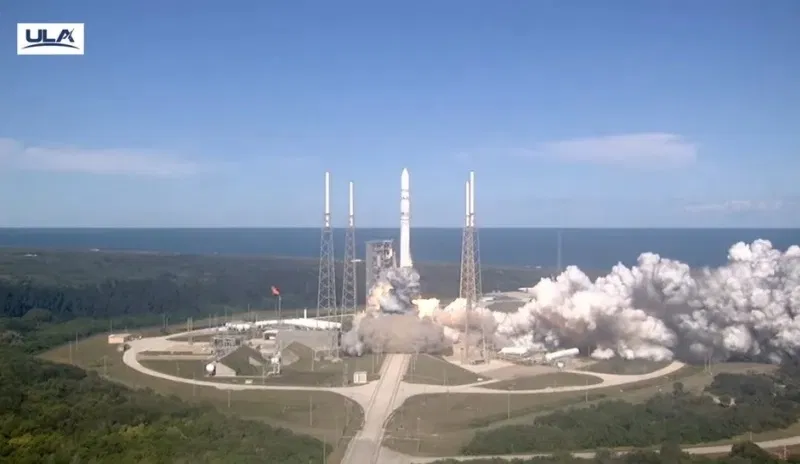
United Launch Alliance (ULA) encountered an abnormal situation during the launch of the Vulcan Centaur rocket, resulting in the loss of 40 telecommunications satellites for the Amazon Leo low-orbit constellation. The launch took place from the US Space Force launch site at Cape Canaveral in Florida on November 15 at 12:40 local time (20:40 Moscow time).
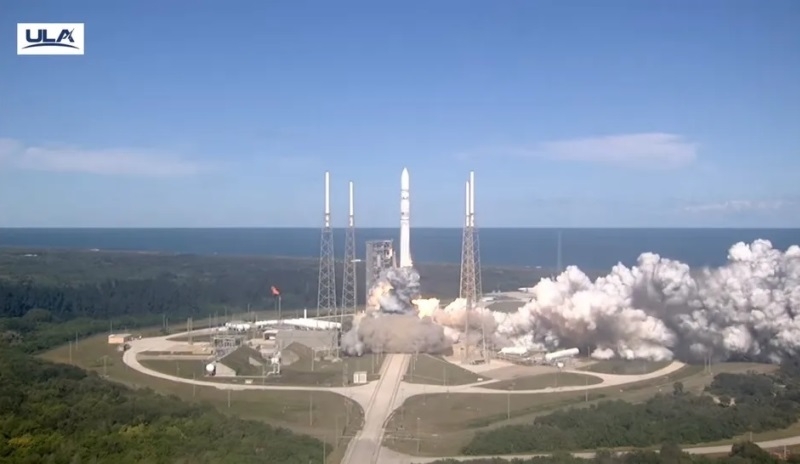
Image source: ULA
“Based on information received by the launch director, we confirm that the Vulcan rocket launched from Launch Complex 41 encountered an abnormal situation 10 minutes into its flight and was unable to place the Amazon satellites into orbit. Since the anomaly has only just been detected, we do not yet have specific data to understand what exactly happened,” said a message that appeared on ULA’s social media account X.
The current launch is expected to be a return mission for the Vulcan Centaur launch vehicle, which is the successor to the ULA workhorse Atlas V. Vulcan debuted in January 2024 and had completed four launches before yesterday. During two of the four launches, problems arose with one of the solid rocket boosters. In both cases, the accelerator nozzle burned out, causing it to fall off approximately 30 seconds after launch. Despite this, the payload in both cases was delivered to the intended orbits.
However, the too frequent occurrence of problems worried the US Space Force, causing Vulcan Centaur launches to be suspended in the interests of national security. ULA worked hard to fix the problems and, about nine months after the last launch, prepared the next Vulcan Centaur rocket for a commercial mission.
“Our combined team has made significant progress toward understanding the cause of the solid rocket booster anomaly that occurred during the previous Vulcan flight. Several possible causes were identified, which were resolved through changes to the nozzle design and manufacturing processes,” ULA said in a statement published in late October.
Apparently, ULA was actually able to fix the problem with the nozzle, since during yesterday’s launch the boosters operated as normal. However, during the flight a more serious anomaly arose, which could not be overcome immediately. As a result, 40 Amazon Internet satellites were lost, intended to expand the company’s constellation, which intends to compete with SpaceX Starlink. In total, Amazon plans to launch 3,200 satellites into orbit. Until yesterday, it was possible to send about 400 devices into outer space, for which Atlas V, SpaceX Falcon 9 and Arianespace Ariane 6 rockets were used.
If you notice an error, select it with the mouse and press CTRL+ENTER.