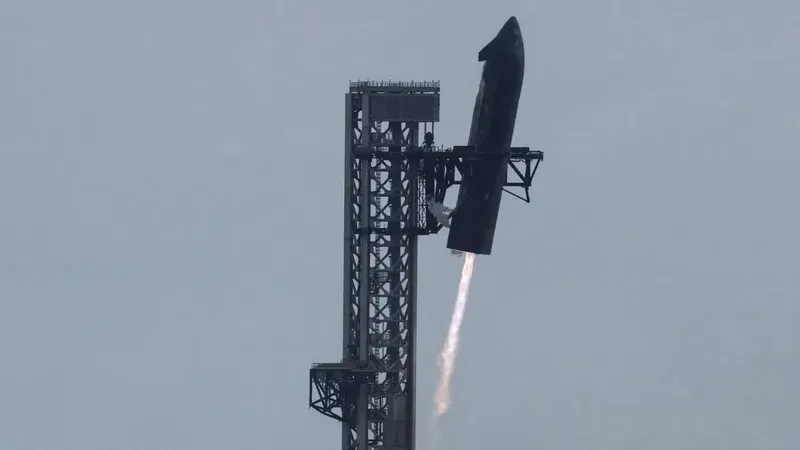
SpaceX CEO Elon Musk took to social network X to announce plans to increase the size and power of the next-generation Starship spacecraft, which could debut as Starship V4.
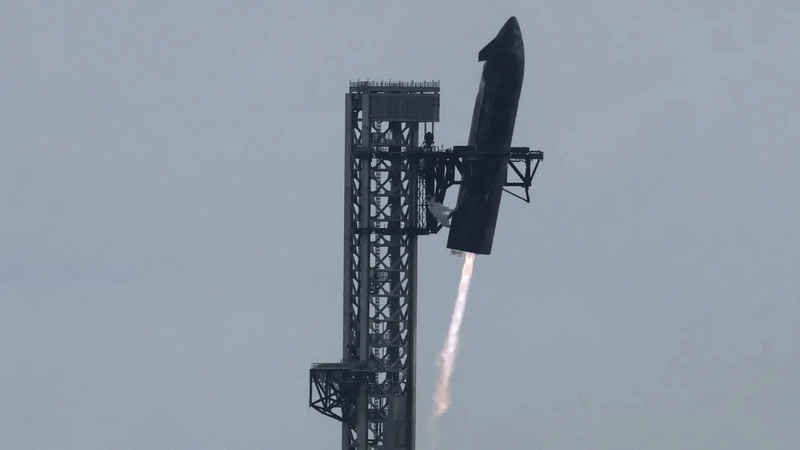
Image source: CNBC
“The length of Starship V4 will be about 70 meters – this is about 40% larger than the previous size, which allows for an increase in fuel capacity by more than 60%. The number of engines will be increased to nine: three more Raptor-Vacuum engines will be added. At the same time, the V4 version engines themselves will have increased thrust,” reported Musk on Sunday evening (November 15).
The current version – Starship V3 – has a length of 52 meters, and the total height of the rocket of the same name when assembled reaches 124 meters. Starship’s upper stage is currently equipped with six Raptor V3 engines, and the 72-meter Super Heavy booster has 33 engines. The height of the upper stage of the V4 version alone will be equal to the two-stage Falcon 9 rocket, while its diameter will be 9 meters versus 5.2 meters for the Falcon 9 nose fairing.
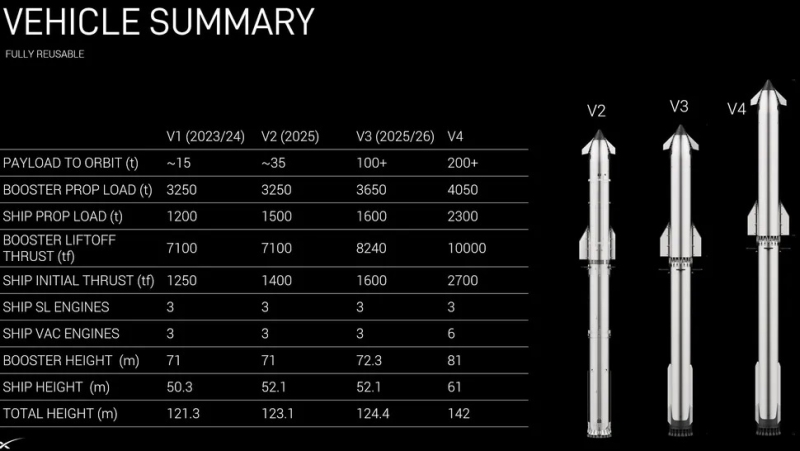
Starship development plan from August 2025. Now version V4 is planned to be larger and more powerful. Image Source: Elon Musk
In August 2025, Musk published a plan for the evolution of the rocket, according to which the debut of Starship V4 is expected in 2027, and the total height of the system assembled with the accelerator was supposed to be 142 meters (including a 61-meter upper stage). In a new publication, the head of SpaceX clarified that previous estimates are outdated, and the total height of the V4 rocket “will likely be closer to 150 meters.”
The announcement follows Starship’s 15th test flight on November 13. The original mission plan included simultaneous capture of both stages by the launch tower’s manipulators. The Super Heavy booster was diverted for splashdown into the Gulf of Mexico 6.5 minutes after launch due to a low fuel level sensor. The Ship upper stage spent 22.5 hours in orbit, successfully deployed a batch of Starlink V3 Internet satellites, and on November 14 was caught by a service tower on its return to Earth for the first time in history.
If you notice an error, select it with the mouse and press CTRL+ENTER.