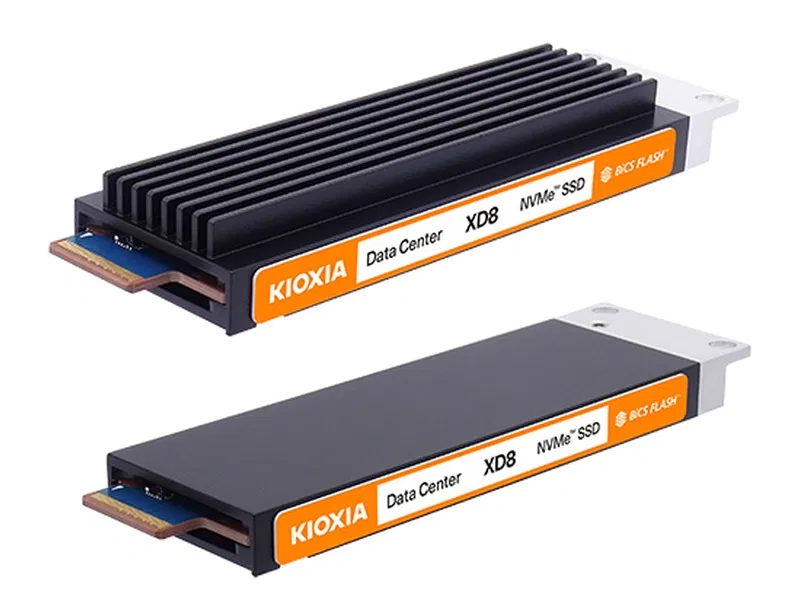
Kioxia and Nvidia have demonstrated the ability to expand the memory available to AI accelerators using solid-state drives. The experimental system received a 1.1 PB SSD and is designed to process up to 2 trillion data vectors. At the same time, Kioxia revealed the characteristics of the new GP2 drive with a performance of over 18 million IOPS.
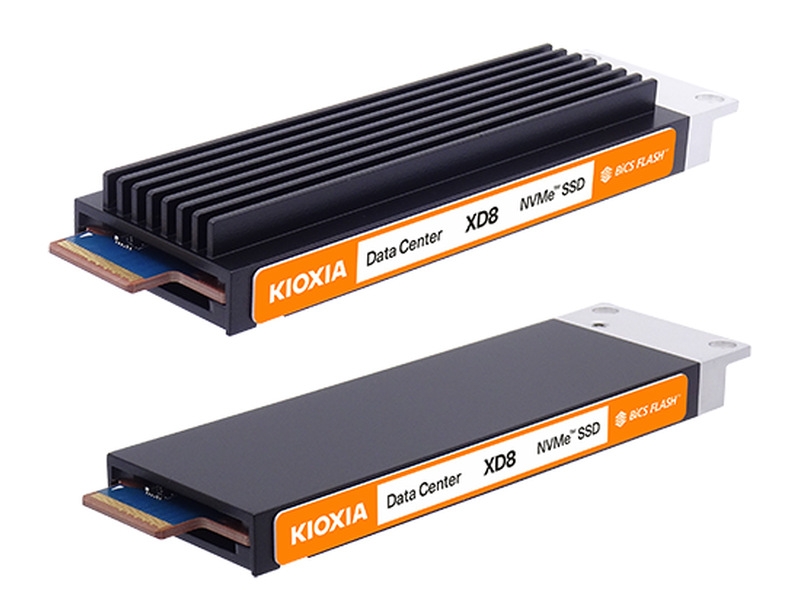
Image source: Kioxia
How reports Kioxia, the experiment was carried out on an Nvidia GB200 NVL72 system using SCADA (Scaled Accelerated Data Access) and Storage-Next software technologies. They allow GPUs to access data on NVMe drives, expanding the available processing space beyond the onboard HBM memory.
The configuration included 18 server systems and 144 Kioxia XD8 drives with a capacity of 7.68 TB each. There were eight SSDs per node with a total capacity of almost 60 TB. The total volume of the array was about 1.1 PB. The system supports access to blocks of 512 bytes in size and potentially allows working with databases containing up to 2 trillion vectors of a similar size.
This approach is designed for tasks related to processing large amounts of information, including vector search and graph neural networks. Instead of constantly transferring data between HBM and external storage, GPUs receive an additional layer of SSD-based memory. This does not increase the physical capacity of HBM, but it allows you to work with data sets that do not fit in it.
For now we are talking about proof of concept. Kioxia and Nvidia continue to evaluate SCADA and Storage-Next capabilities, including system performance when processing large volumes of data. The company did not disclose specific results of measuring speed.
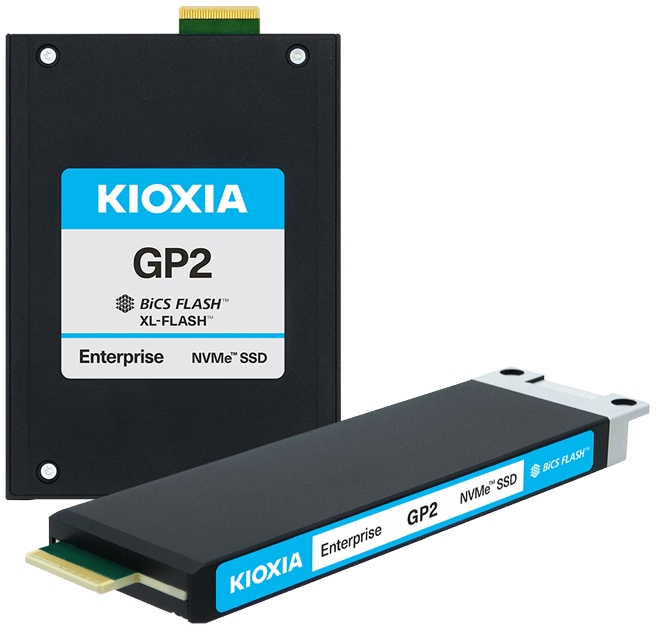
Same day Kioxia announced a new series of specialized GP2 drives designed for similar tasks. Unlike the XD8 used in the experiment, the new products are designed with the expectation of intensive exchange of small blocks of data directly with GPUs.
GP2 are built on third generation XL-FLASH flash memory and support the PCIe 6.0 x4 interface and the NVMe 2.3 specification. According to Kioxia tests, the random read performance of 512-byte blocks exceeds 18 million operations per second, which is almost double that of the previous GP1 series. The expected sequential read speed reaches 28 GB/s.
The developer also announced a resource of up to 50 complete drive overwrites per day (DWPD). The release of models in the E1.S form factors with a thickness of 9.5 mm and E3.S with support for direct liquid cooling is being considered. According to Kioxia, using XL-FLASH provides approximately 2.5 times more random read operations than TLC-based CM10 series SSDs.
However, GP2 has not yet entered mass production. The company plans to provide the first samples for functional testing to individual customers by the end of 2027. Claimed speeds of up to 28 GB/s remain expected, and final specifications for commercial devices may vary.
In October, Kioxia already demonstrated an experimental SSD of the GP family with a performance of over 20 million IOPS. In the future, the company intends to increase this figure to 100 million operations per second to speed up the access of AI accelerators to large data sets.
If you notice an error, select it with the mouse and press CTRL+ENTER.