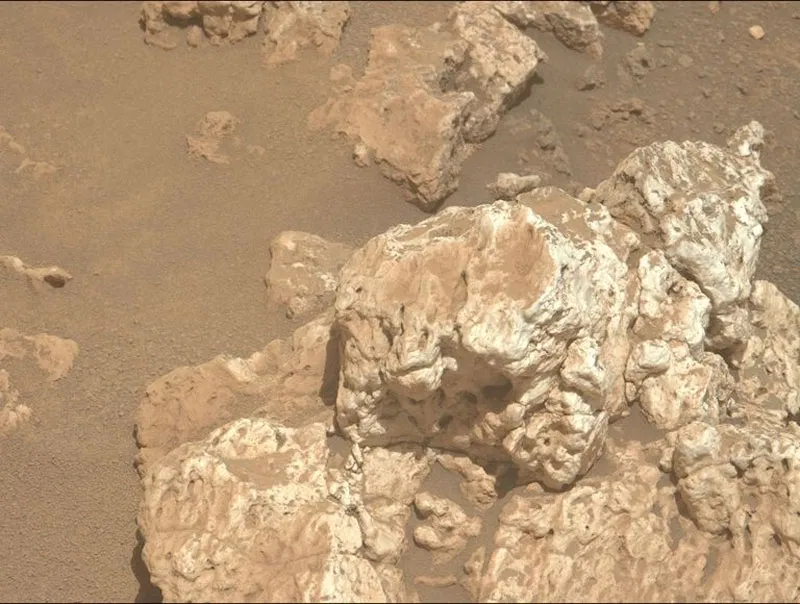
NASA’s Perseverance rover has discovered a large accumulation of “ghost” rocks on the surface of Mars – unusually light and vibrant mineral formations that had previously only been found as rare inclusions in other rocks. Meanwhile, on Earth, fossils of ancient microorganisms are always found in the same “stones,” which has already delighted astrobiologists.
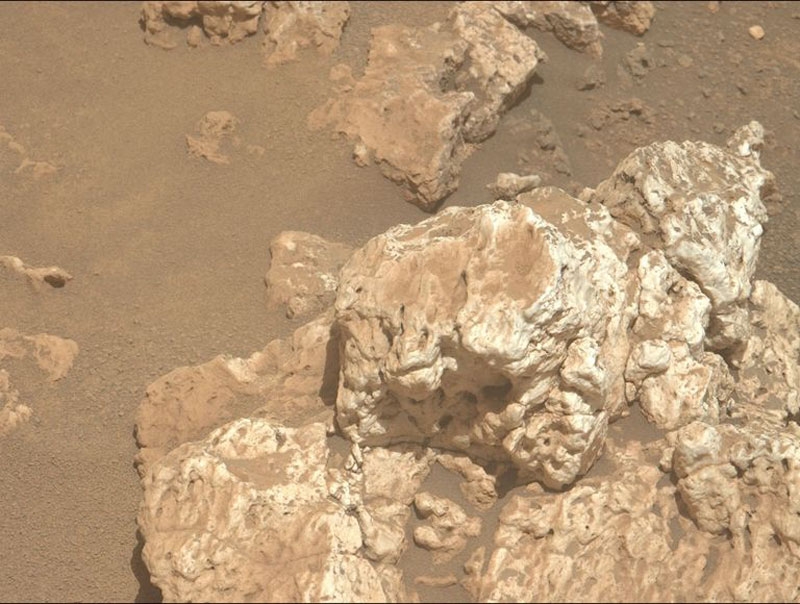
Image source: NASA
The discovery was made in the Idubi region outside the Jezero crater, from which the rover emerged exactly two years ago. These formations are noticeably different from the surrounding darker Martian rocks: they have a pale, almost ghostly color and, according to preliminary data, may represent the remains of ancient geological systems associated with the presence of liquid water. Researchers view the find as an opportunity to study geological processes in the Martian crust under the influence of aqueous solutions on rocks in the distant past.
Studying the find with a SuperCam device mounted on the rover’s mast confirmed that these rocks are not of igneous origin and are rich in hydrated silica. On Earth, similar mineral formations are found in hydrothermal systems, soil, and groundwater circulation zones. They arise as a result of the interaction of water with rocks, but exactly how they were formed in this particular case remains to be seen.
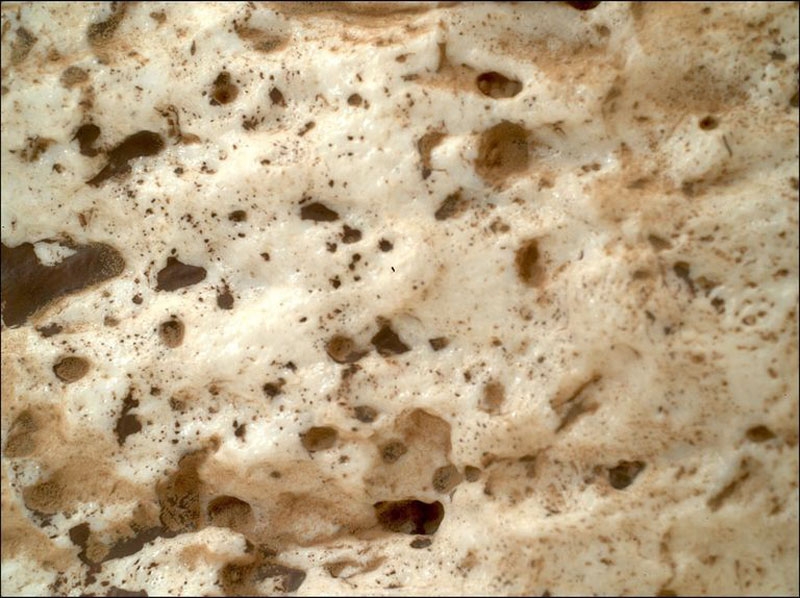
But the main feature of such formations is their ability to preserve microscopic structures, including traces of ancient microorganisms. Therefore, such mineral deposits are considered promising objects for astrobiological research. Perseverance had previously discovered rocks with high silica content on the inner slope of Jezero Crater, but they were too small to be fully studied by instruments mounted on the robotic arm. The discovery of large formations of the same kind already allows for a detailed analysis, as far as possible in the field.
At the time of publication of the NASA news reportedthat a detailed research program has already begun. Scientists will have to clarify the mineral composition, the conditions of formation of the rocks and their ability to preserve possible biological markers. The discovery is quite recent: the rover’s cameras detected the object on October 29, 2026. All the most interesting things are now ahead.
If you notice an error, select it with the mouse and press CTRL+ENTER.