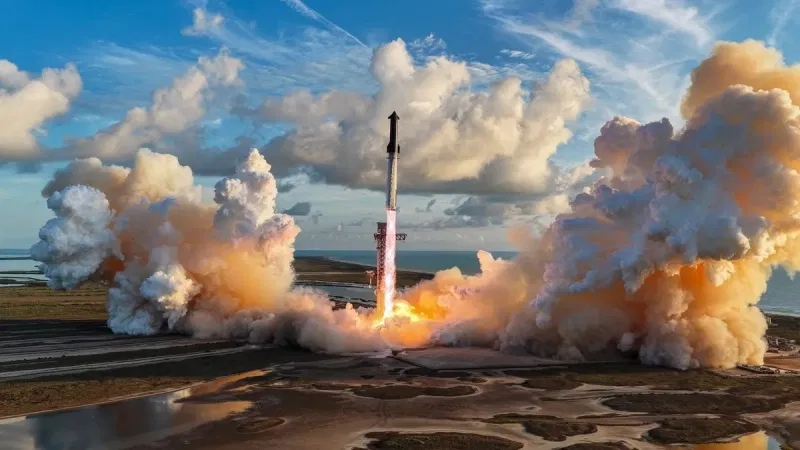
SpaceX has scheduled the 15th test flight of the Starship super-heavy rocket for Friday, November 13. During this mission, an attempt will be made to complete a task that has never been accomplished before – both the Starship itself and the Super Heavy booster must return to the launch pad, where they will be “caught” by ground systems. If all goes according to plan, SpaceX will make space history this week.
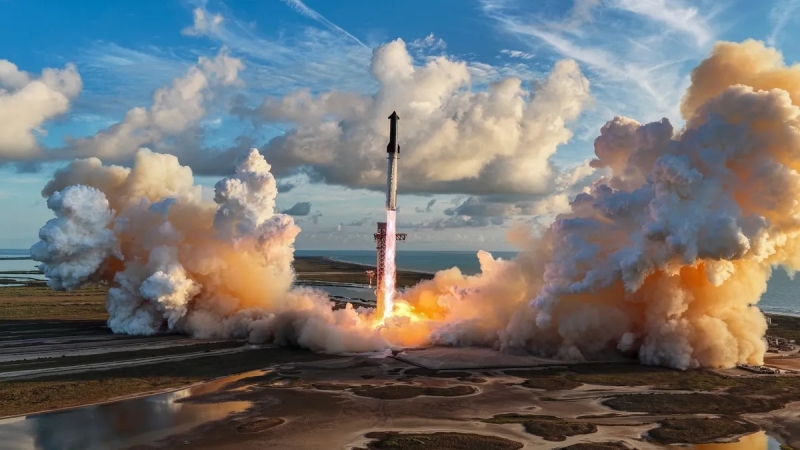
Image source: SpaceX
“The upcoming flight will be the first in which both the Starship itself and the Super Heavy booster will return to the launch pad, where they will be ‘caught’ by ground systems,” the mission description says. “If successful, this will be the first full return of all components of an orbital rocket system and an important step towards creating a reliable, quick-to-use Starship rocket.”
Super Heavy is the giant first stage (booster), and Starship (or simply “ship”) is the second stage of the system. Both elements are designed so that they can be reused and quickly prepared for new flights. The term “catch” refers to a unique mechanism for returning the stages: each stage must return to the launch complex at the Starbase site in South Texas, where it will be picked up in the air by special manipulators of the launch tower, reminiscent of chopsticks.
To date, SpaceX has already successfully “caught” the Super Heavy booster three times, but such a maneuver has never been performed with the Starship itself. This is a much more complex task: the ship rises higher and flies further than the booster, so its return to Earth involves higher loads and requires more precise energy management.
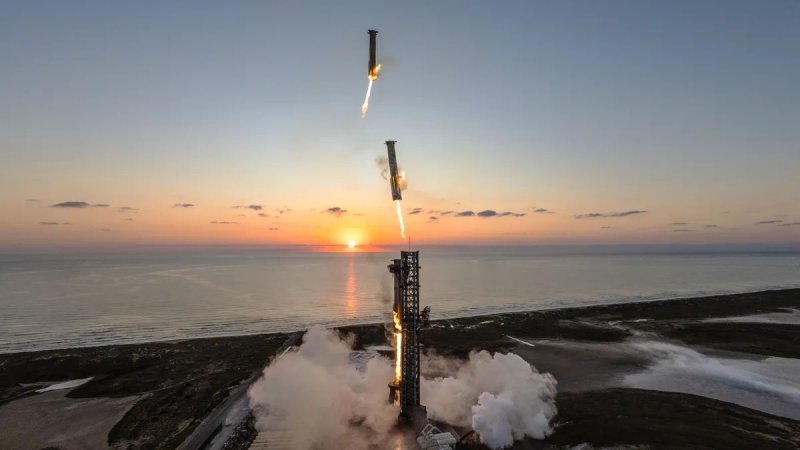
The 15th mission is scheduled to launch from Starbase on Friday. There is a 75-minute “window” for the launch, which opens at 17:45 Eastern time (01:45 Moscow time). If all goes according to plan, the Super Heavy booster will return to Starbase approximately six and a half minutes after liftoff.
Starship will remain in flight much longer. It is planned to enter low-Earth orbit at an altitude of about 275 km. The ship will make approximately 14 orbits around the planet, and the total flight duration will exceed 22 hours. Starship will deliver 26 new generation Starlink satellites (version V3) into orbit. These are the first vehicles of a future megaconstellation, which could ultimately number about 100,000 satellites.
SpaceX plans to land Starship, but does not rule out possible complications. “As in the case of the first orbital flight, the program is designed so that at any time it is possible to switch to a safe suborbital trajectory or perform a routine deorbit in one of the predetermined areas above the ocean,” the company explained.
If you notice an error, select it with the mouse and press CTRL+ENTER.