RTK-CODa full-cycle IT service provider, presented at the CNews Forum the expanded architecture of the Kovcheg data backup and recovery platform. The technical director of the company, Alexey Zabrodin, spoke about the “Bunker” and “Phoenix” modules during his speech. The presented solutions complement the basic “Reserve” storage circuit as part of the “Ark” and allow you to build multi-level protection of customer data.
The Kovcheg platform is based on the principle of strict isolation: backup data is physically moved outside the customer’s main infrastructure. The basic circuit is the “Reserve” module, which places critical information on a remote site and applies a strict role-based access model. The architecture of the solution is built in such a way that even a complete compromise of the customer’s IT environment does not allow changing protected backup copies or deleting them.
The “Bunker” module represents another level of data protection, implemented as a separate installation physically located on an additional site. According to a given schedule, the “Bunker” connects to the “Reserve” and takes current snapshots – instant copies that record the exact state of the data at a specific point in time. It then moves them to physically isolated, immutable storage. The scheduled operation mode with the ability to disable the data storage system provides additional protection due to periodic unavailability of the storage.
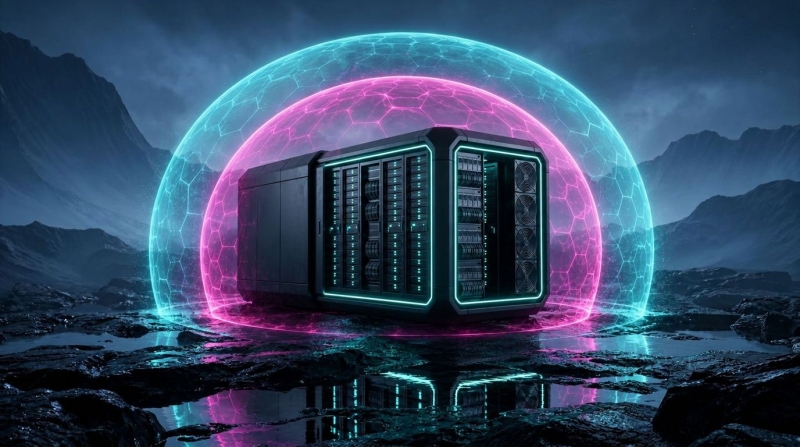
Image source: RTK-DPC
Phoenix provides an isolated, trusted recovery environment. If the “Reserve” and “Bunker” modules are responsible for storing backup copies, then “Phoenix” allows you to deploy and test them in a clean environment before restoring them to the productive infrastructure.
Depending on customer requirements, the solution can be implemented in several configurations. The first involves the allocation of ready-made computing resources in the RTK-DPC cloud. The second option is to build a private cloud. The third scenario is the provision of infrastructure using the bare metal model. RTK-DPC transfers to the customer equipment connected to the cloud, on which he independently or with the participation of the provider’s specialists configures his IT landscape. To restore, Phoenix can also use the customer’s own reserve capacity.
For large companies with special architectural requirements, another scenario is available – the creation of an individual “cold” site. RTK-DPC prepares a dedicated infrastructure that replicates the customer’s IT landscape in a limited or full format. This installation is in standby mode and is activated when there is an urgent need to restore the main data center. Phoenix can be used not only for emergency recovery after failures or attacks, but also as a backup data center. In normal mode, the customer can optimize costs by redistributing part of the supporting systems to the Phoenix site and reducing the load on the main infrastructure.
“Ark is not just a backup, it is a solution that breaks the chain of attack. With the Bunker and Phoenix modules, we complete the architecture: now the data is not just stored, it is physically inaccessible to attackers, and the business has a secure environment for checking it and restarting the IT infrastructure. RTK-DPC offers customers not only backup protection, but also a recovery plan, and also provides a full cycle of operation and support. This is an integrated approach that really saves a business in a critical situation,” said the technical director RTK-COD Alexey Zabrodin.
If you notice an error, select it with the mouse and press CTRL+ENTER. | Can you write better? We always welcome new authors.
Advertising | Joint Stock Company “Data Storage Center” TIN 9722084937 erid: F7NfYUJCUneVfS9xLdoM
Source: